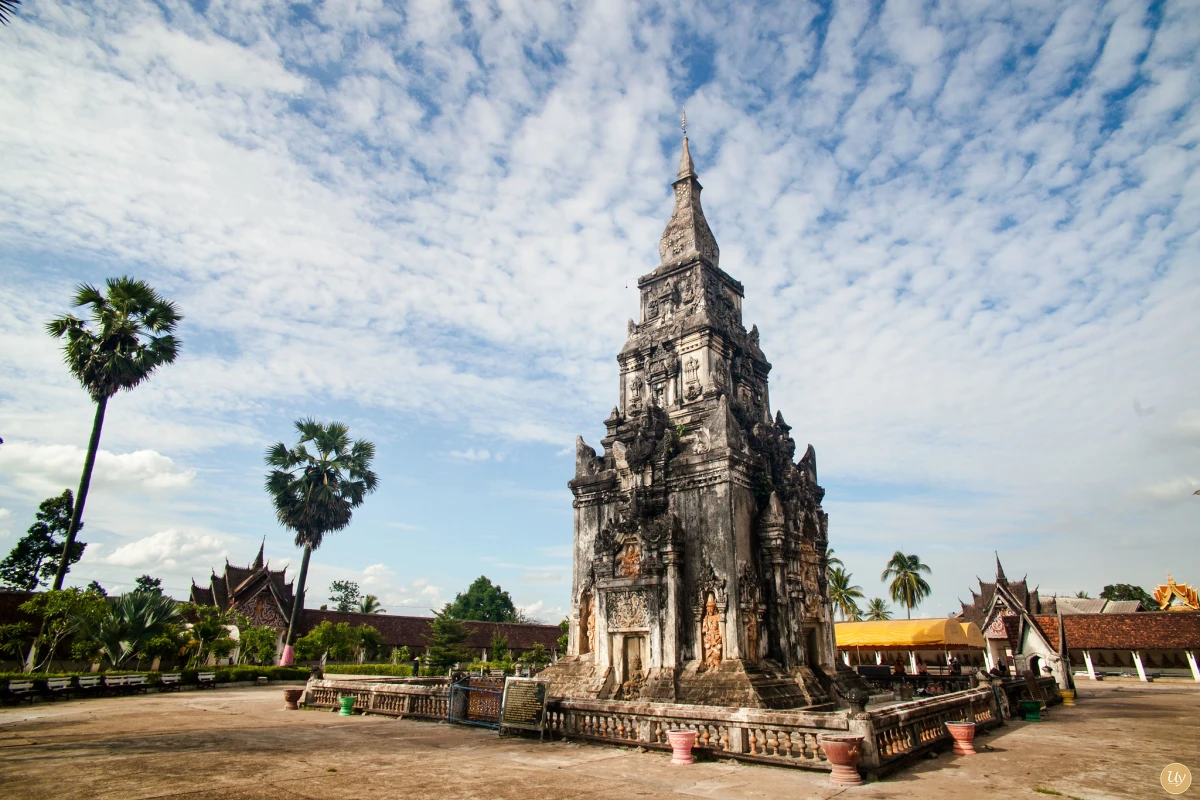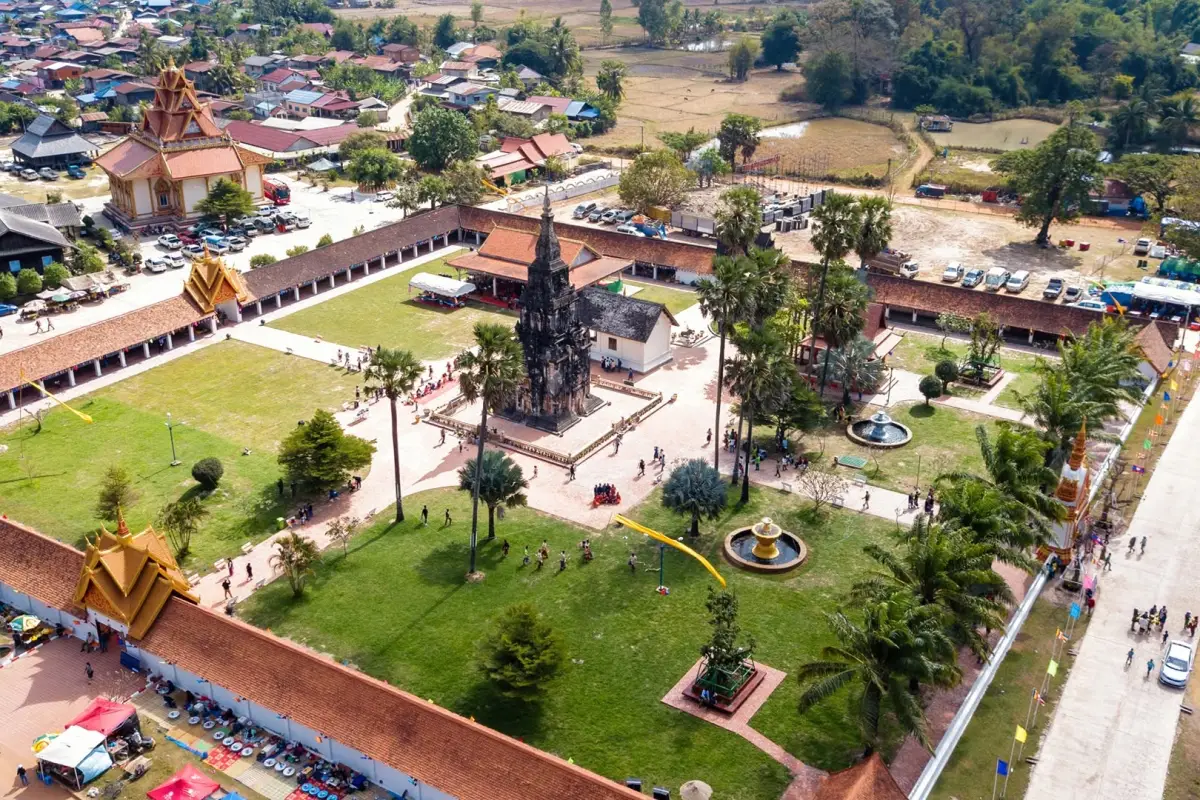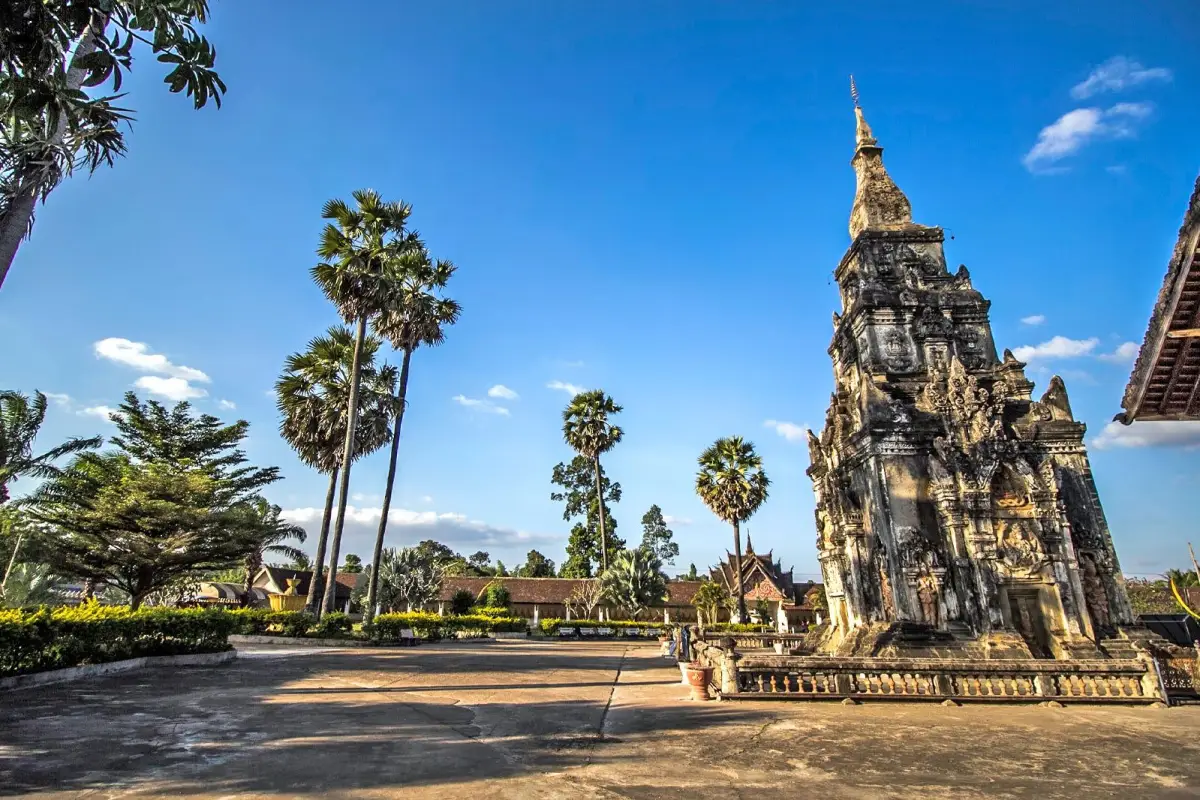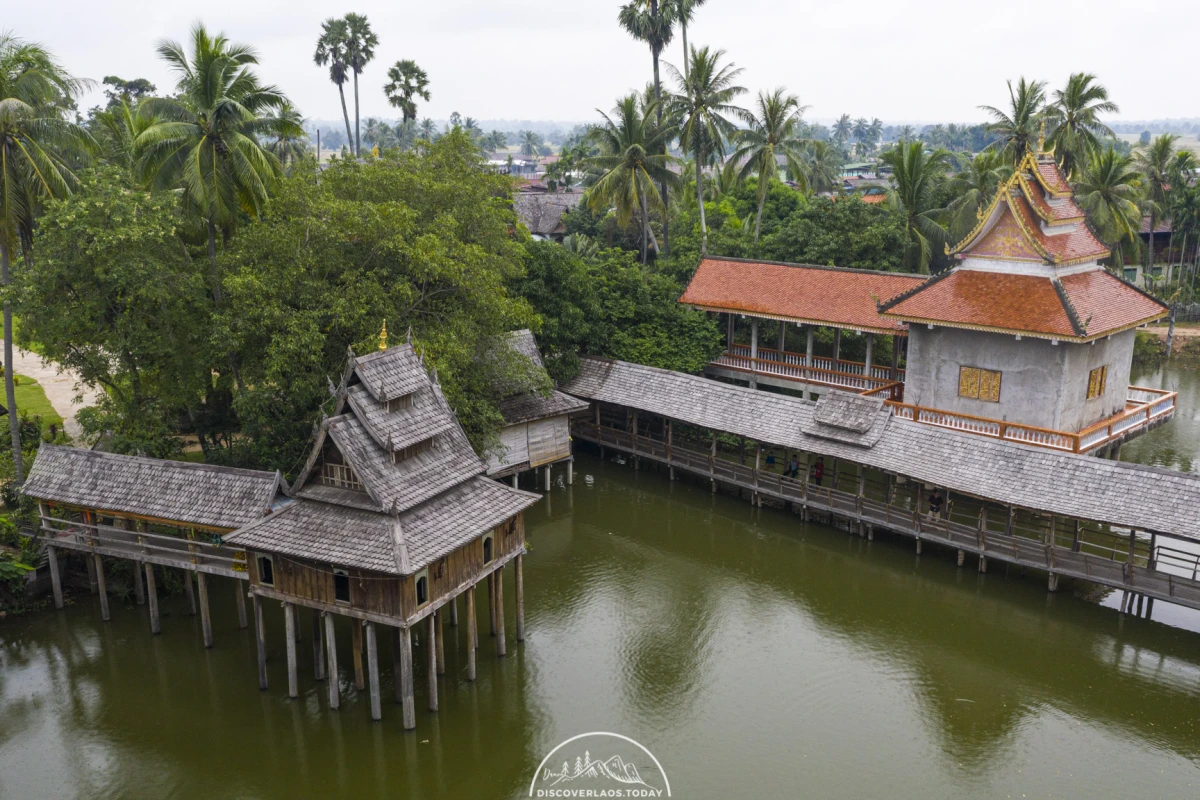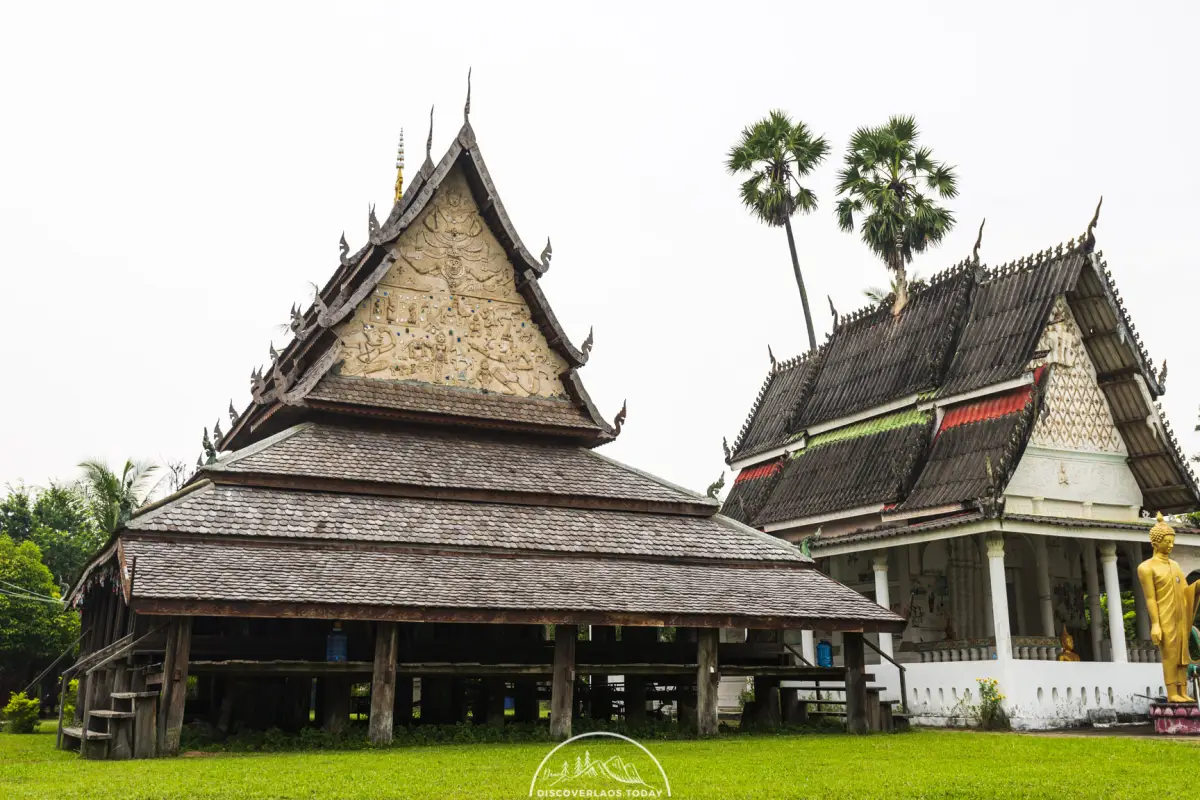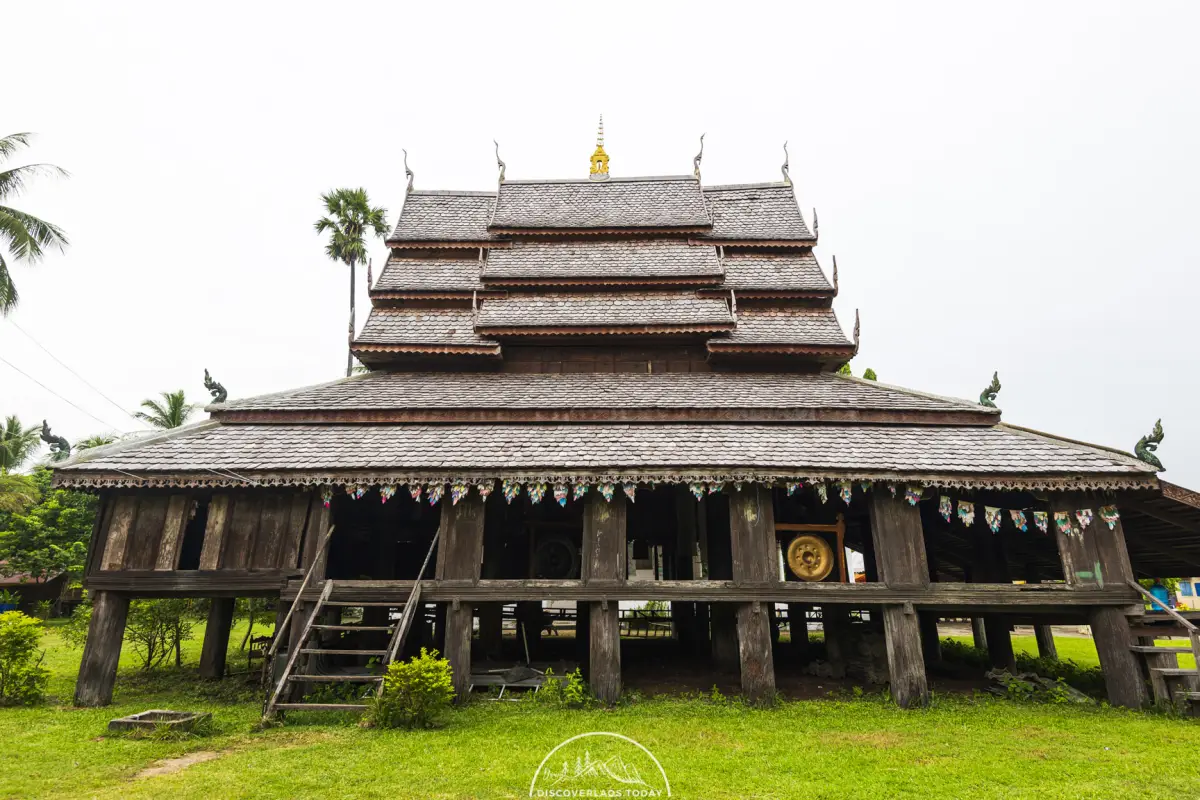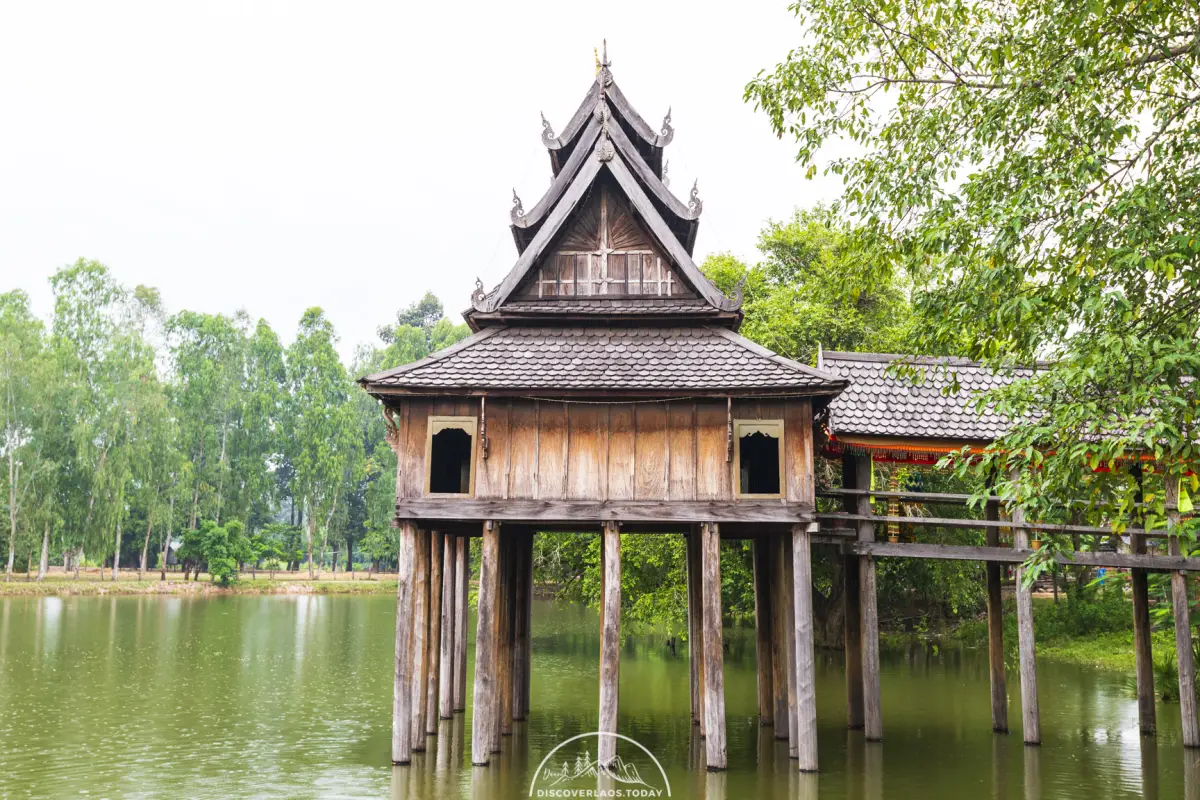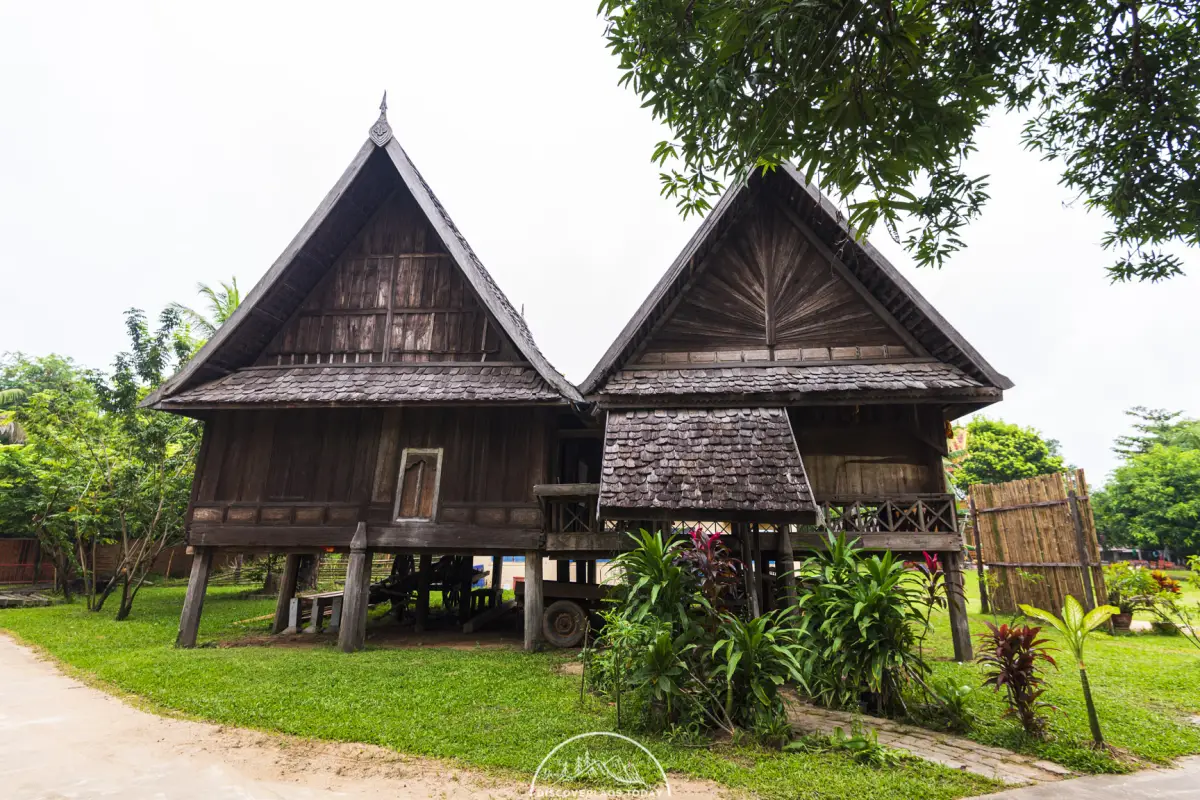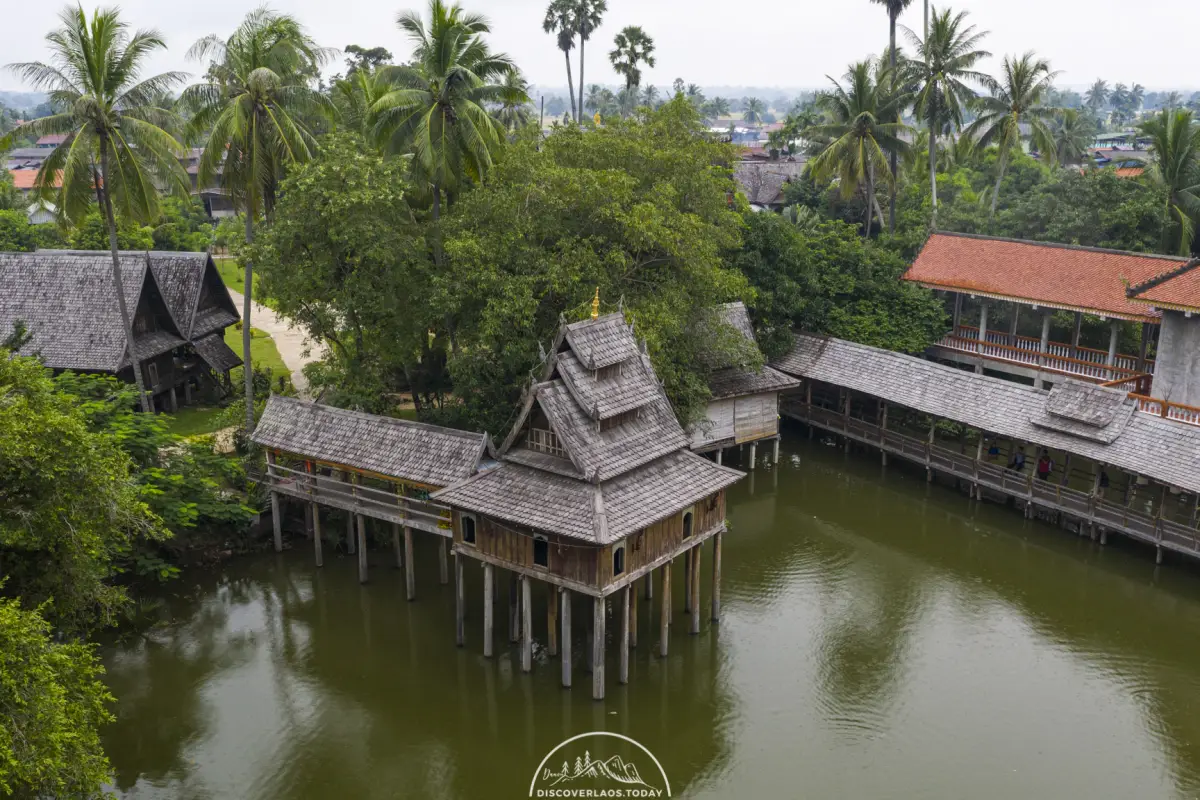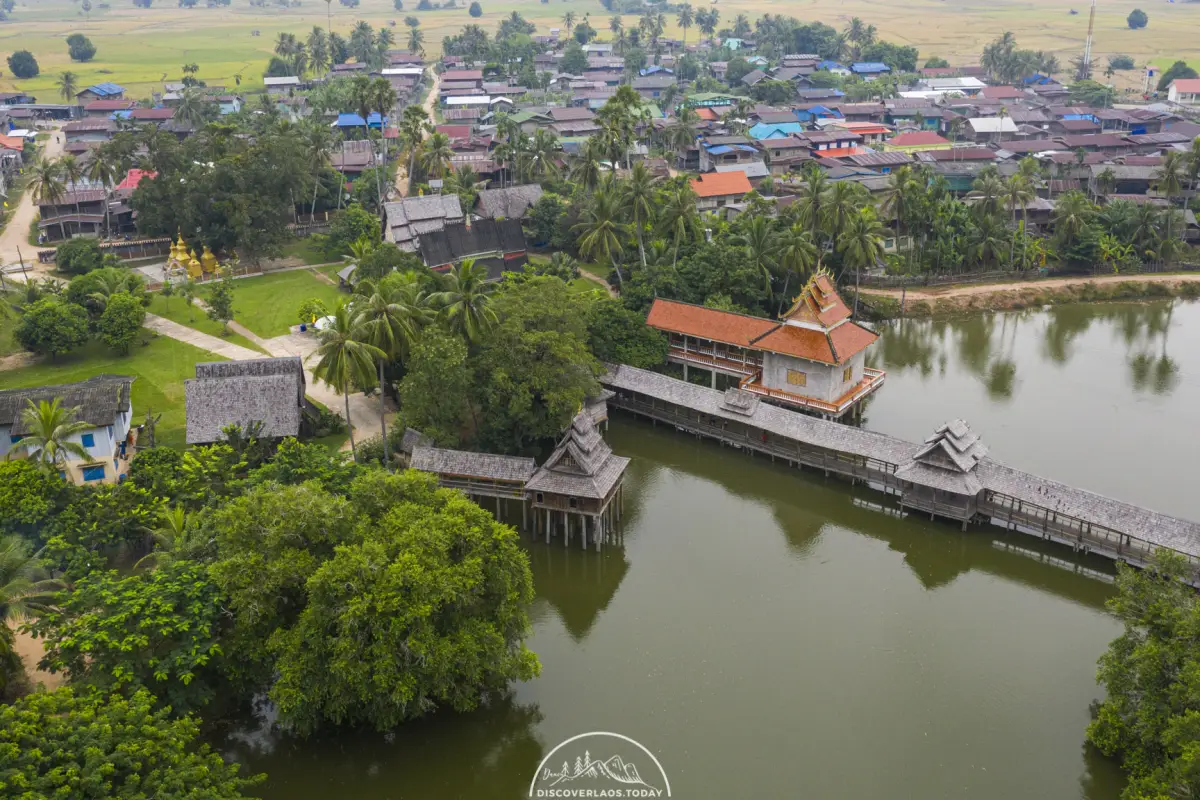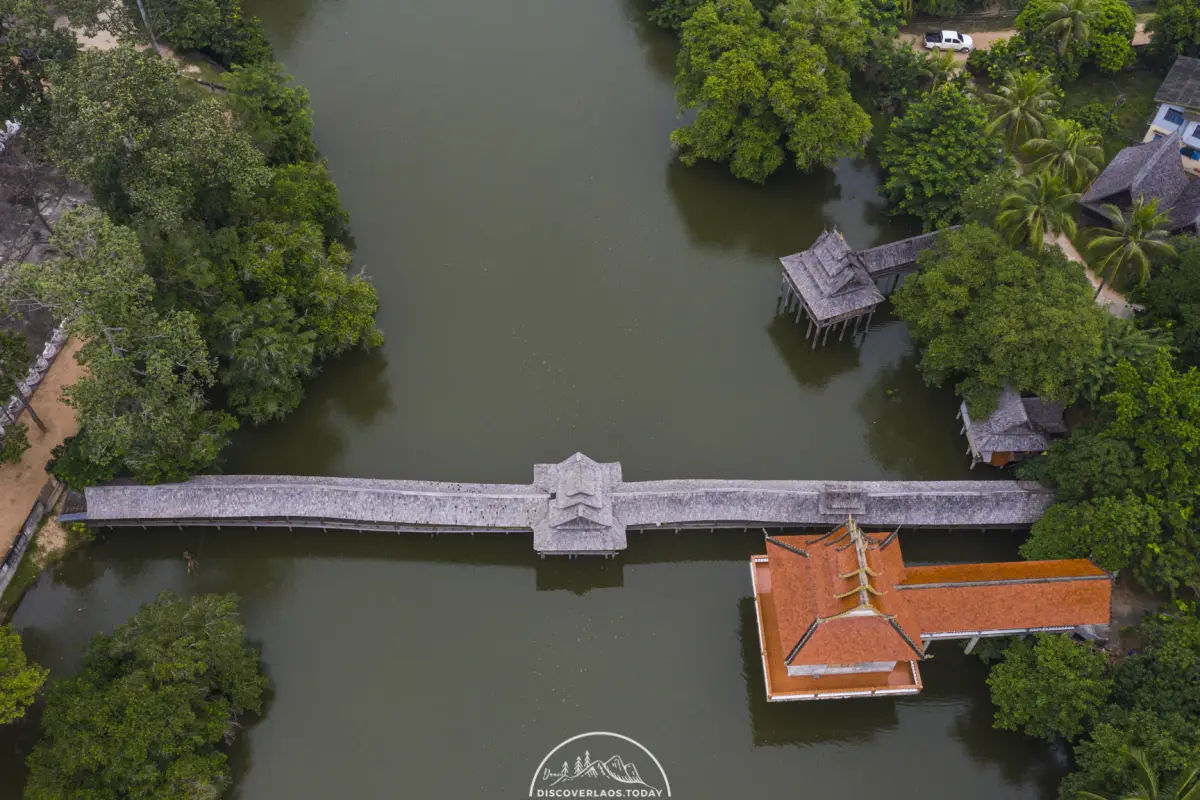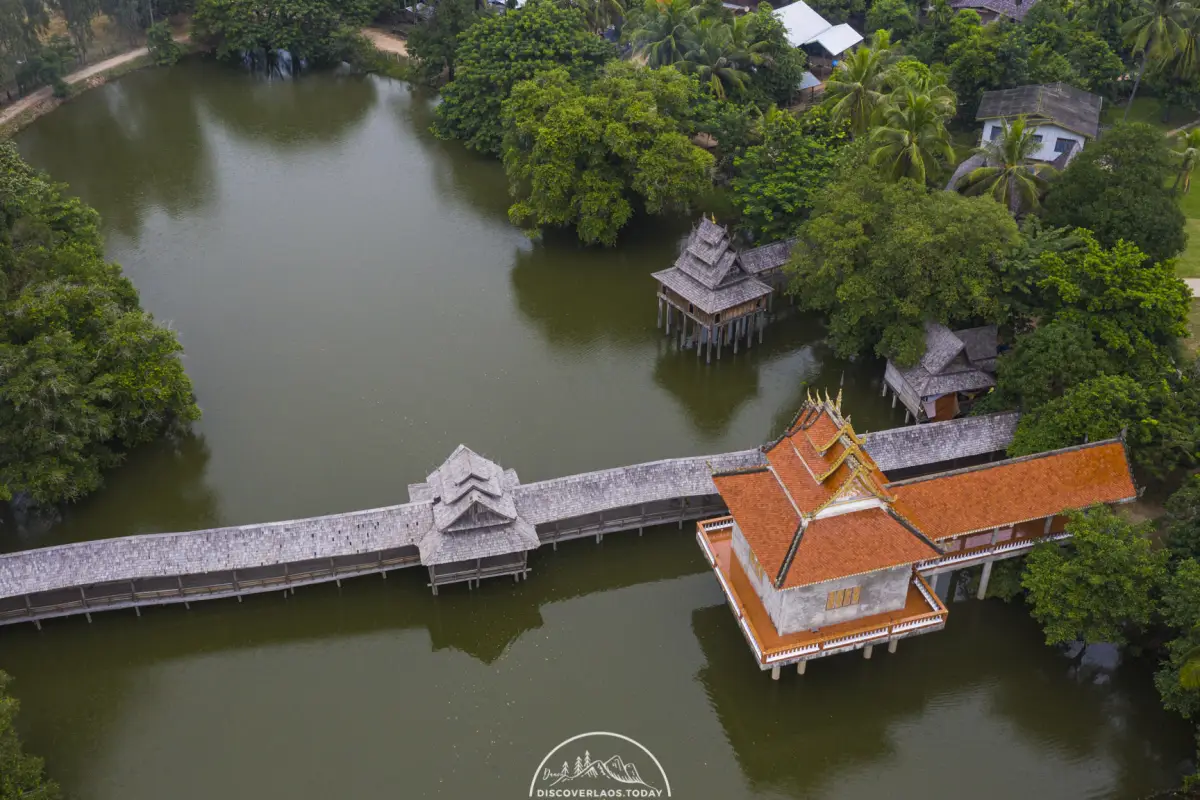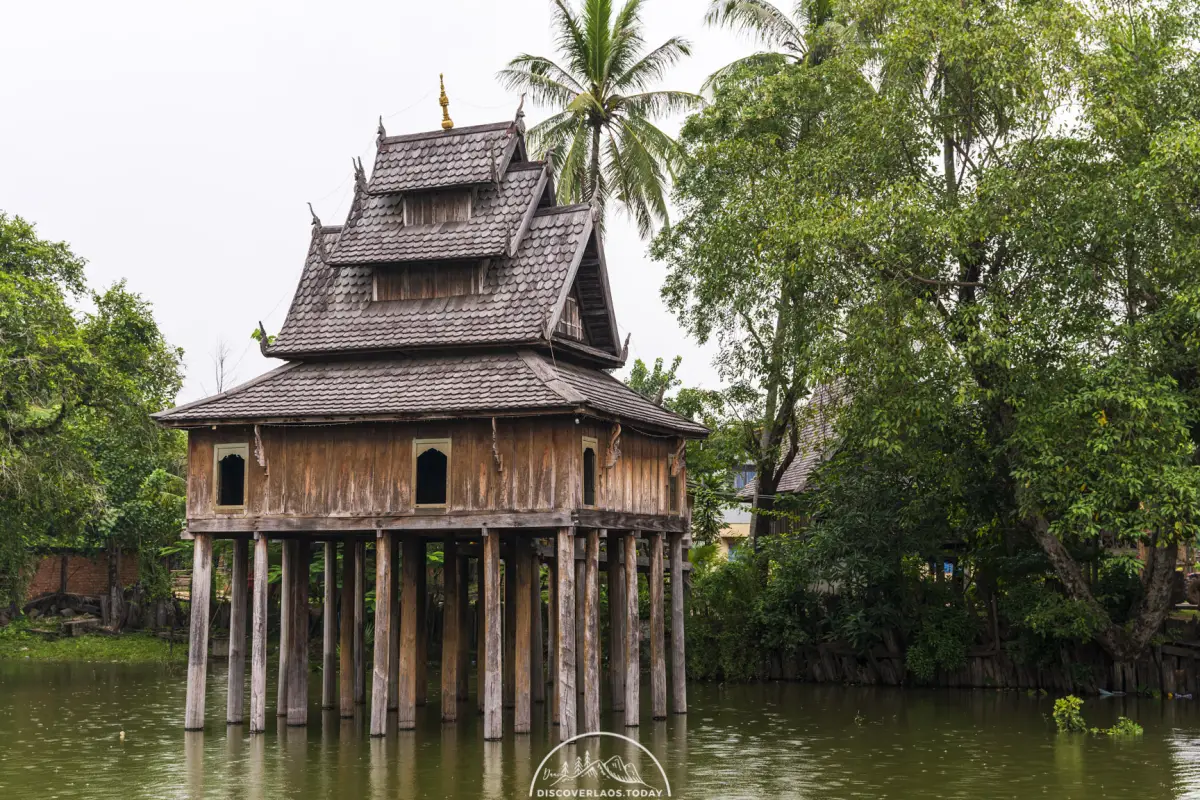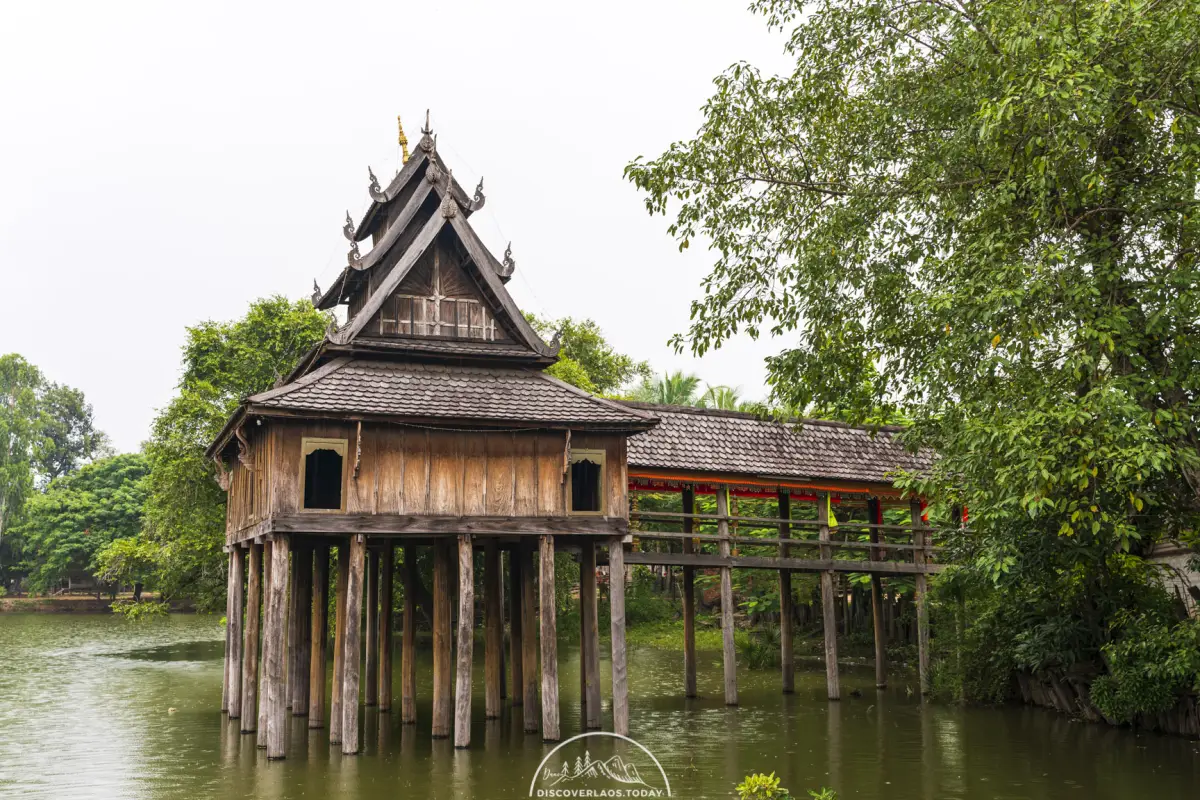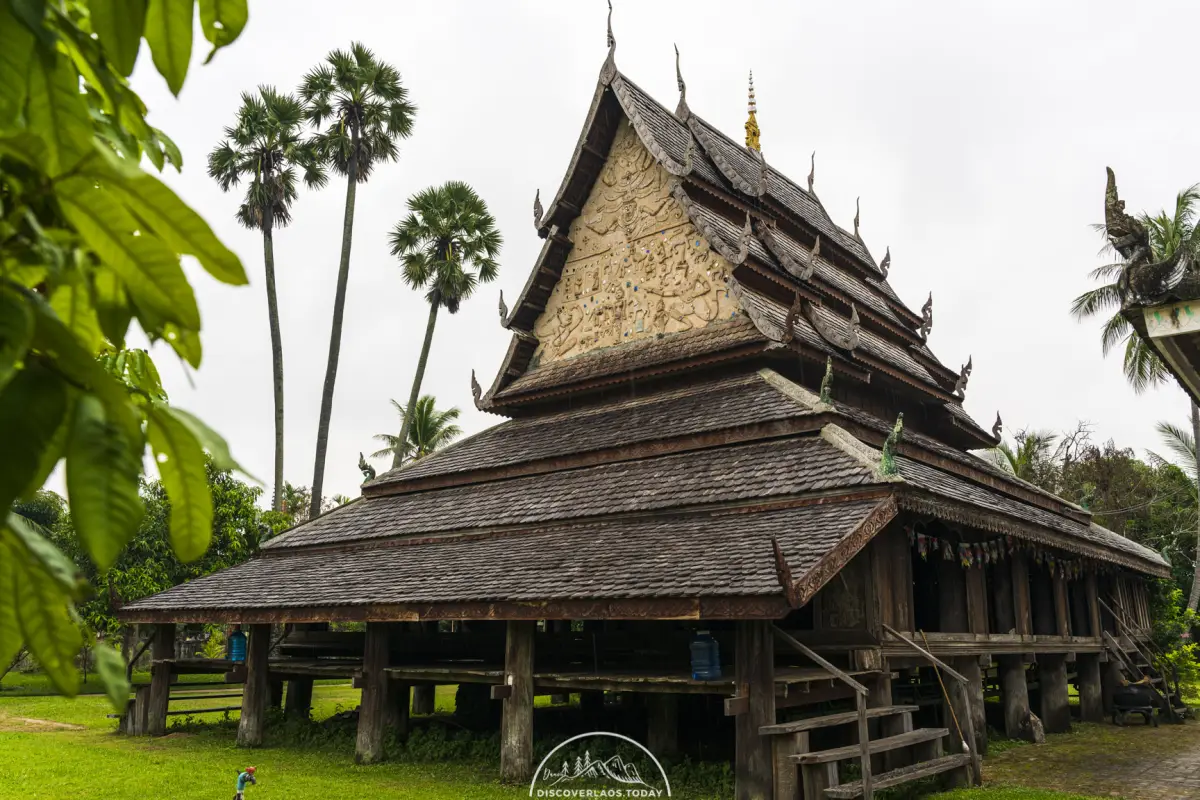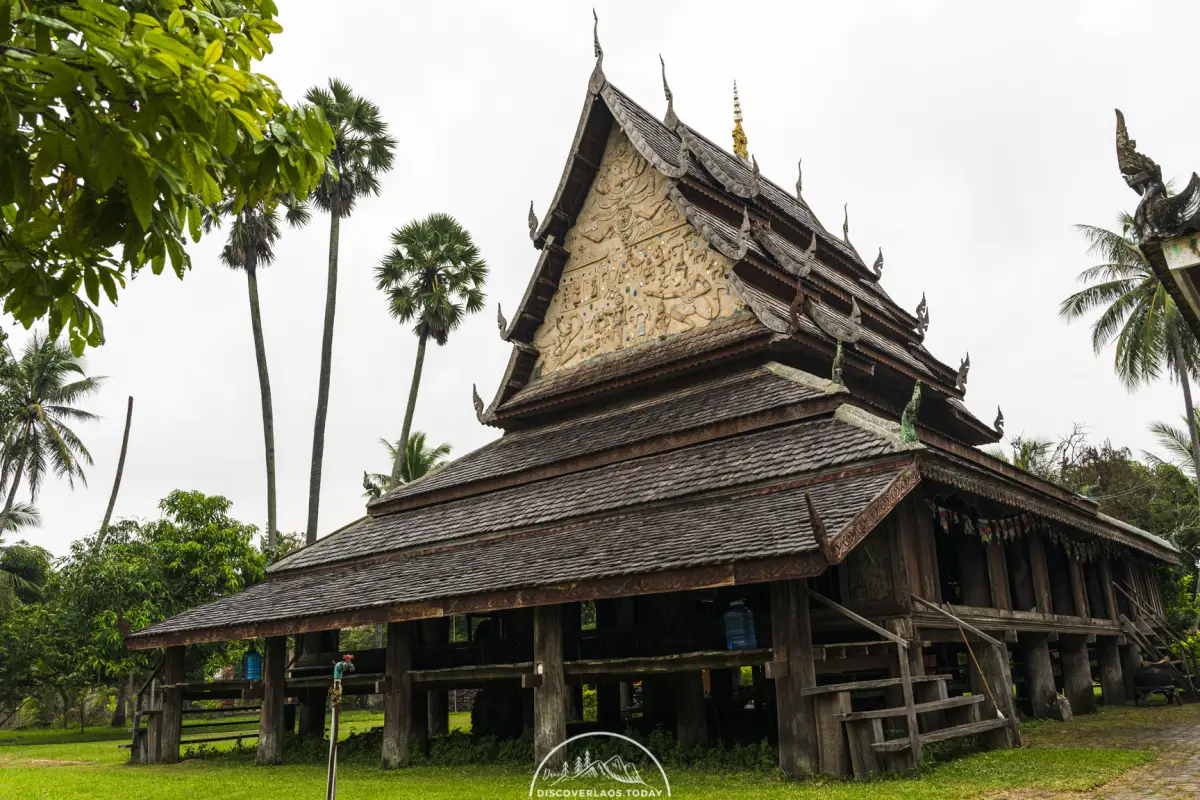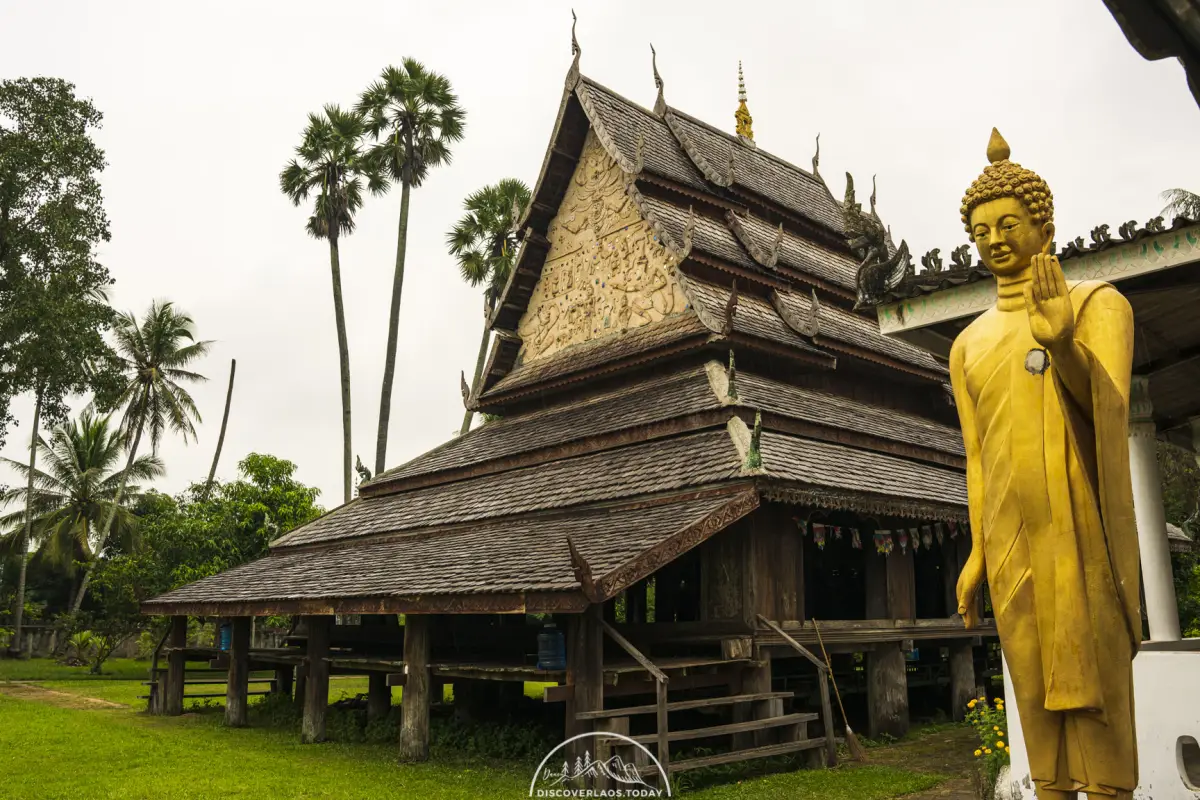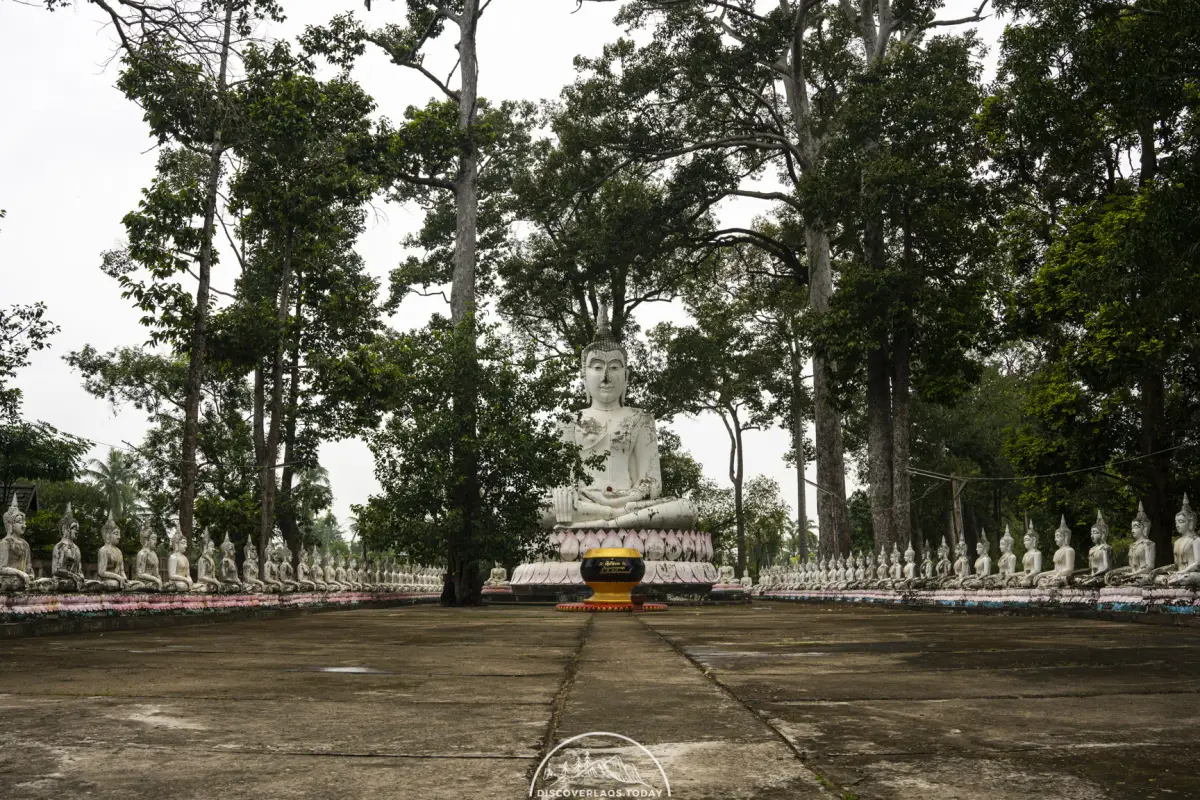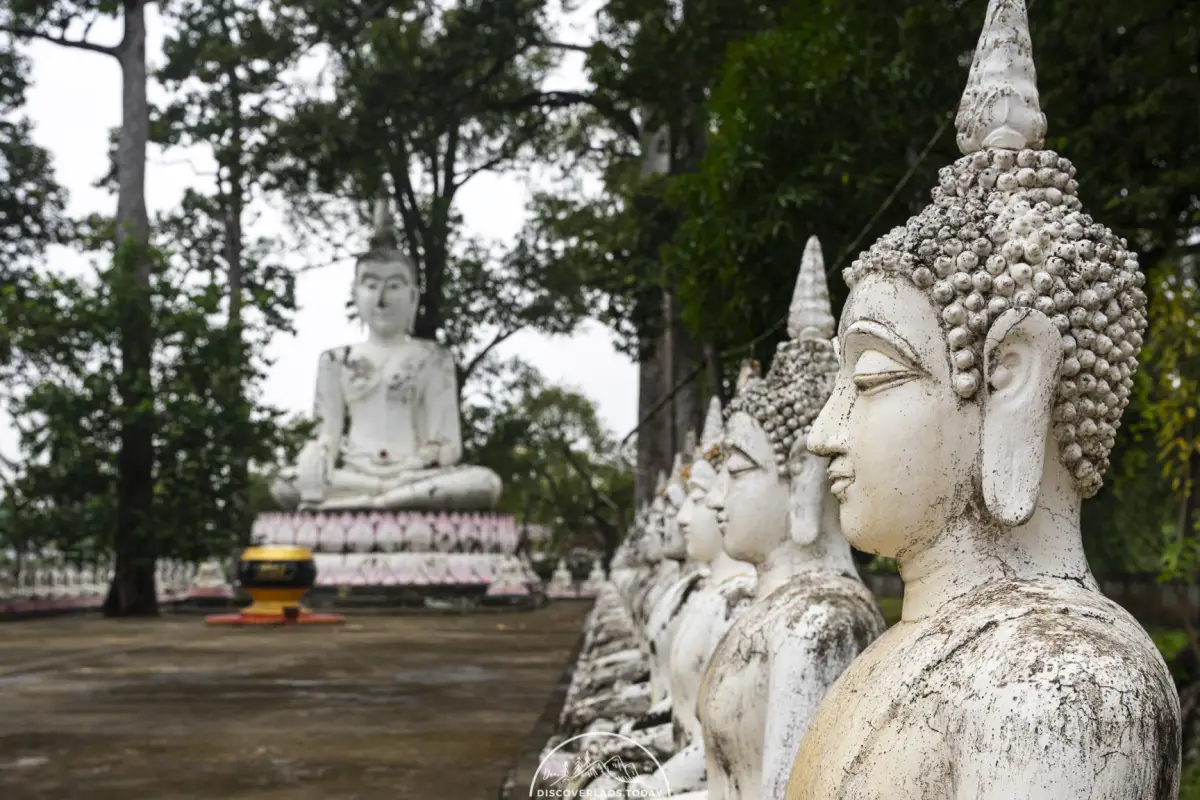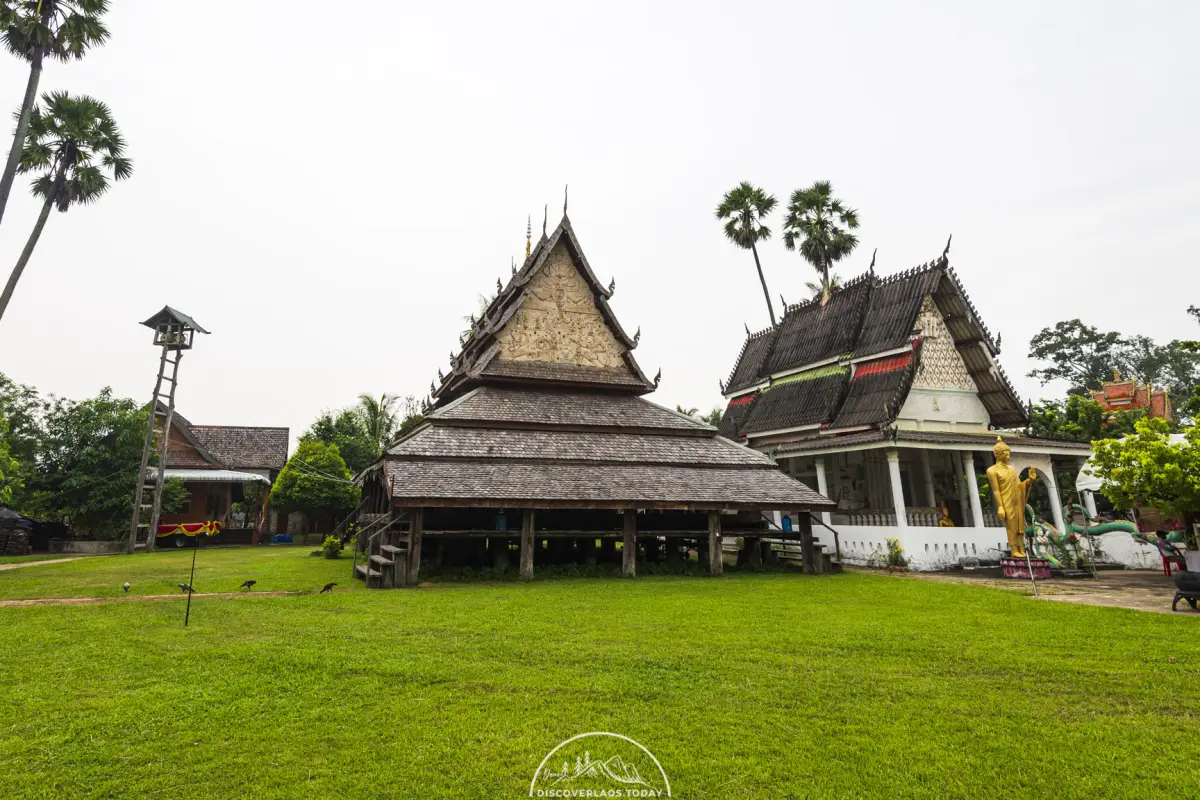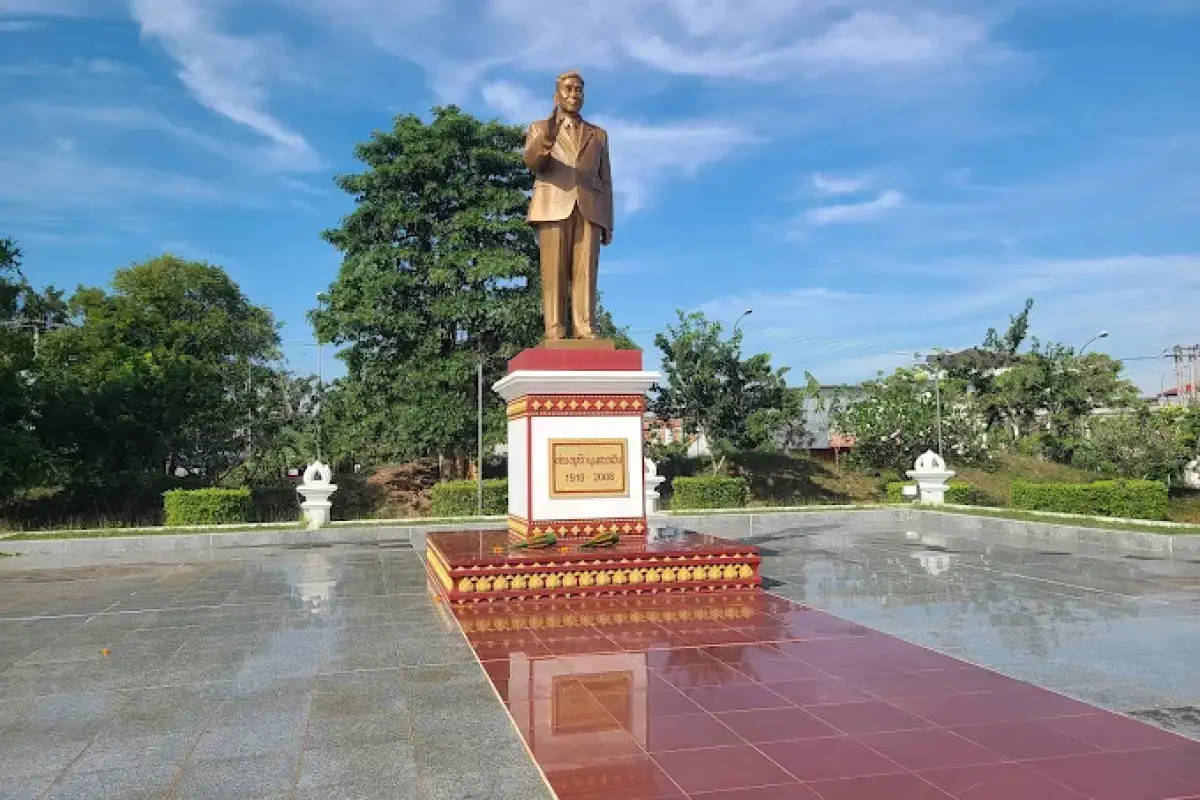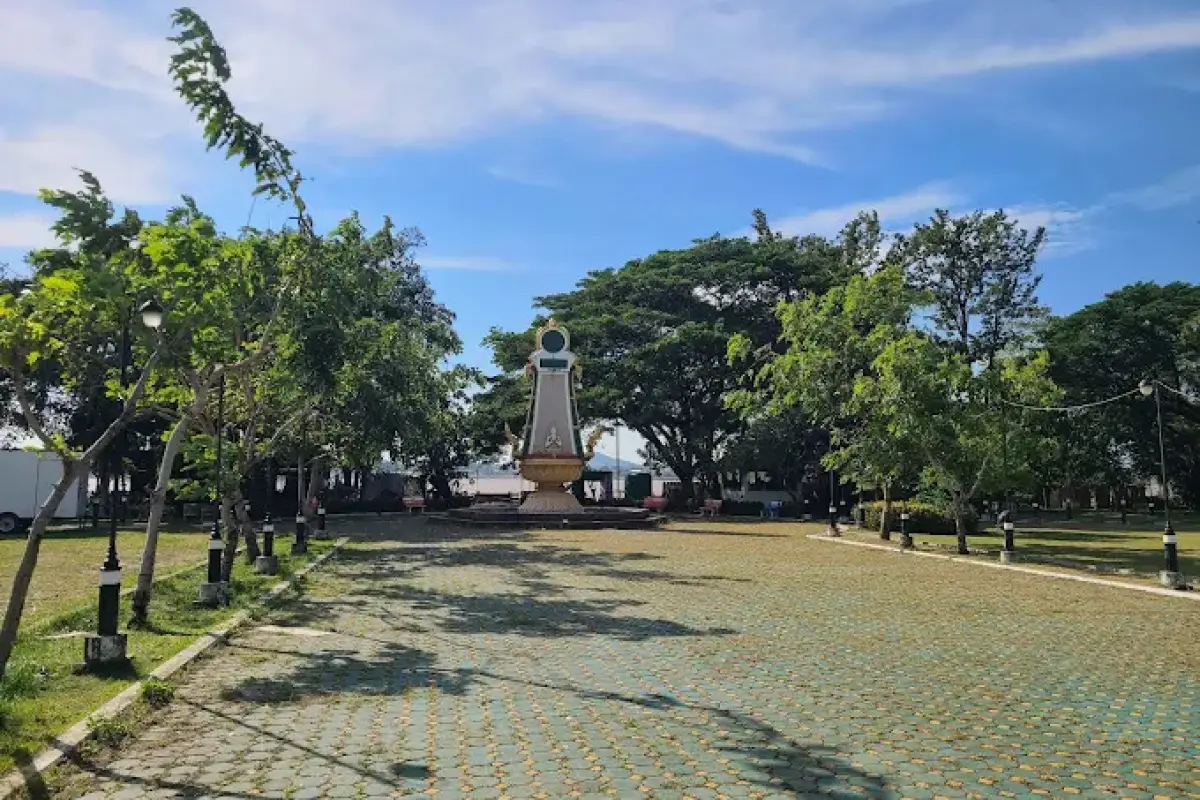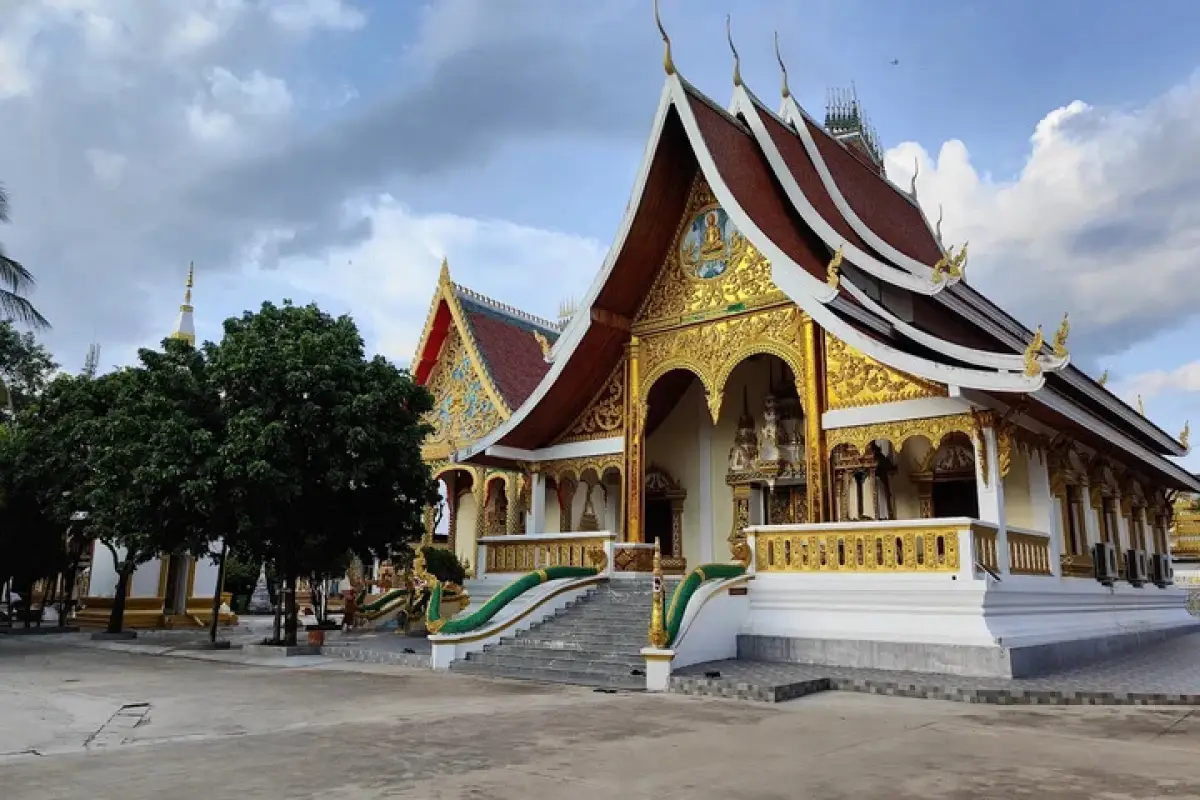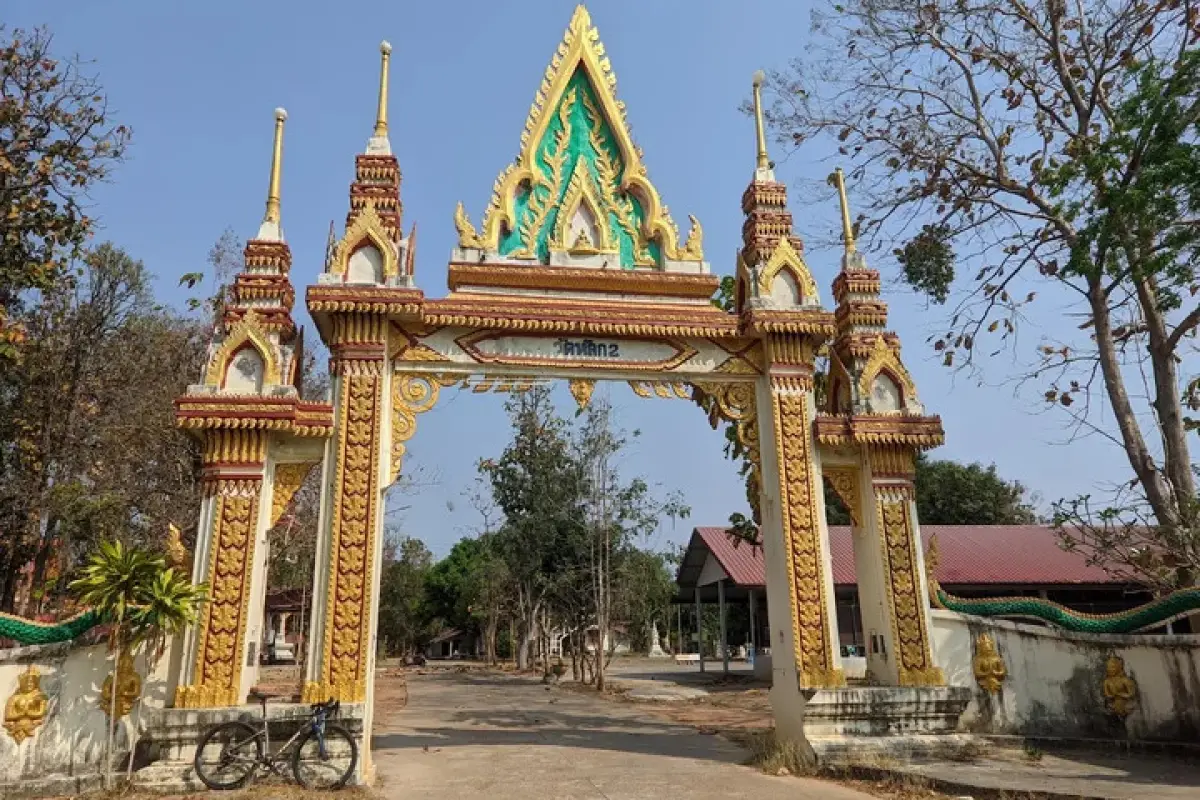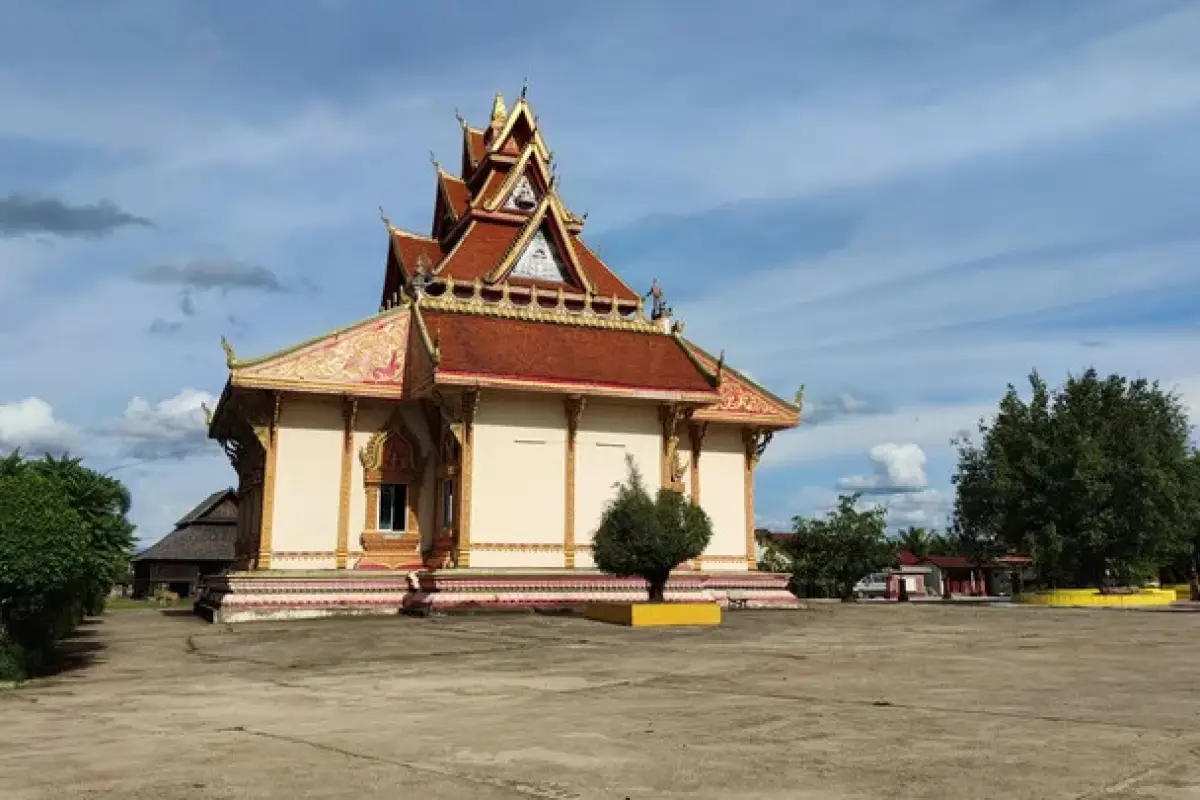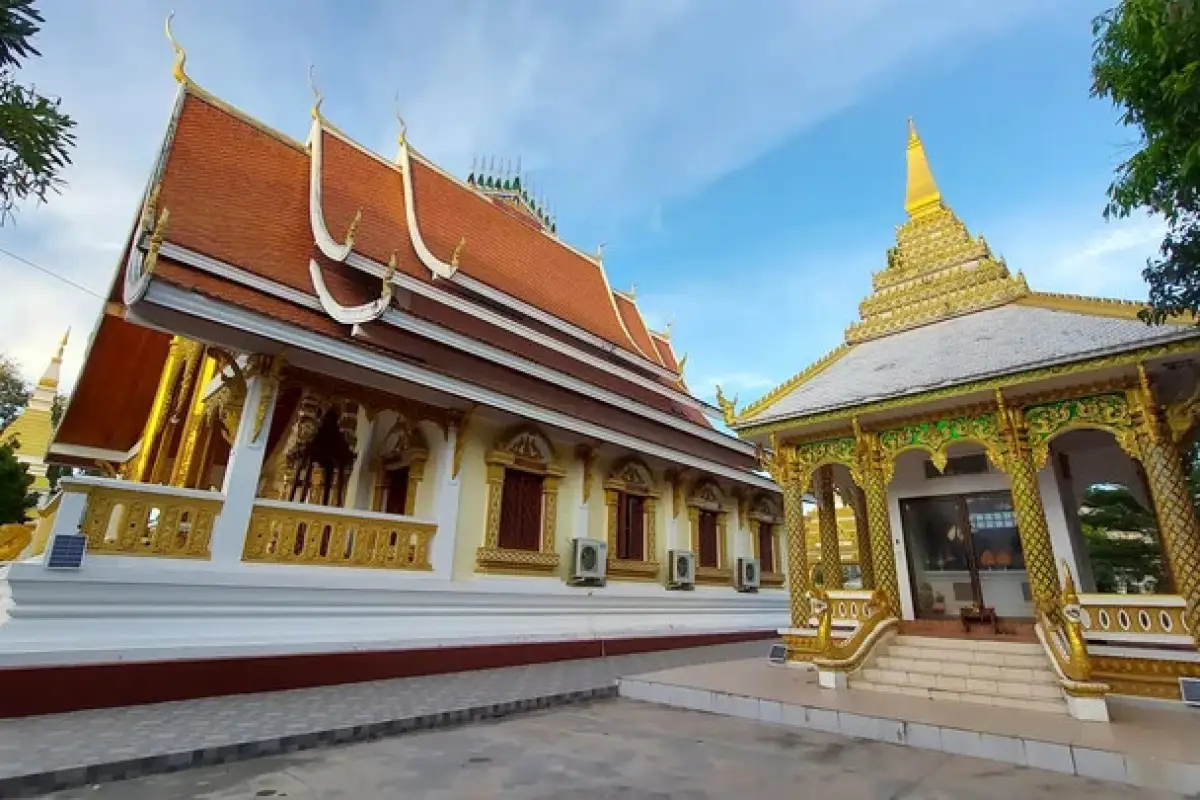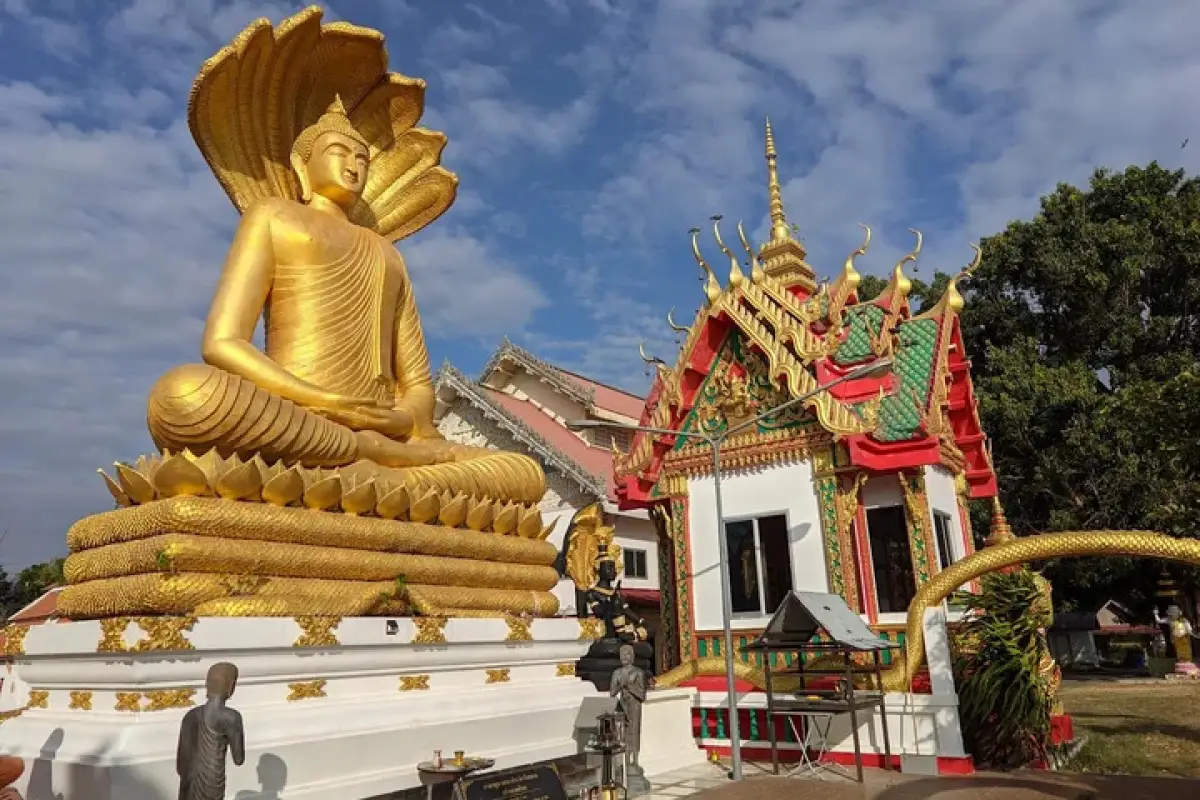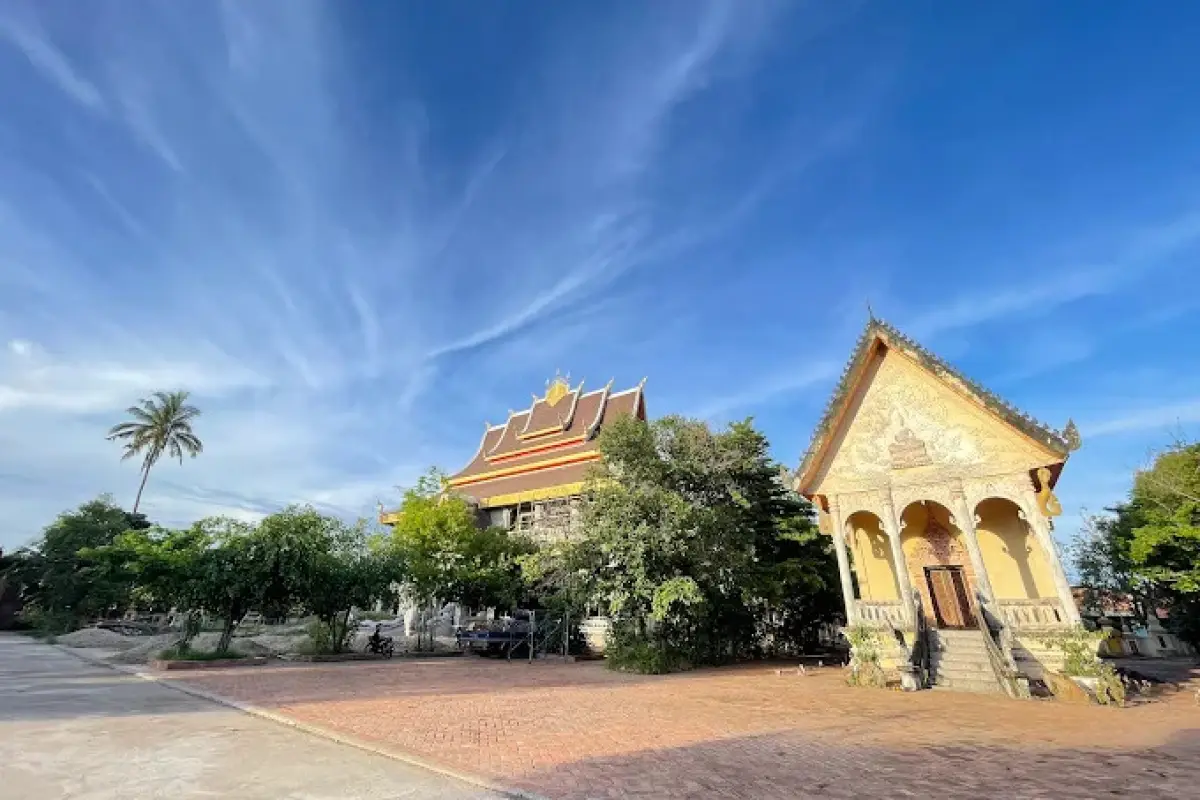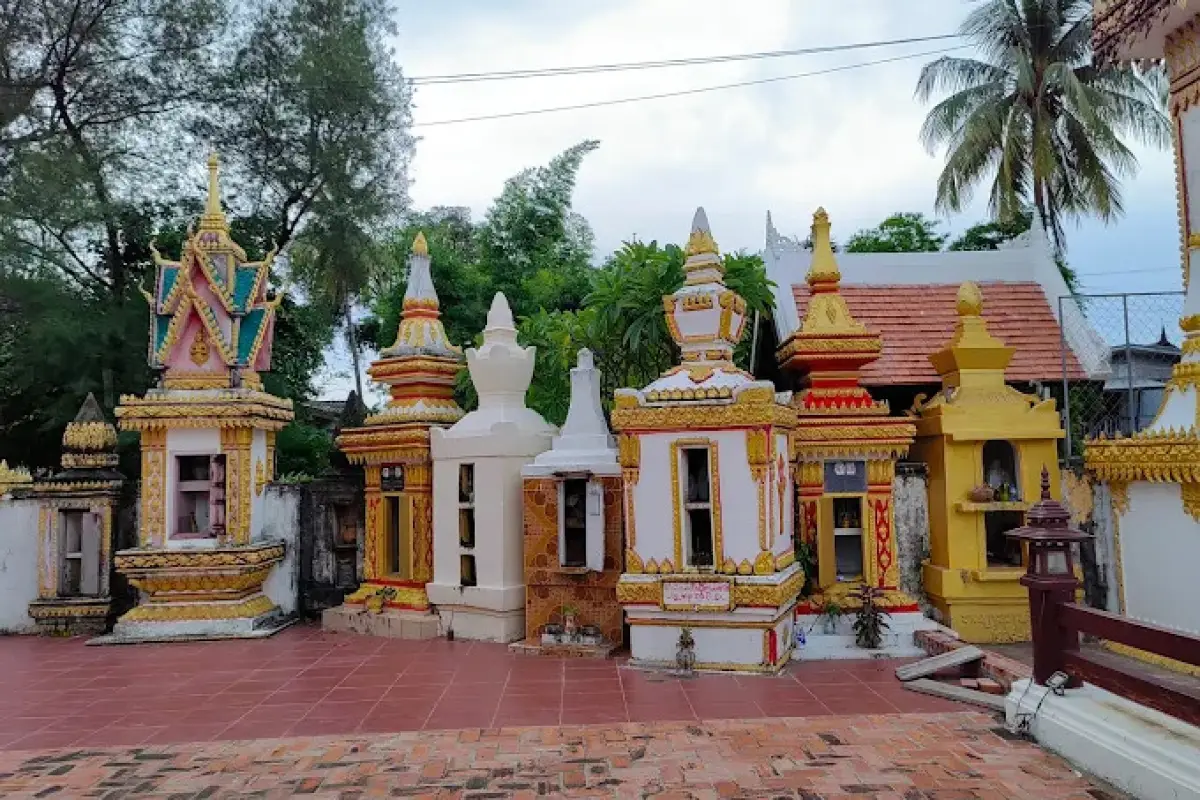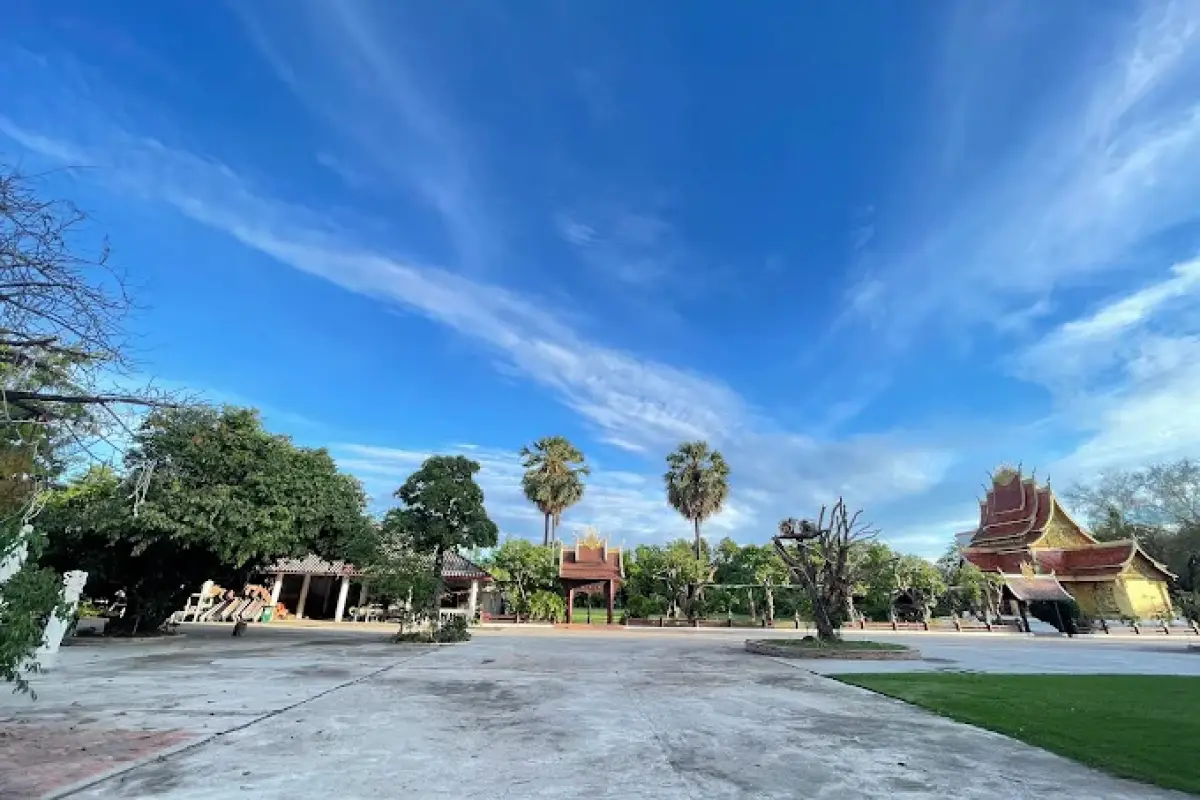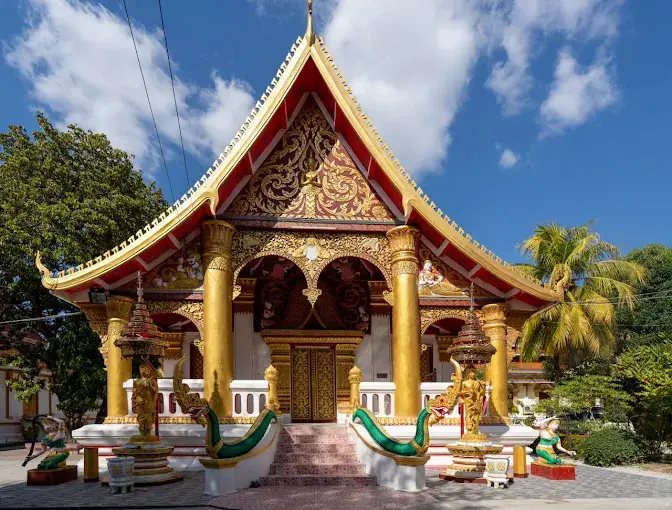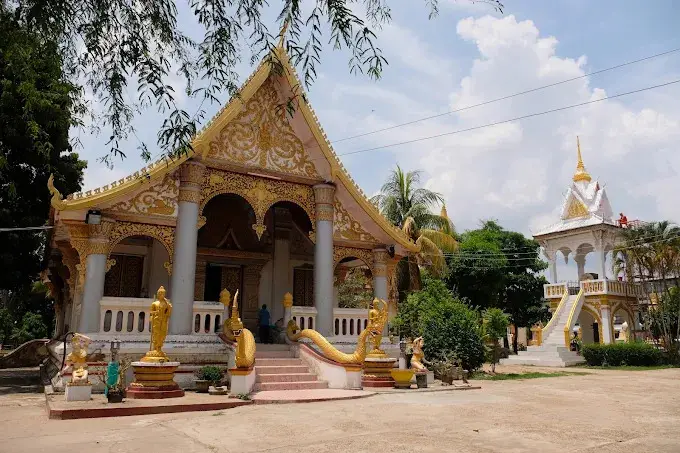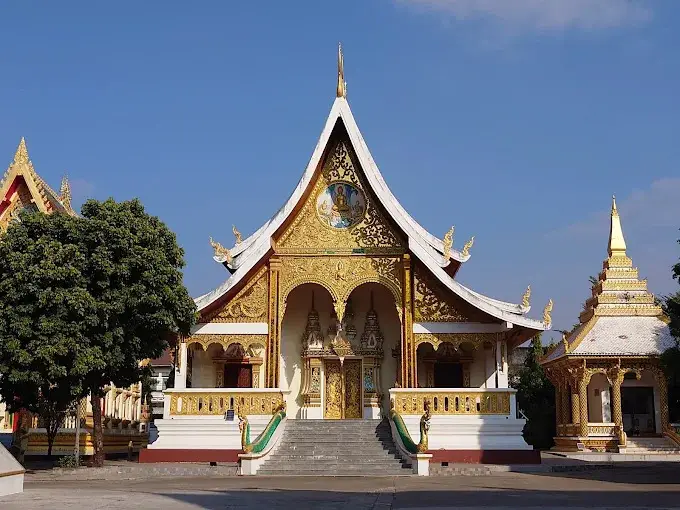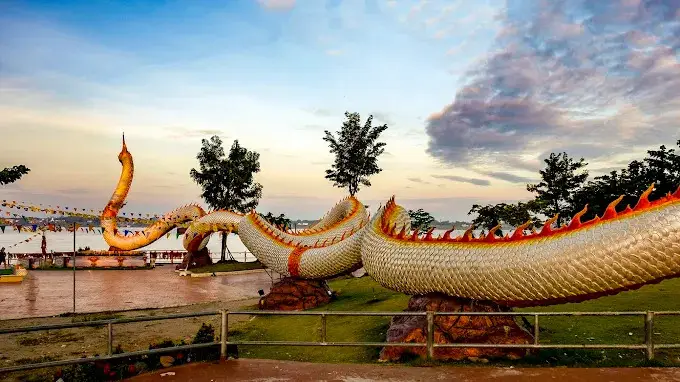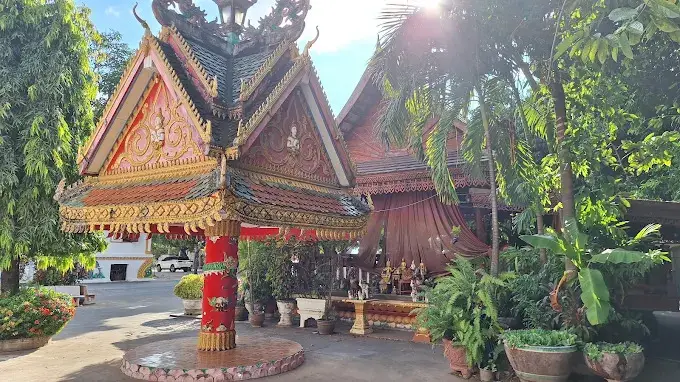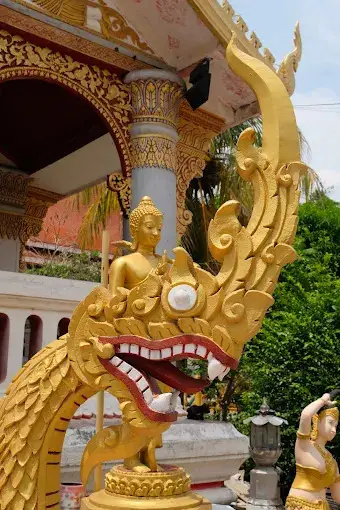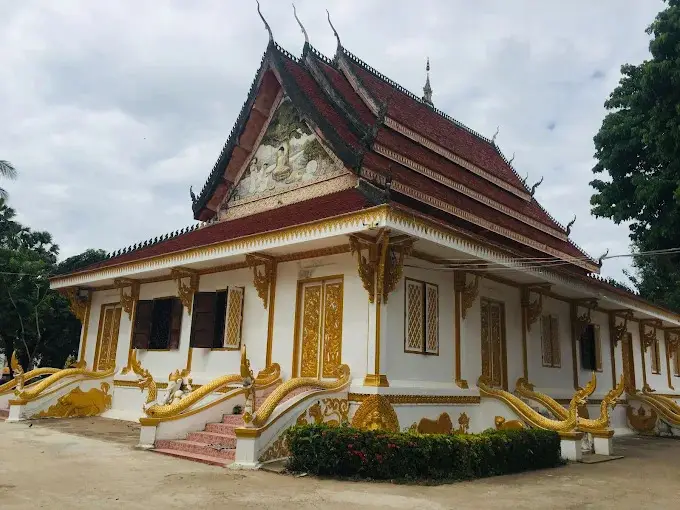
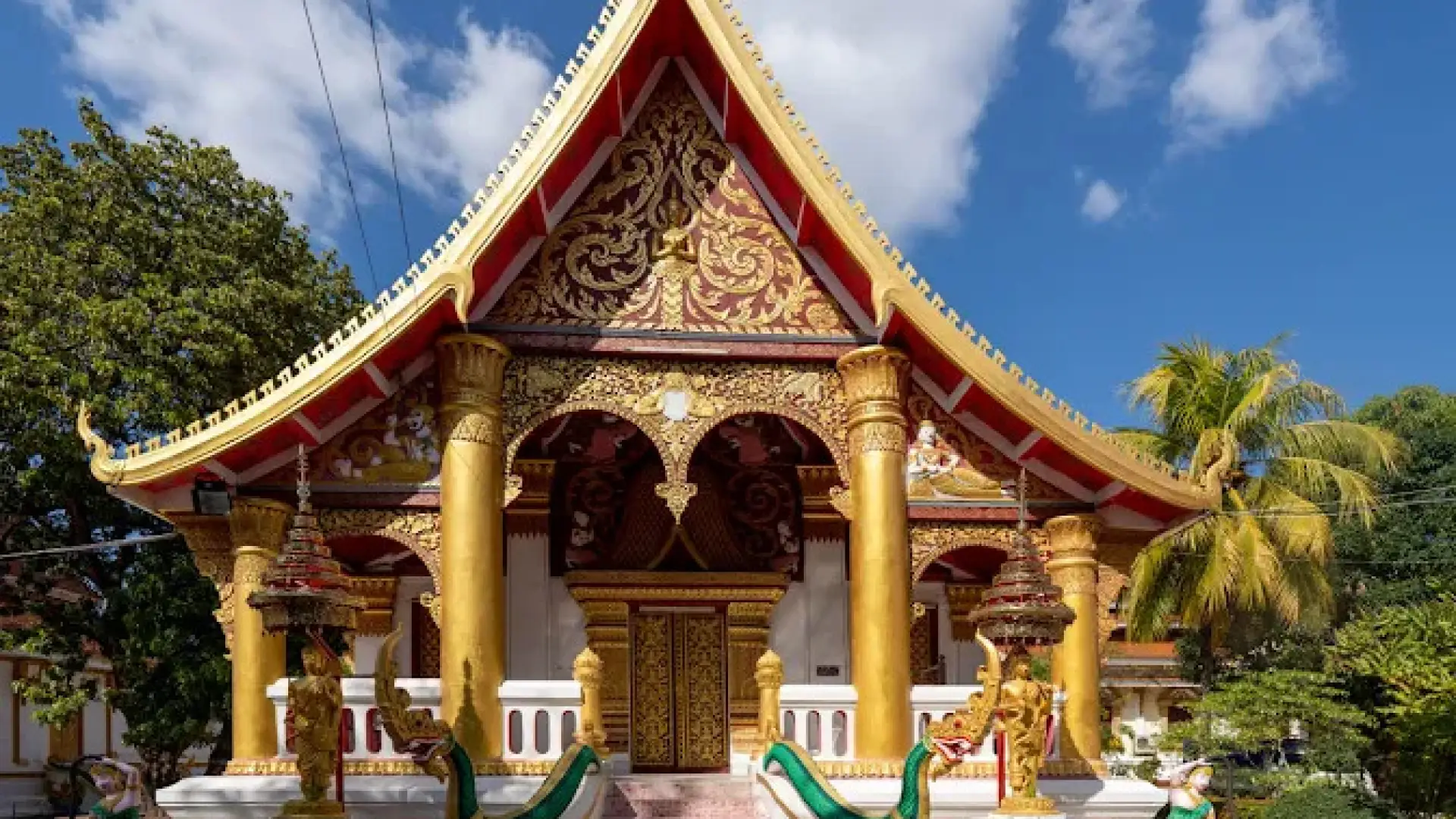
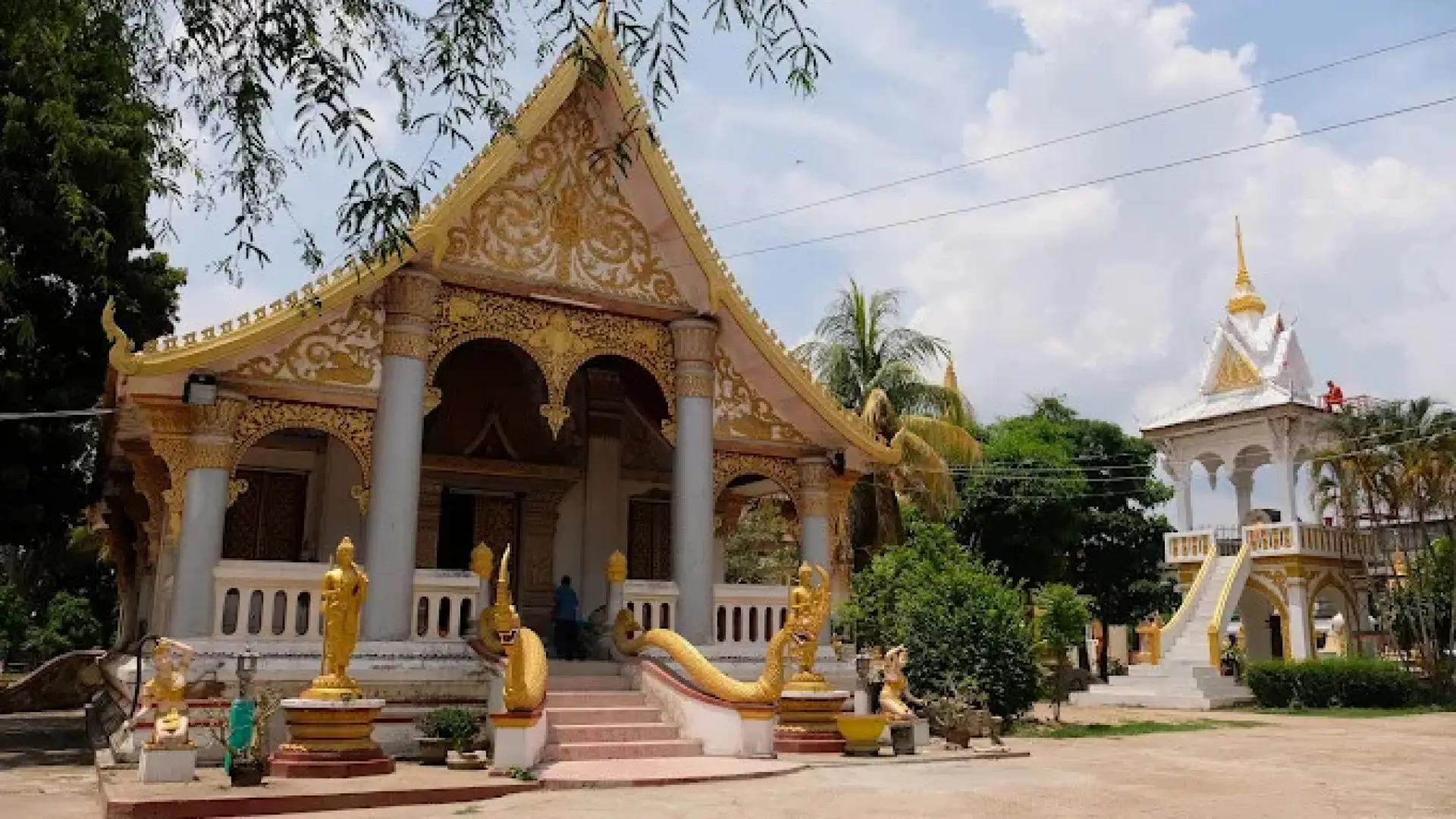
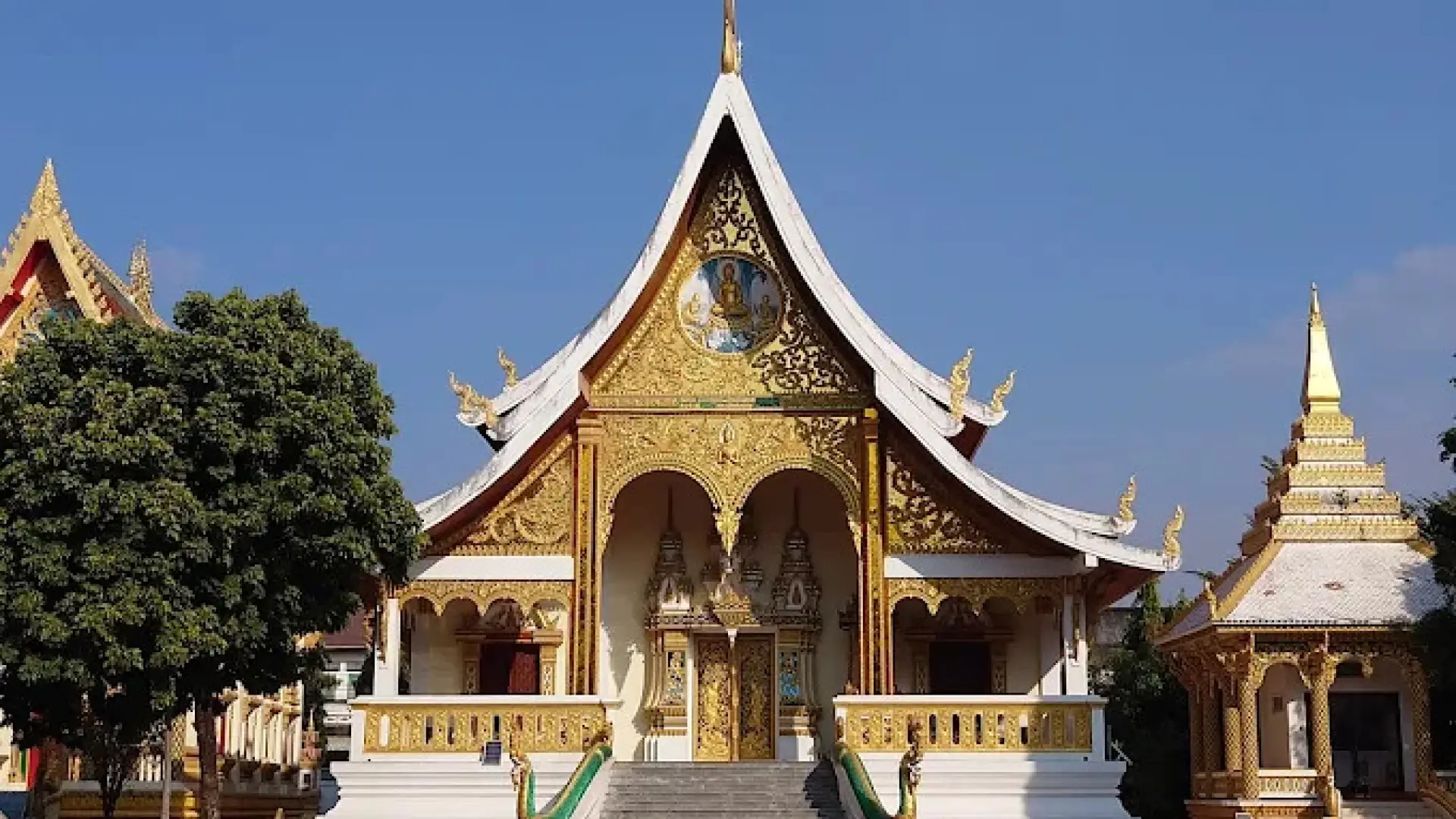
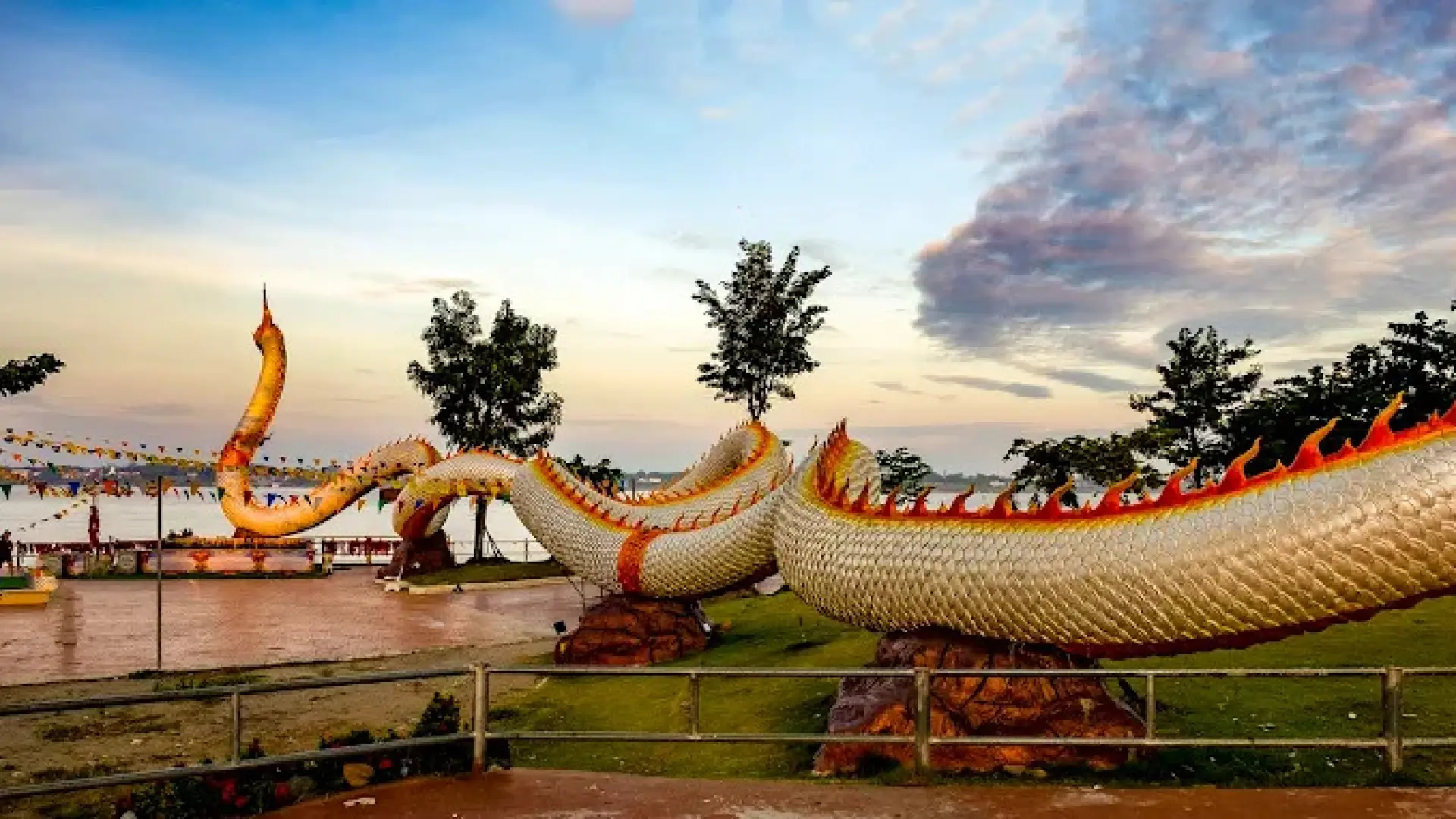
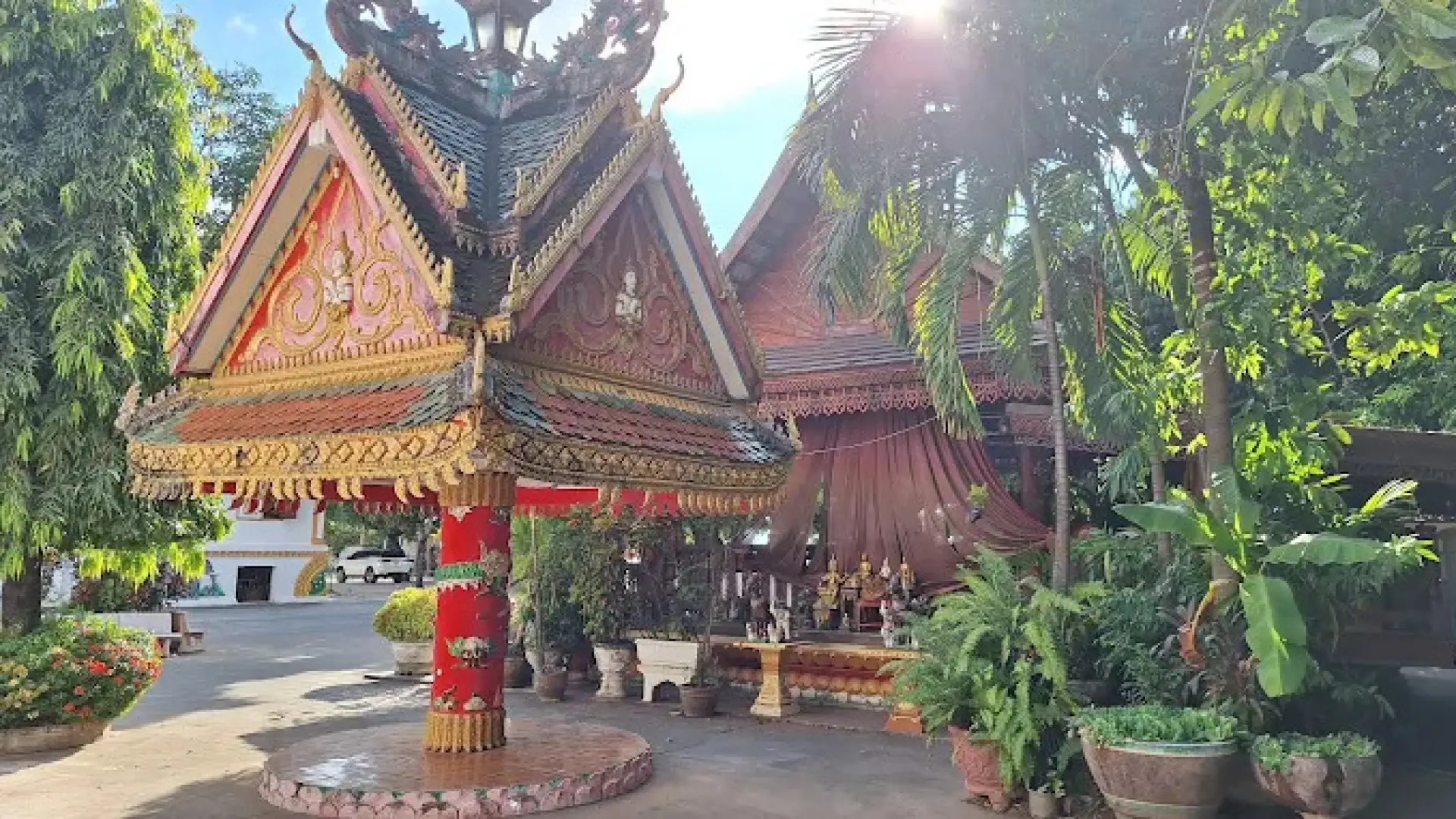
Wat Saynhaphum, also known as Wat Sainyaphum or Wat Xayaphoum, is one of the oldest, largest, and most important Buddhist temples in Savannakhet Province. Situated along the banks of the Mekong River in the historic center of Kaysone Phomvihane City, the temple has been a spiritual and cultural landmark for nearly five centuries. Originally established in 1542 during the early development of Savannakhet, it remains one of the province's most revered religious sites and a symbol of southern Lao Buddhism.
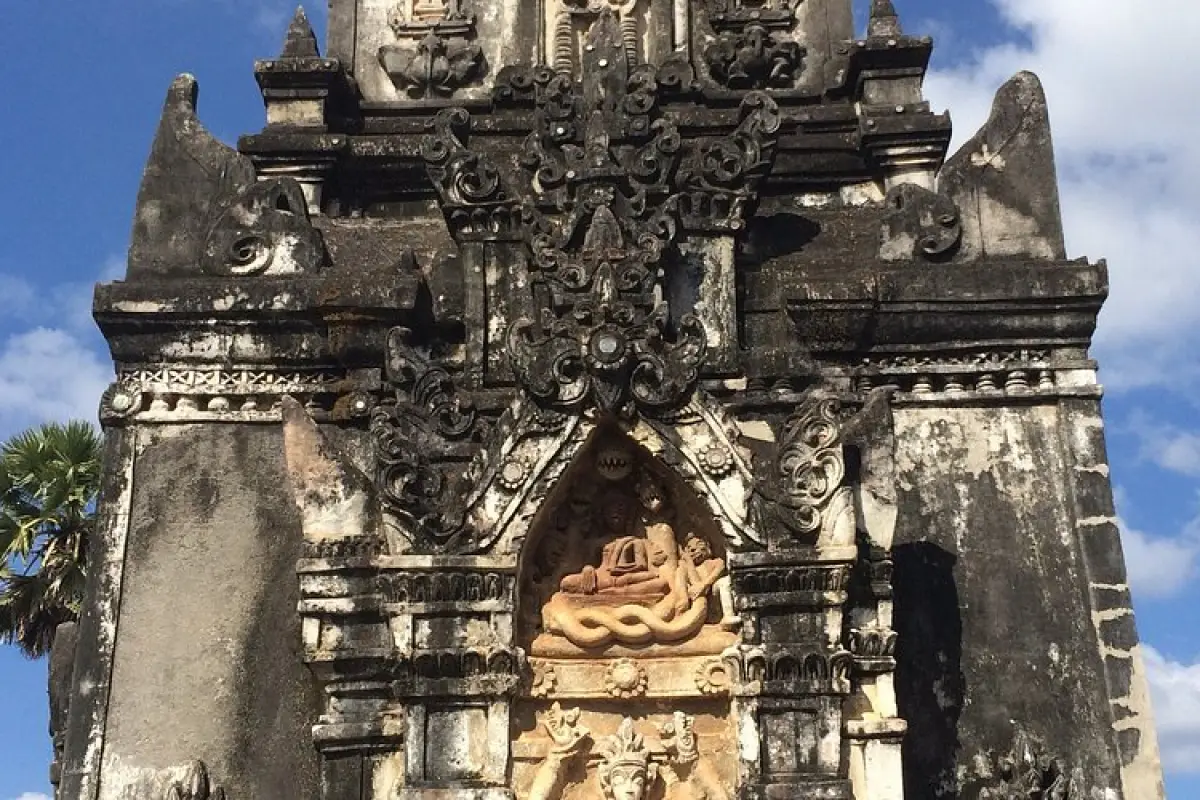
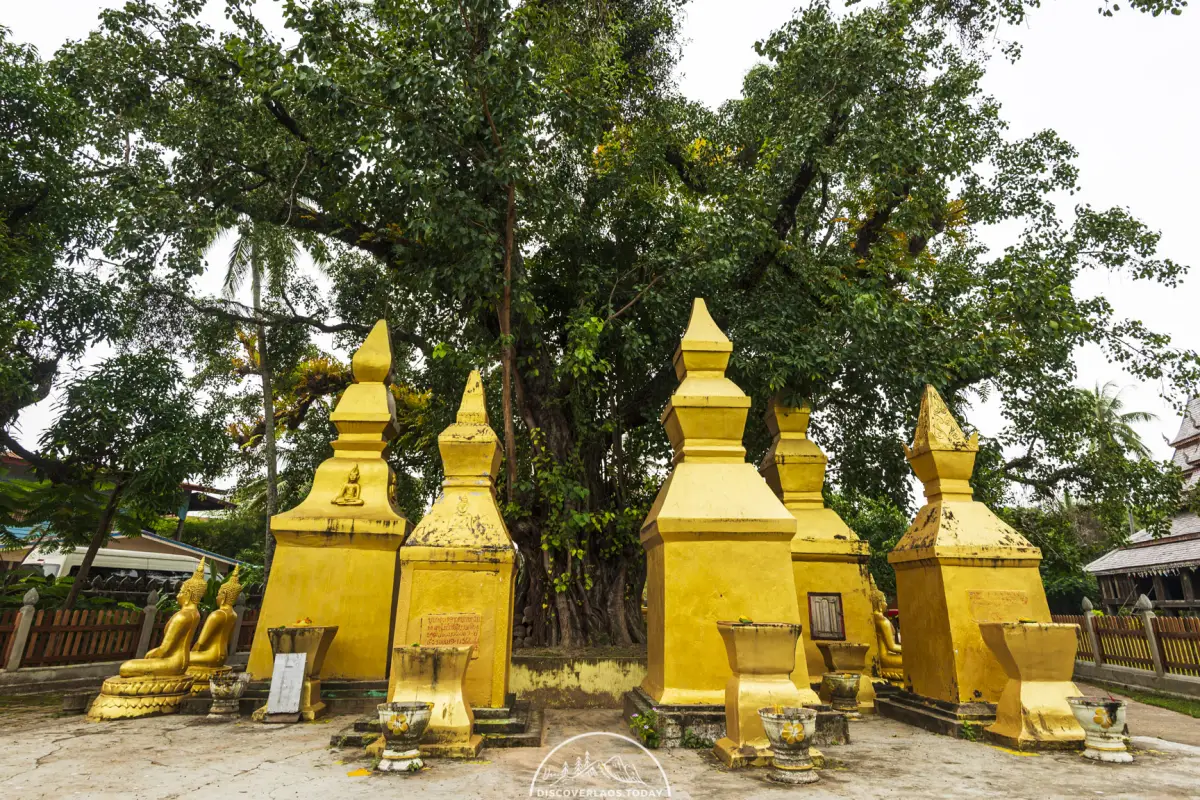
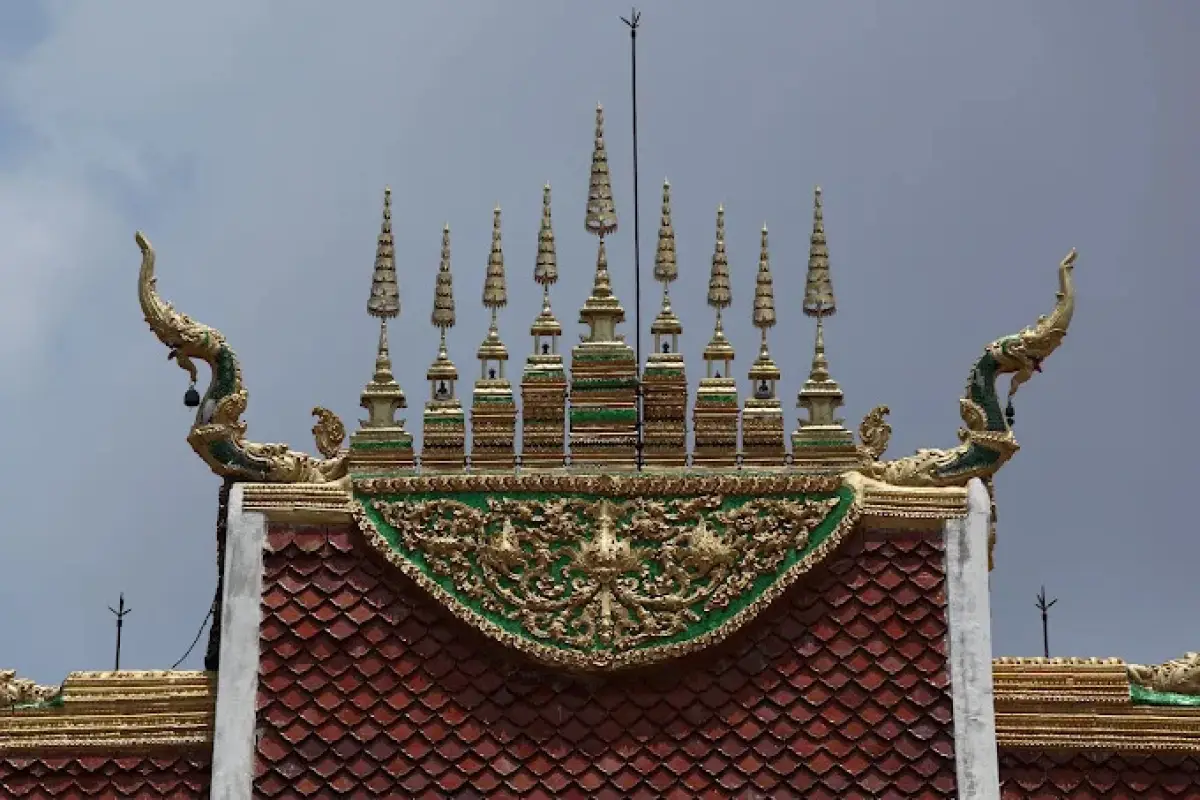
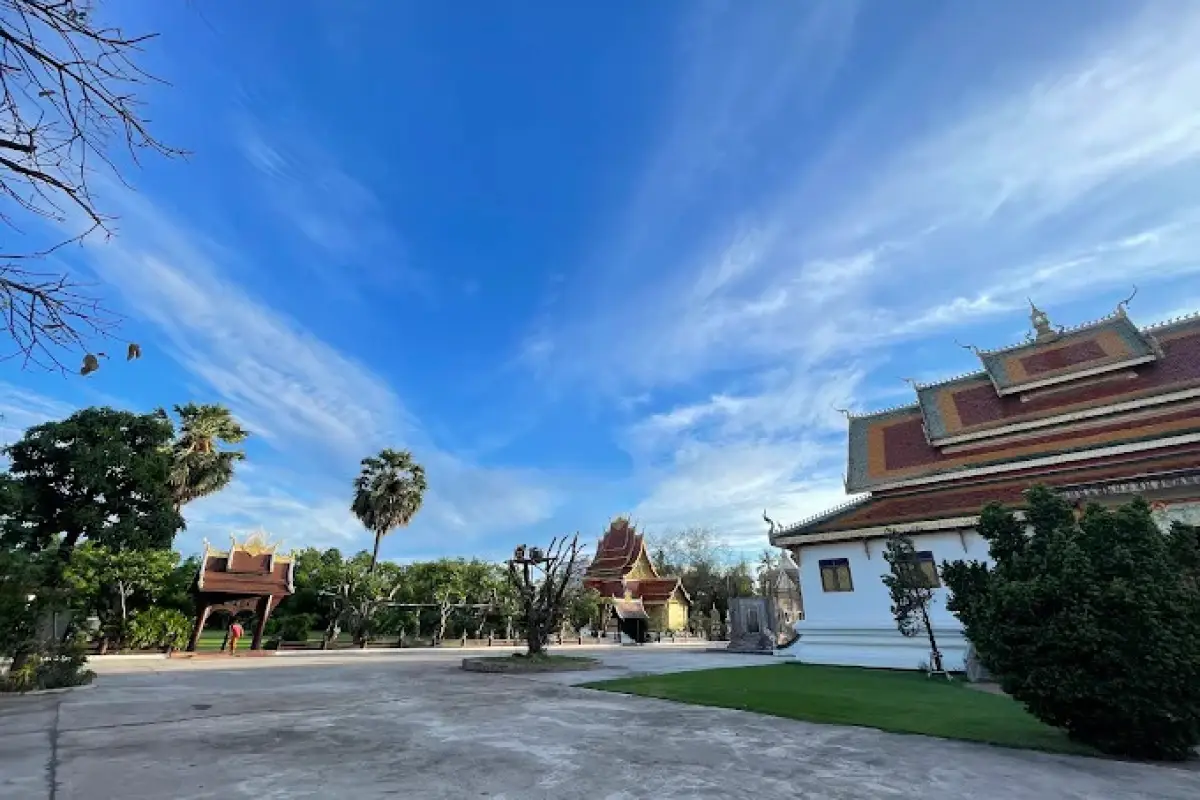
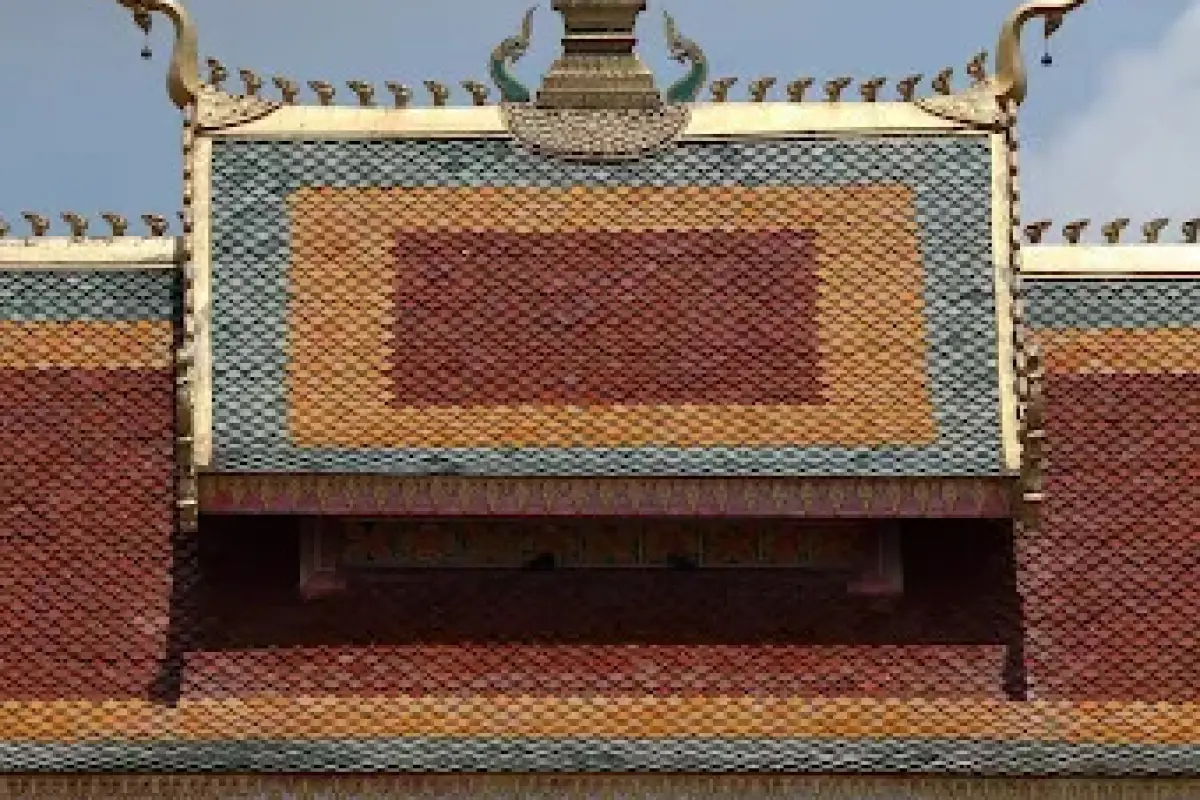
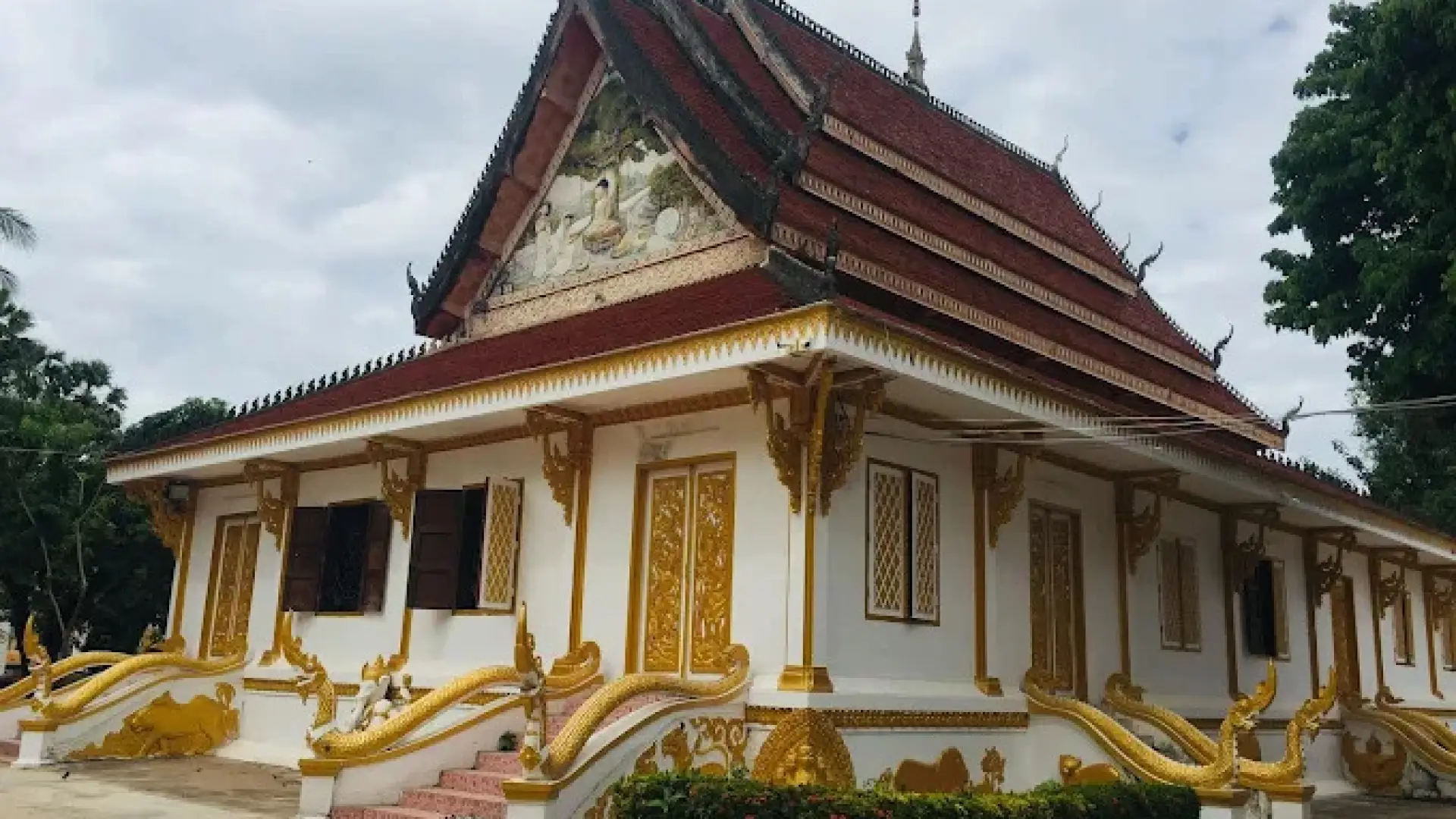
The temple is renowned for its traditional Savannakhet architectural style, featuring an elegant ordination hall (sim), beautifully decorated roofs, intricate carvings, and religious artwork that reflect the artistic heritage of Laos. Over the centuries, the temple has undergone several renovations while preserving its historical character and spiritual significance. The grounds contain monks' residences, meditation areas, sacred shrines, and mature trees that create a peaceful atmosphere for worship and reflection.
As one of the principal Buddhist centers in southern Laos, Wat Saynhaphum serves as an active monastery where monks study Buddhist teachings, conduct daily prayers, and participate in community activities. Visitors often encounter monks chanting, meditating, or teaching novice monks, providing a glimpse into everyday religious life in Laos. The temple has long played an important role in preserving local traditions and promoting Buddhist education throughout the region.
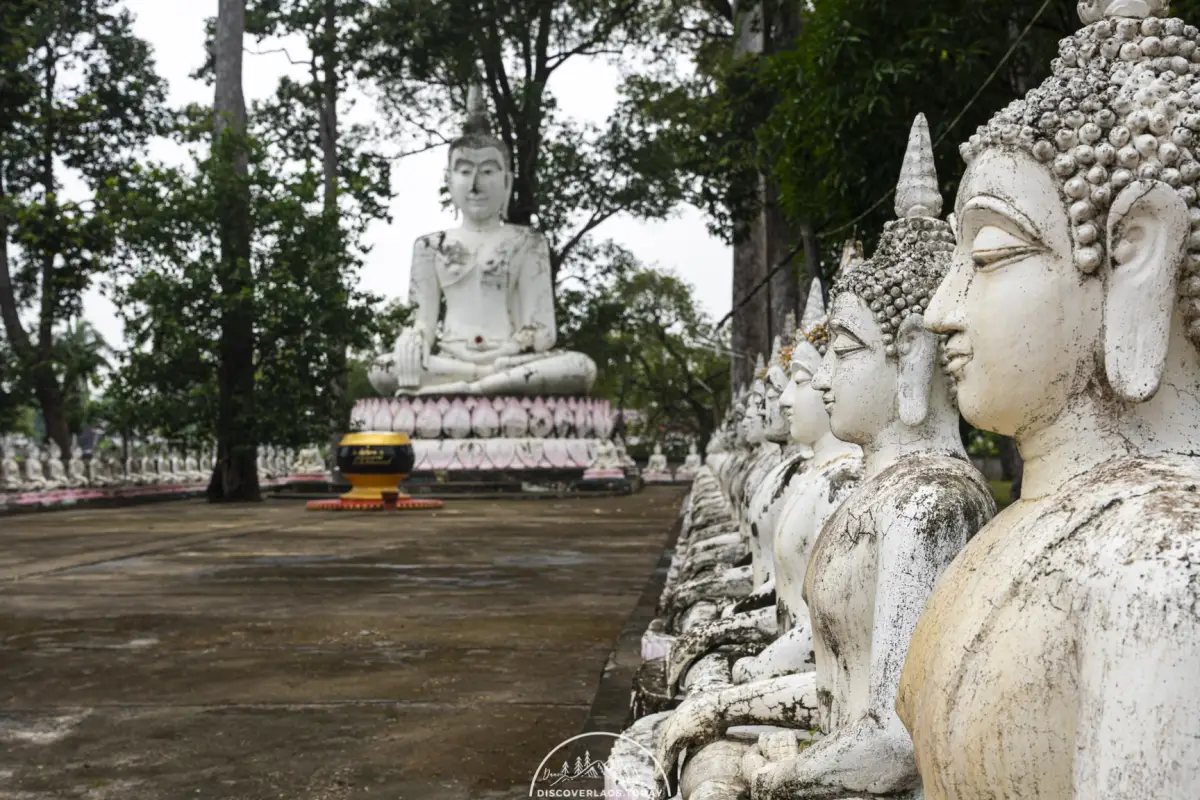
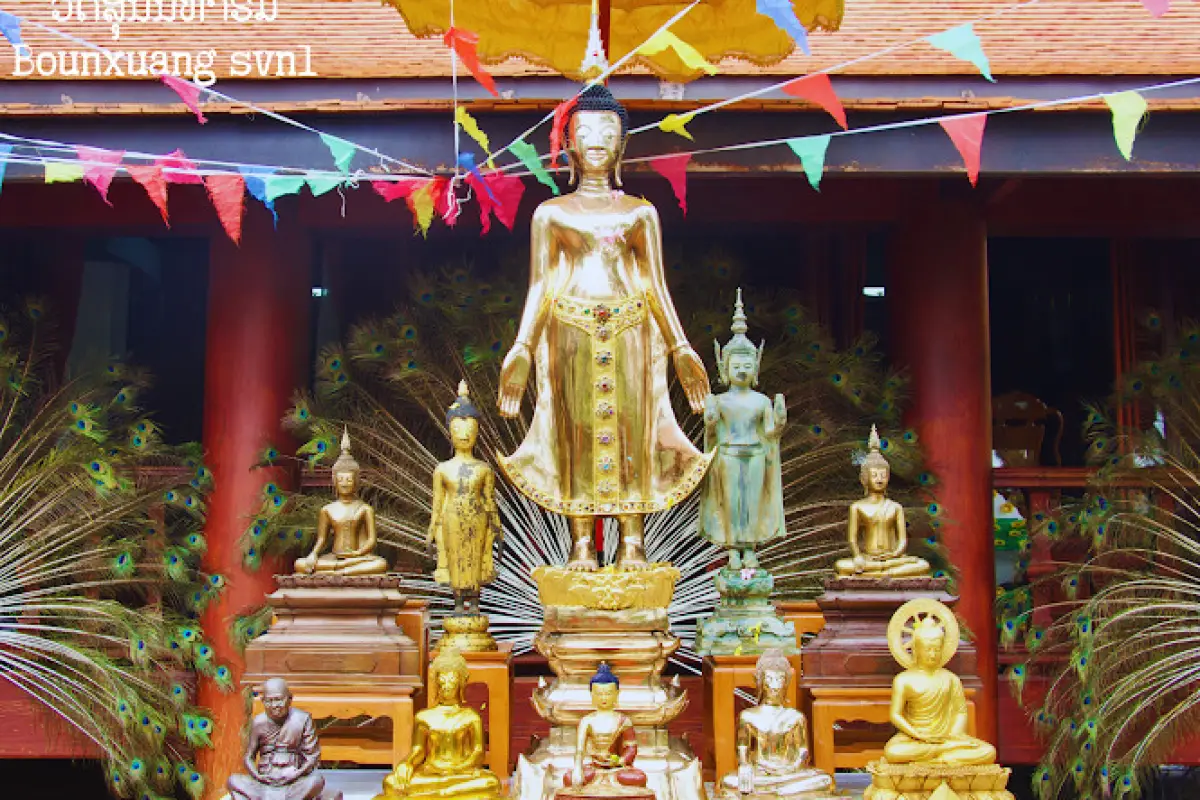
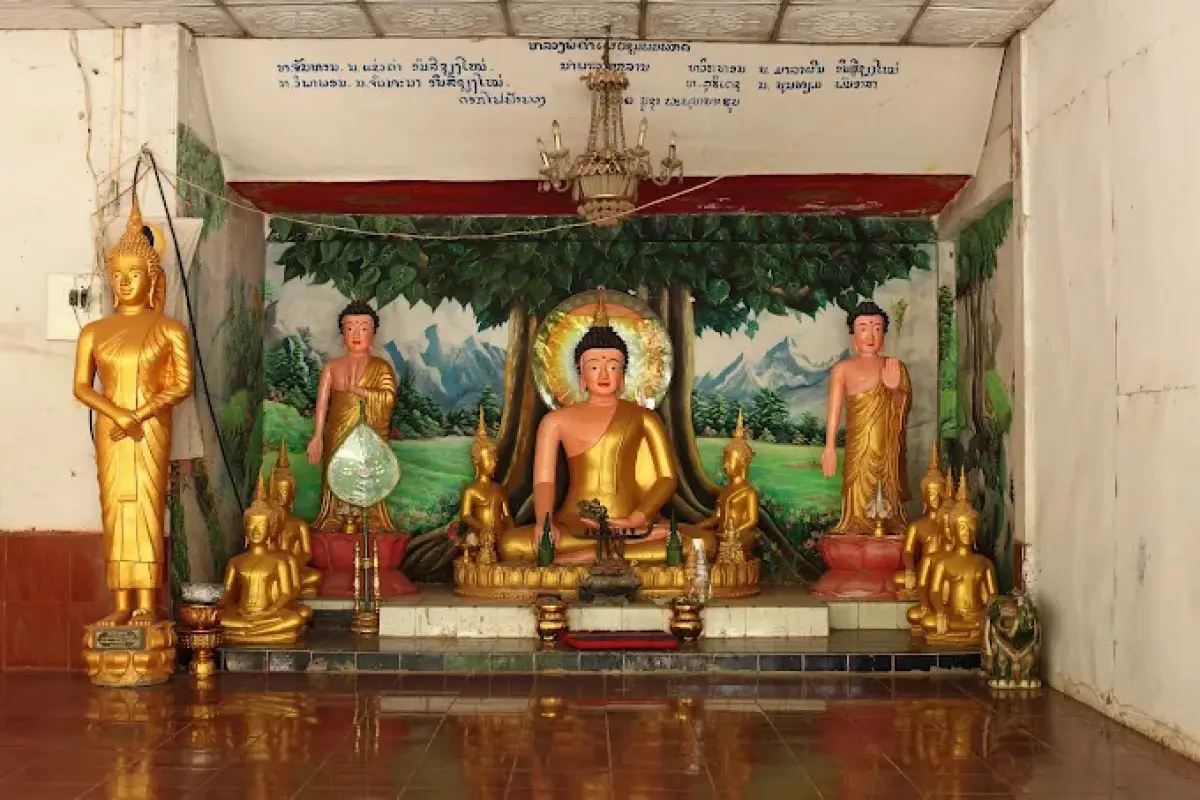
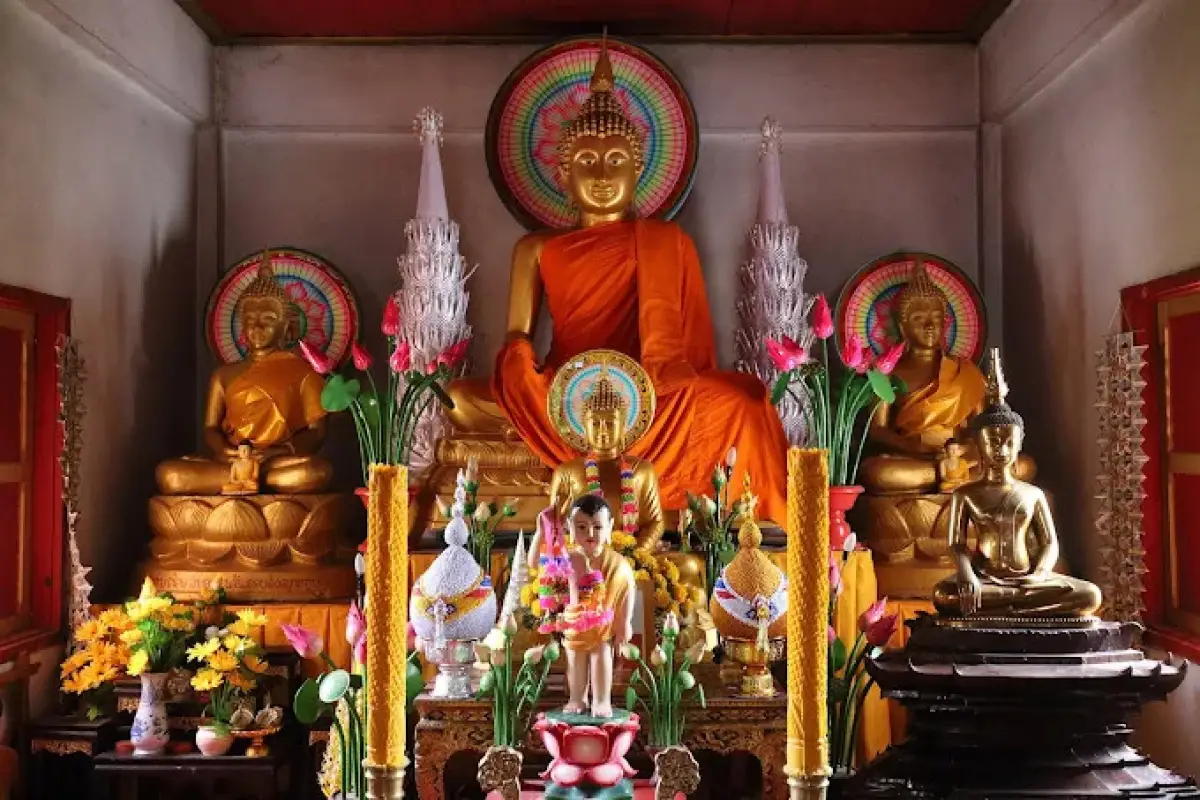
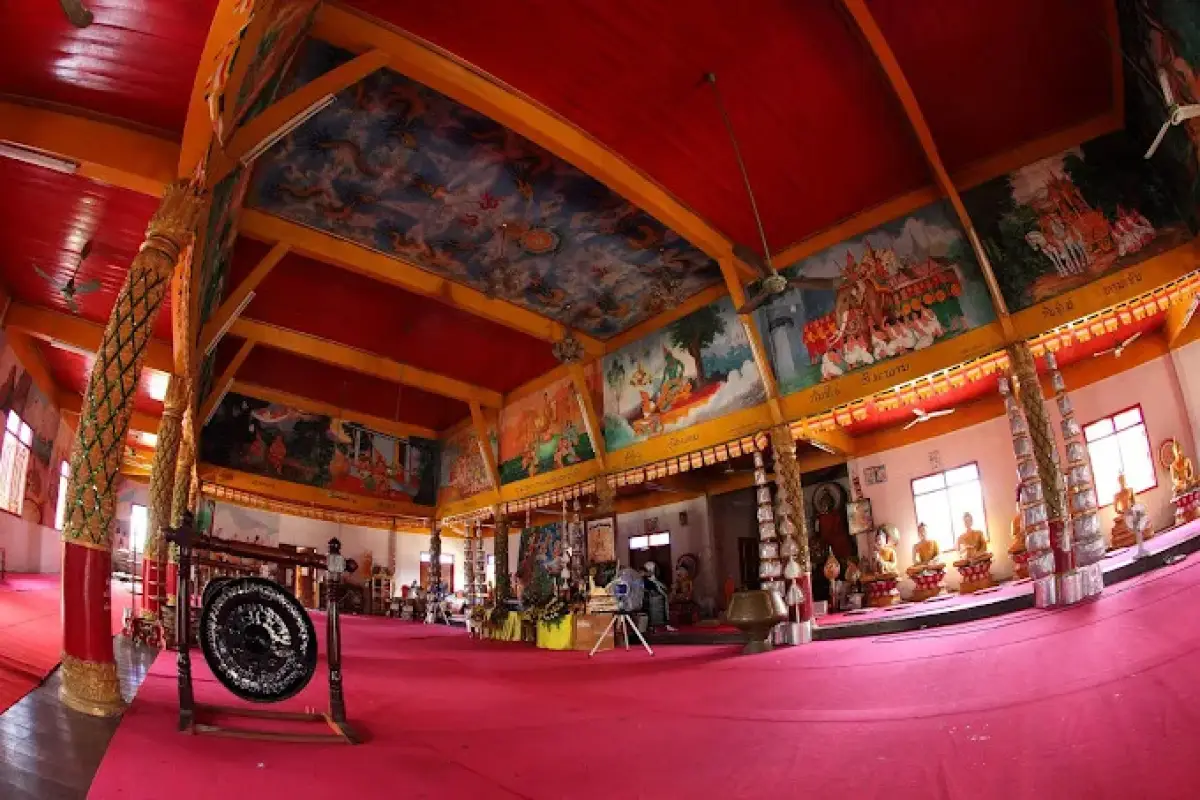
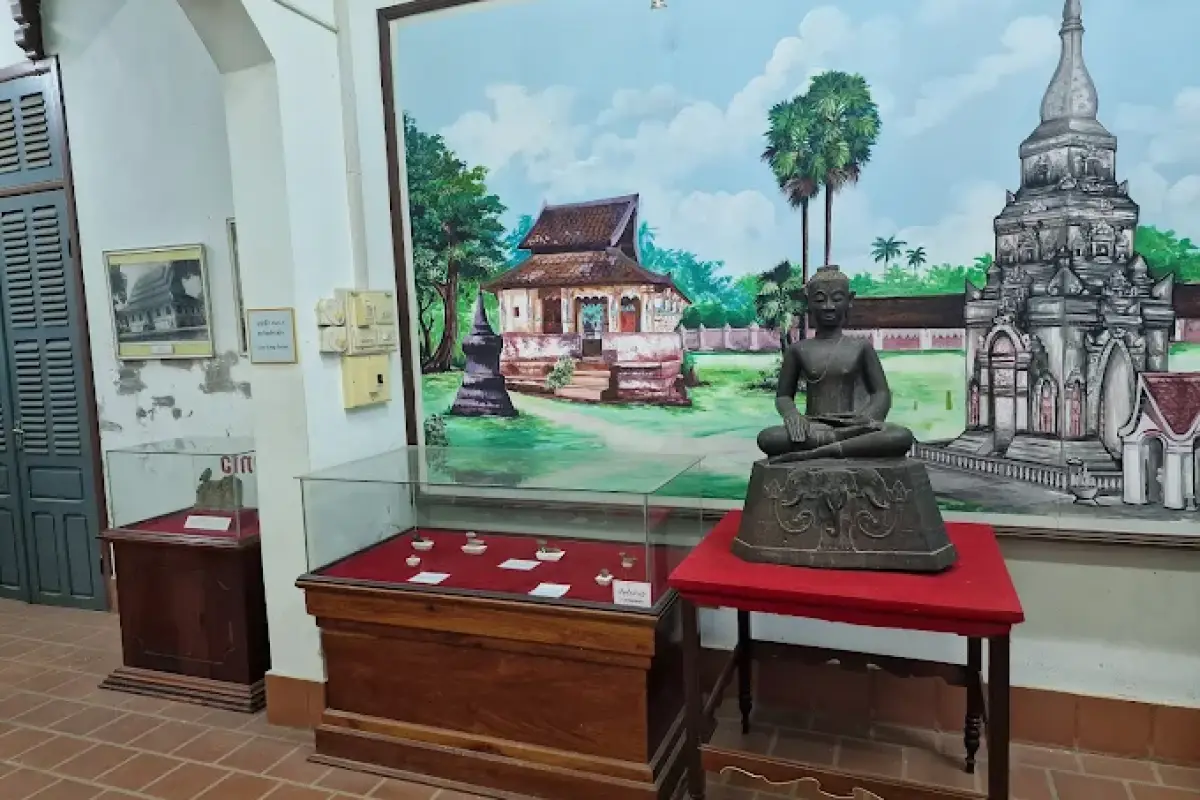
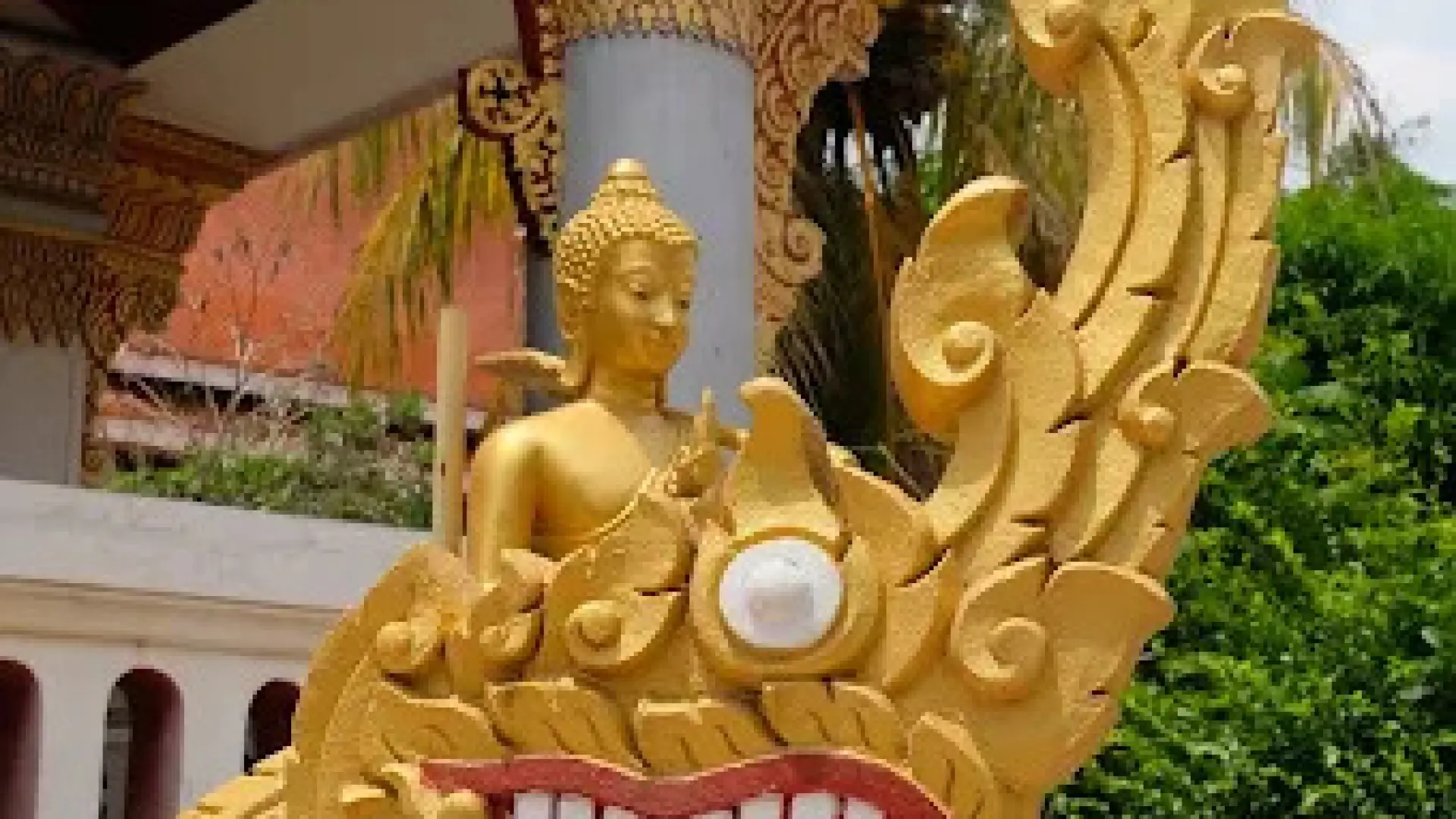
One of the temple's most notable features is its collection of Buddha statues and religious artwork. According to local accounts, the temple houses an ancient bronze Buddha image believed to be among the oldest in Laos. Visitors can also admire colorful murals depicting scenes from Buddhist teachings and the life of the Buddha. The combination of sacred art, traditional architecture, and riverside scenery makes the temple one of the most photogenic landmarks in Savannakhet.
The temple becomes especially vibrant during major Buddhist festivals such as Pi Mai Lao (Lao New Year), Boun Khao Phansa, and Boun Ok Phansa. During these celebrations, local residents gather to make merit, offer food to monks, participate in processions, and receive blessings. These events provide visitors with an excellent opportunity to experience authentic Lao culture and religious traditions firsthand.
Located near the Mekong River and Savannakhet's historic quarter, Wat Saynhaphum is often included in city sightseeing itineraries alongside colonial architecture, museums, and riverside attractions. Its historical significance, spiritual atmosphere, and beautiful setting make it one of the must-visit cultural attractions in southern Laos.
Opening Hours
- Daily: 08:00 AM – 06:00 PM
- Best time to visit:
- Early morning for a peaceful atmosphere and local worship activities.
- Late afternoon for cooler temperatures and beautiful Mekong River views.
- During major Buddhist festivals for cultural experiences.
Highlights
- One of the oldest temples in Savannakhet, dating back to 1542.
- Located on the banks of the Mekong River.
- Traditional Savannakhet-style Buddhist architecture.
- Historic ordination hall and sacred Buddha statues.
- Active monastery and Buddhist learning center.
- Beautiful murals and religious artwork.
- Peaceful temple gardens and century-old trees.
- Important venue for Lao religious festivals.
- Excellent photography opportunities.
- Rich cultural and historical significance.
Visitor Tips
- Dress modestly, covering shoulders and knees.
- Remove shoes before entering temple buildings.
- Respect monks and worshippers by keeping noise levels low.
- Ask permission before photographing monks or ceremonies.
- Visit near sunset for beautiful riverside scenery.
- Combine your visit with nearby colonial buildings and local markets.
- Bring water and sun protection during the hot season.
- Allow 45–60 minutes to fully explore the temple grounds.