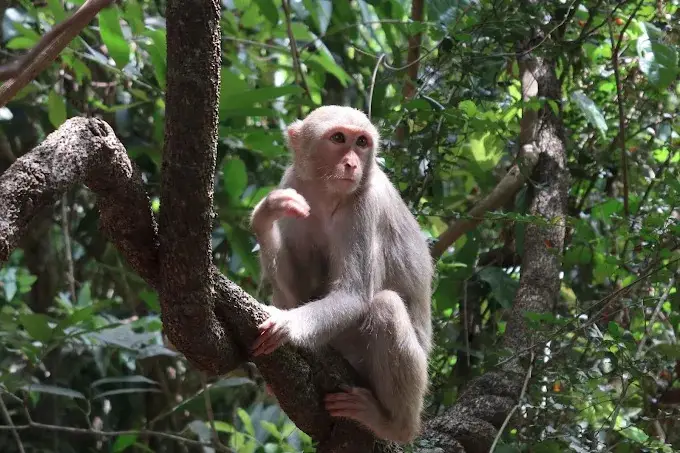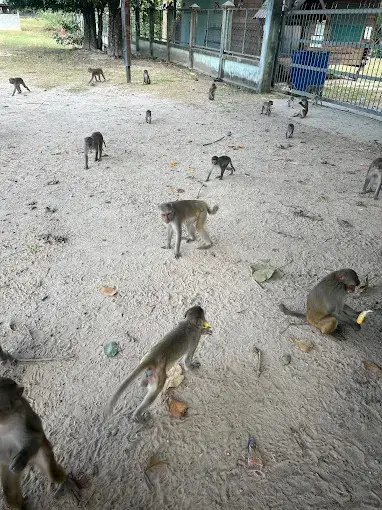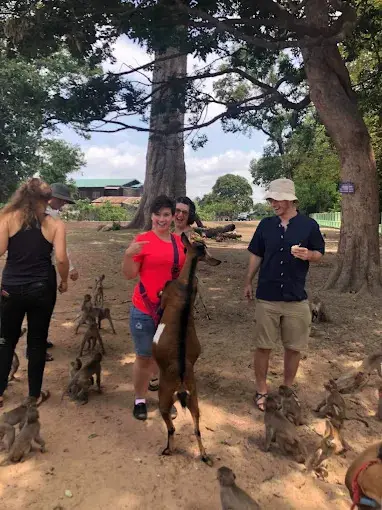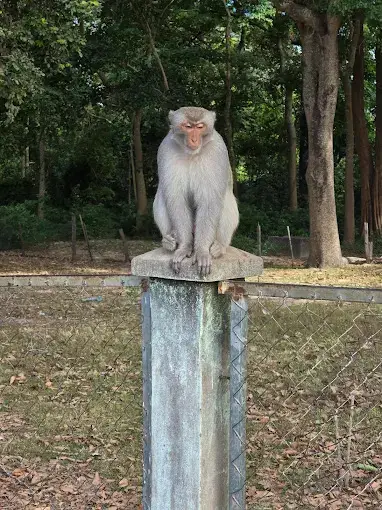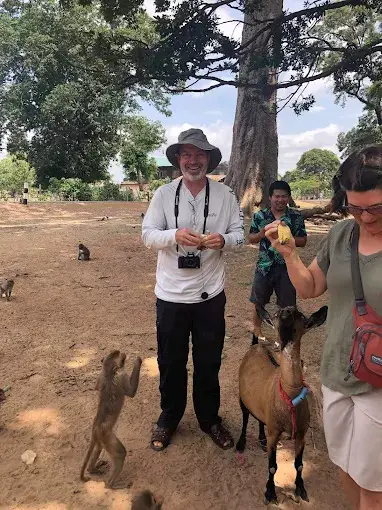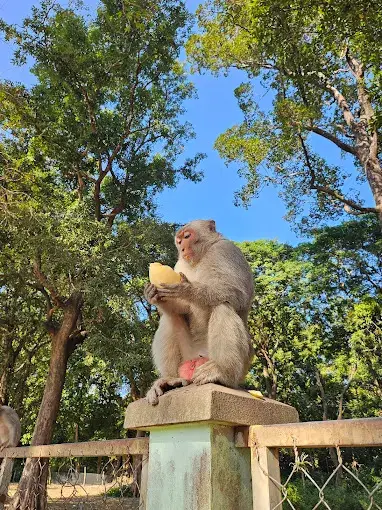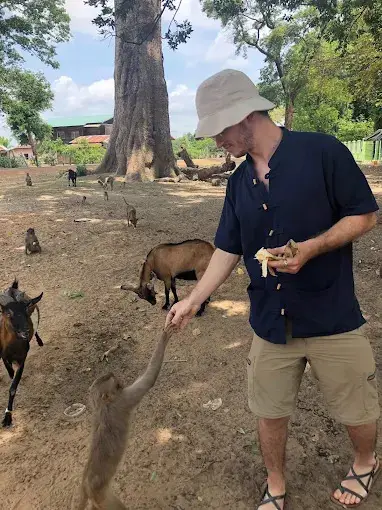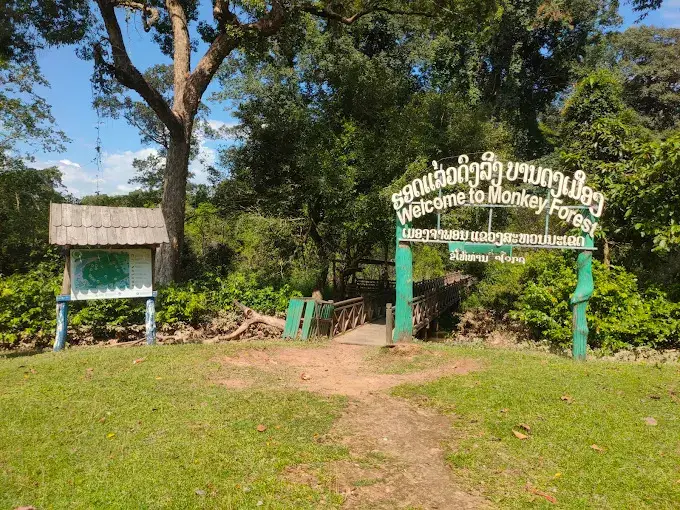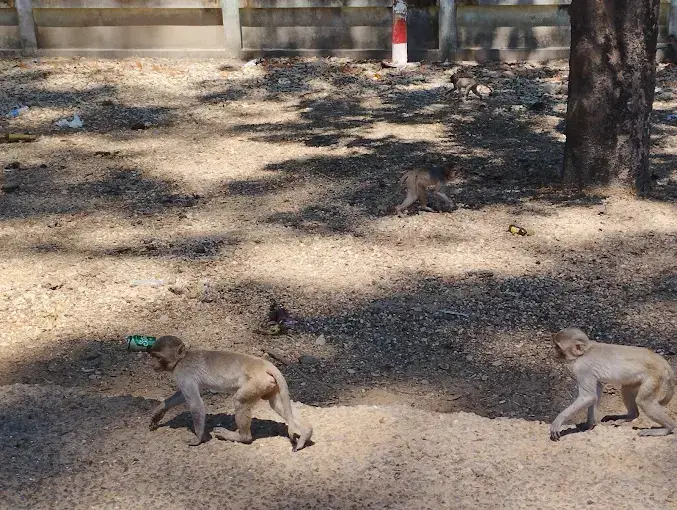
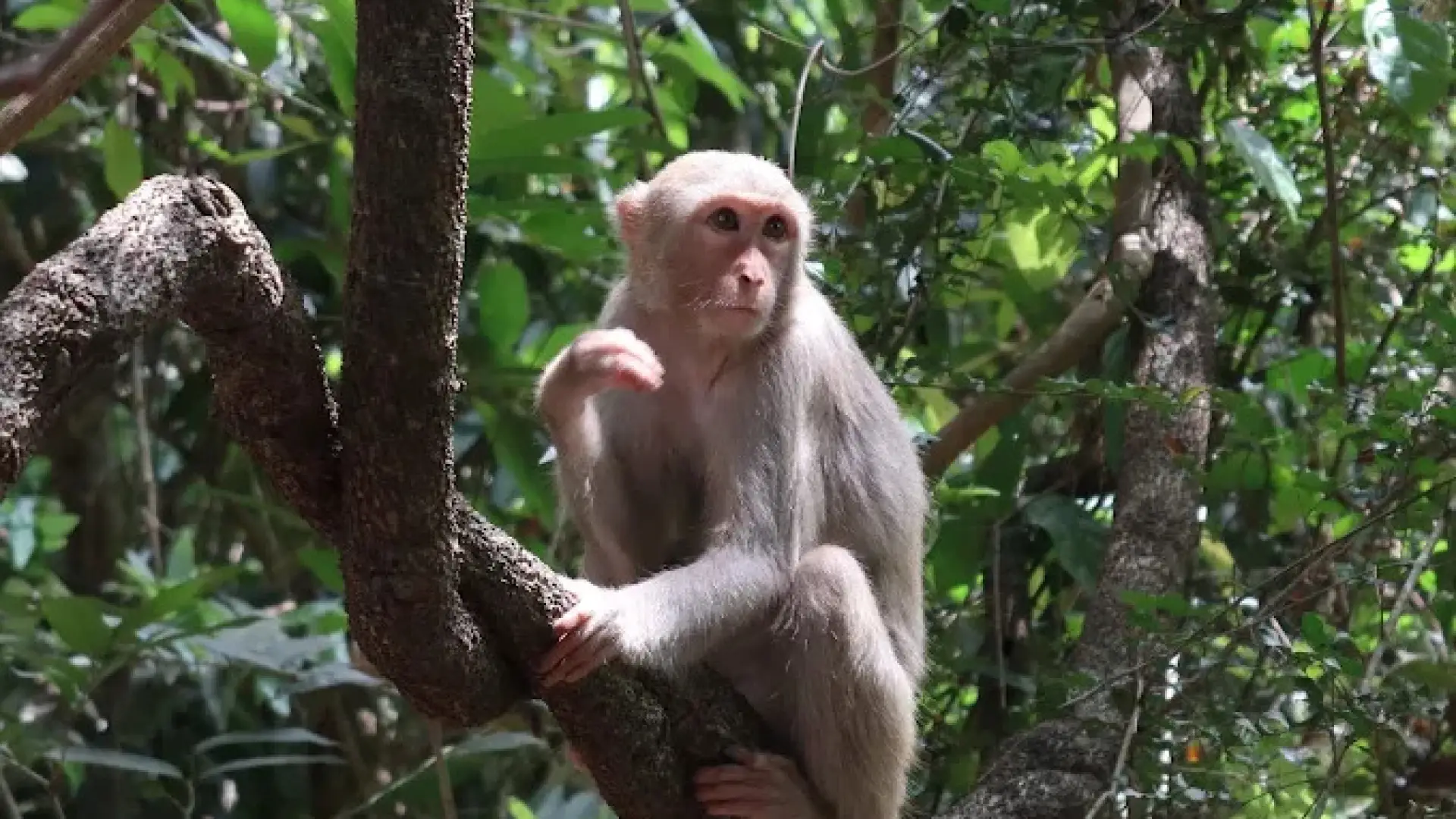
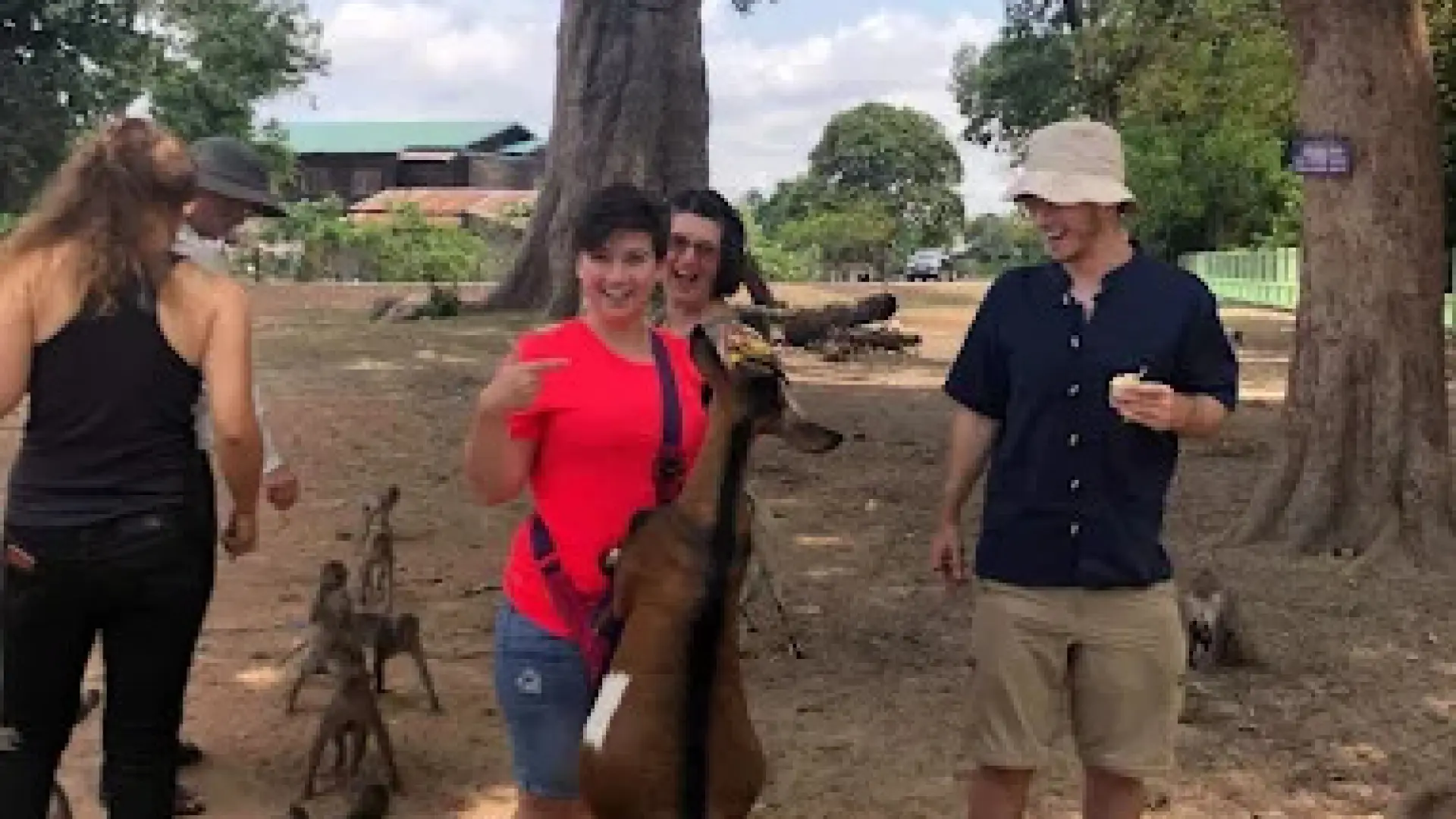
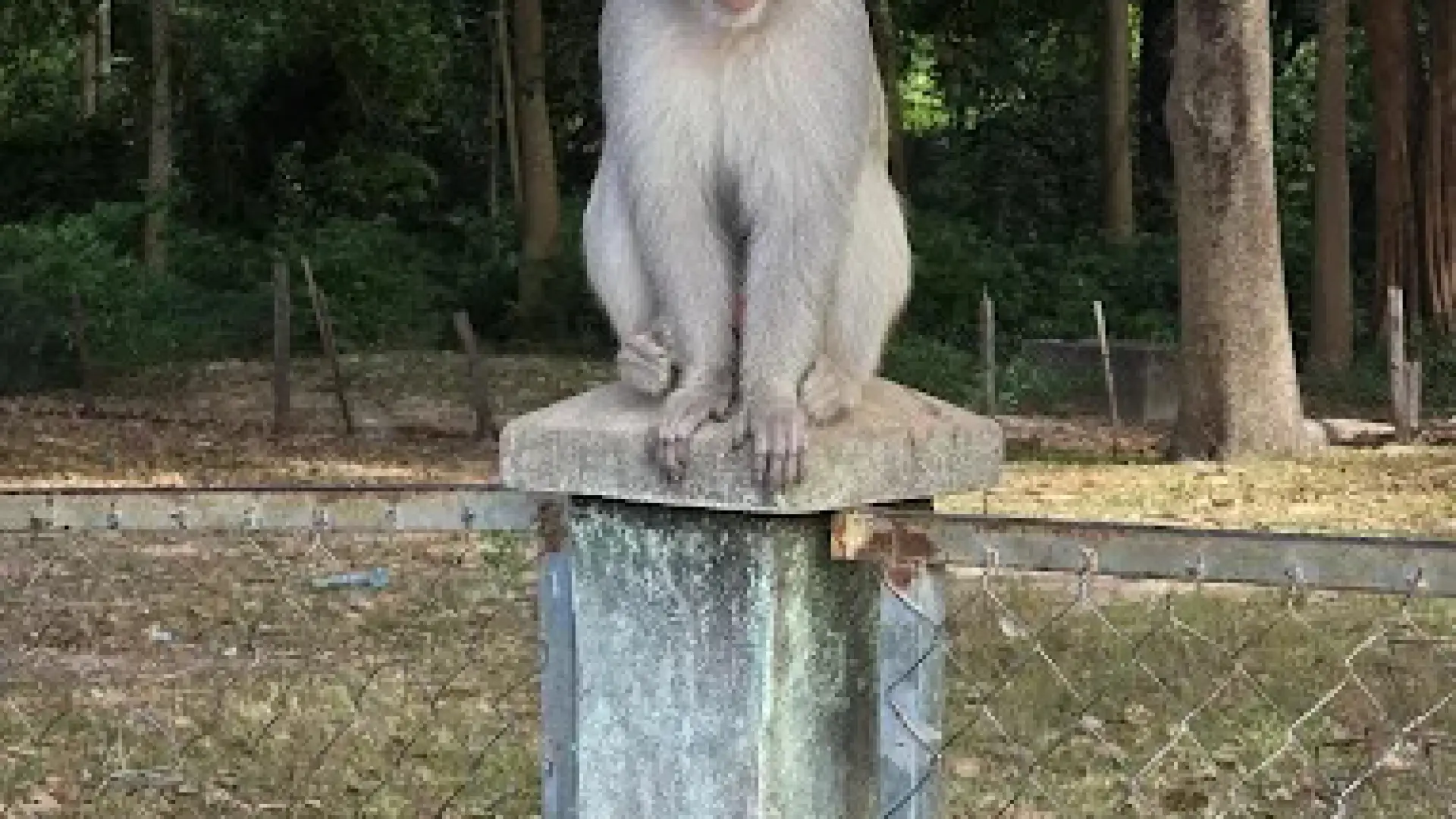
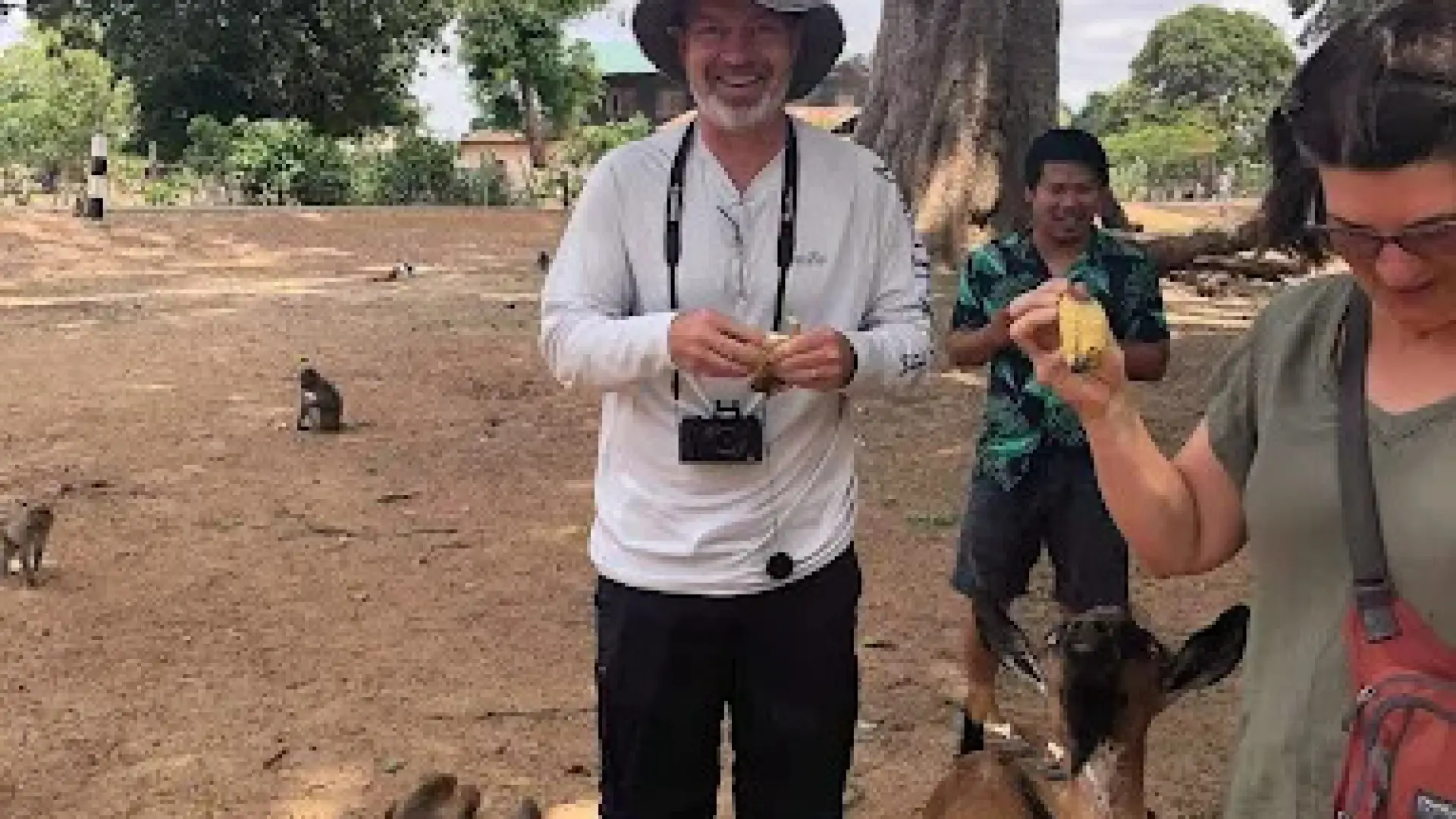
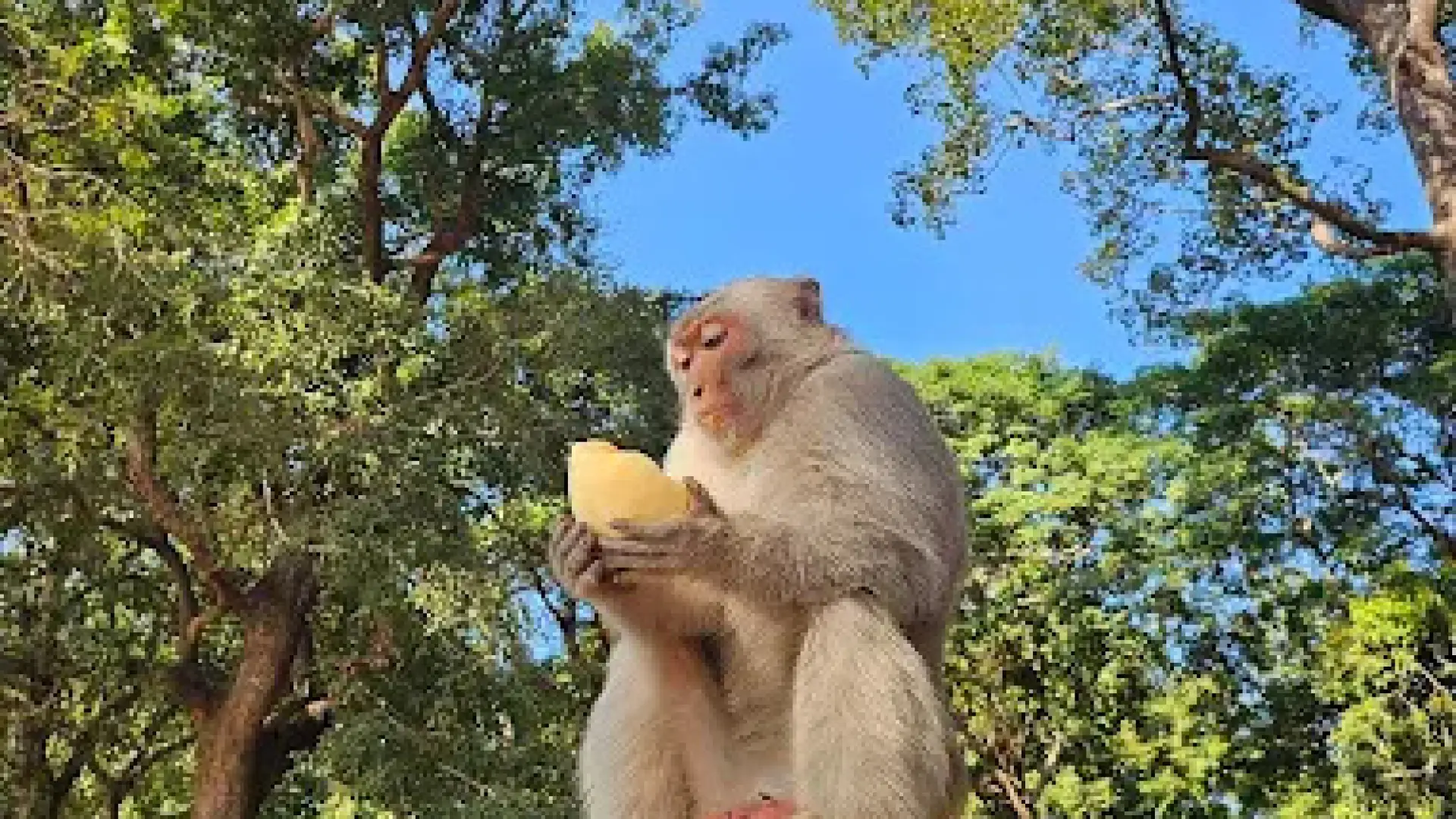
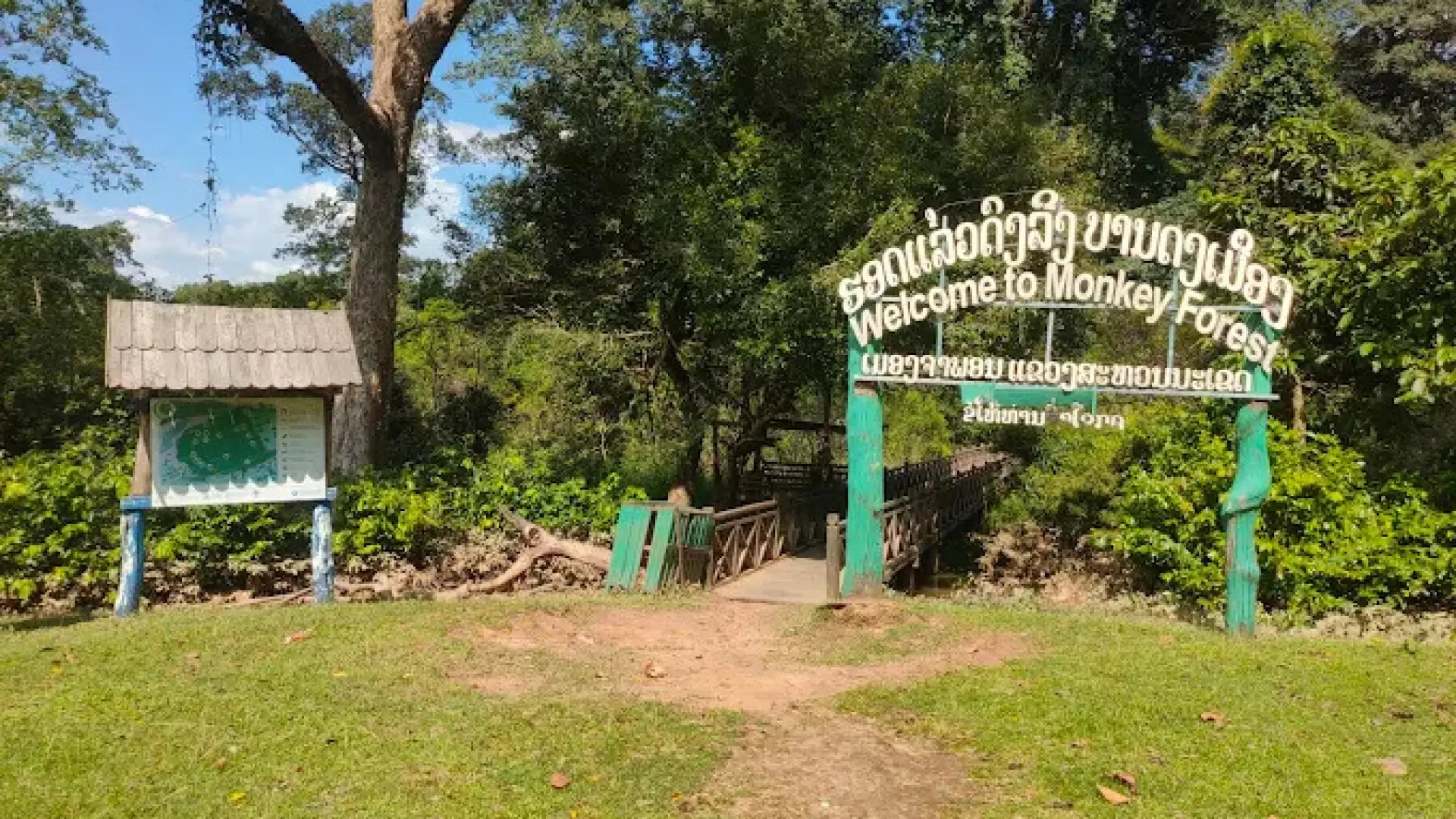
Monkey Forest, locally known as Dong Ling, is one of the most unique wildlife and cultural attractions in Savannakhet Province. Located in Champhone District, approximately 50 kilometers east of Savannakhet City, this sacred forest is home to a large population of wild macaque monkeys that have lived alongside local communities for generations. The forest covers several hectares and is protected by traditional beliefs that regard the area as sacred, allowing the monkeys to roam freely without fear of hunting or disturbance.
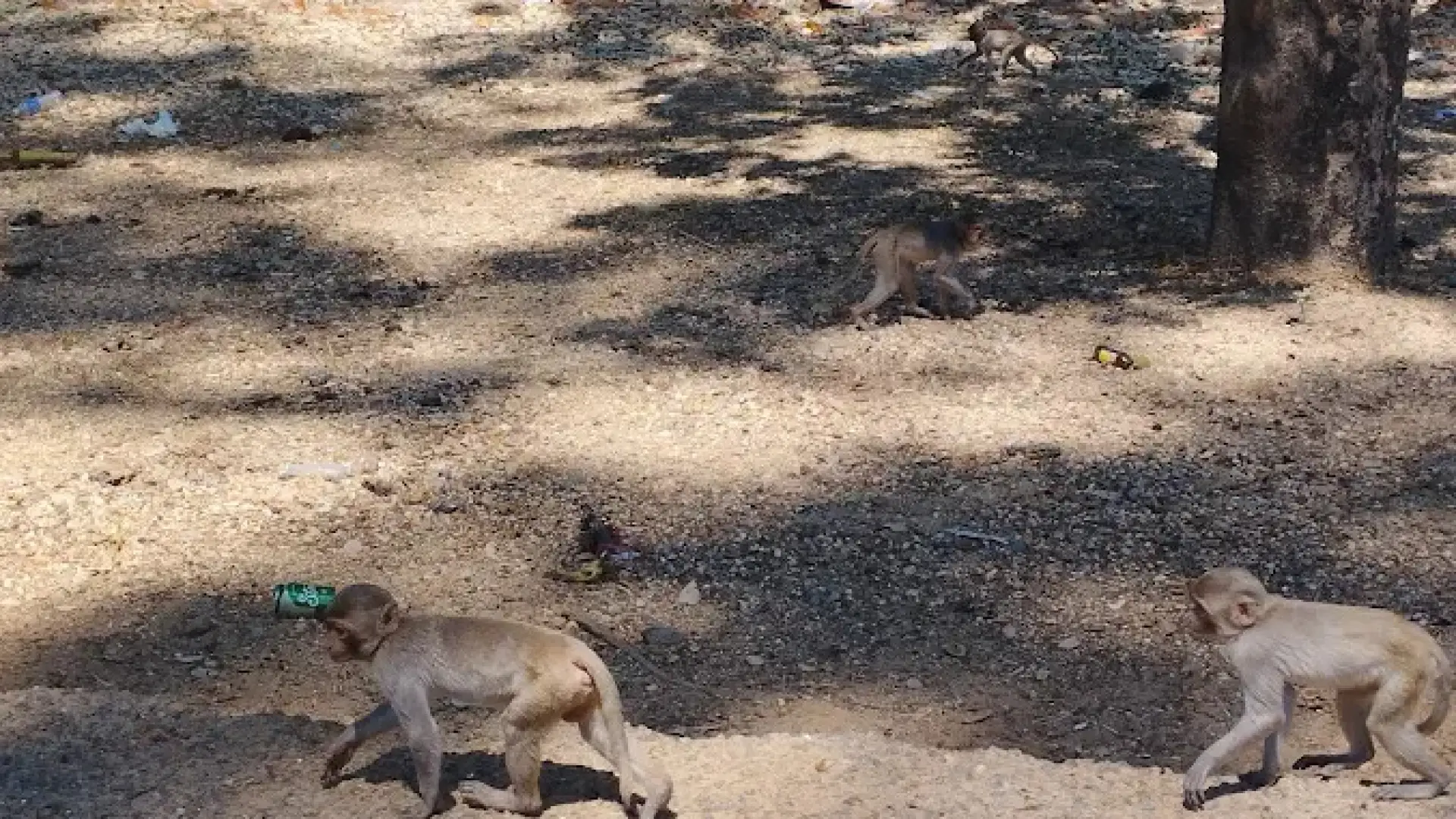
Unlike a zoo or wildlife park, Monkey Forest offers visitors the opportunity to observe monkeys in their natural habitat. Hundreds of macaques can often be seen climbing trees, foraging for food, socializing, and interacting with one another throughout the forest. Their playful behavior and close proximity to visitors make Dong Ling one of the most popular wildlife attractions in southern Laos.
The forest is deeply connected to local spiritual traditions. Villagers believe the forest is protected by guardian spirits, and this belief has helped preserve both the habitat and its monkey population for many years. The site is often visited together with nearby attractions such as the ancient Ho Tay Pidok Library, Soui Reservoir, Turtle Lake, and other cultural sites in Champhone District.
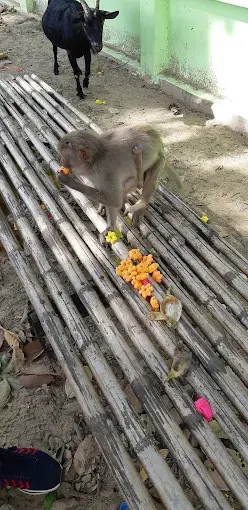
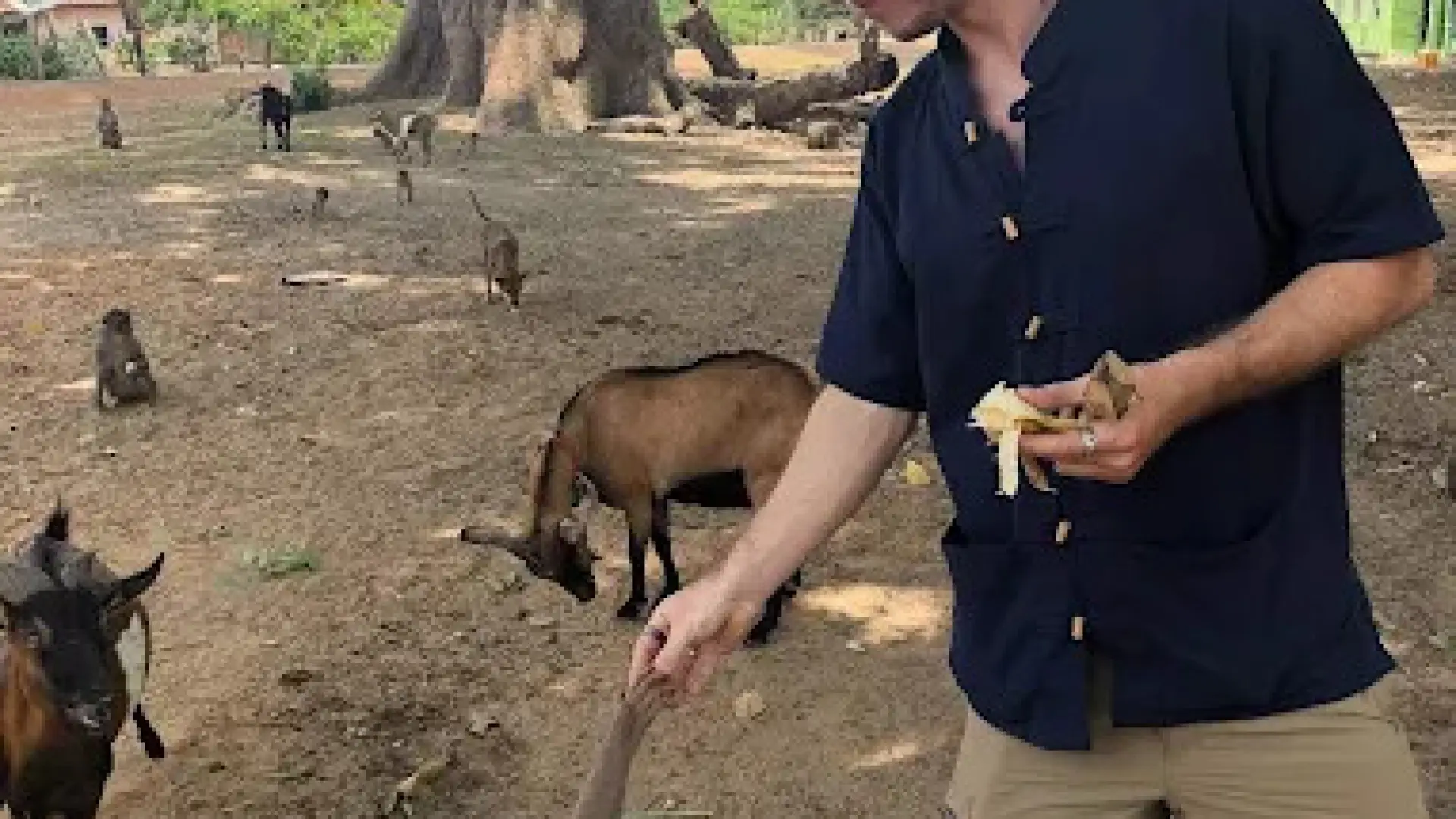
Visitors can stroll through the shaded forest paths while observing the monkeys from a safe distance. The area provides excellent opportunities for wildlife photography, nature observation, and learning about local conservation traditions. Although the monkeys are accustomed to human presence, they remain wild animals and can be mischievous when food is involved. Travelers are advised to keep personal belongings secure and avoid feeding the monkeys directly.
The surrounding countryside is equally attractive, featuring rice fields, wetlands, rural villages, and scenic landscapes typical of Savannakhet Province. Nature lovers often combine a visit to Monkey Forest with eco-tourism activities and cultural excursions throughout the Champhone region. The attraction offers a unique blend of wildlife, local beliefs, and rural Lao culture that cannot be found elsewhere in the country.
Today, Monkey Forest remains one of Savannakhet's most distinctive destinations, attracting travelers interested in wildlife, photography, nature, and authentic local traditions. Its combination of free-roaming monkeys, sacred forest conservation, and peaceful natural surroundings makes it a memorable stop when exploring southern Laos.
Opening Hours
- Daily: 08:00 AM – 05:00 PM
- Best time to visit:
- Early morning (08:00 AM – 10:00 AM) when monkeys are most active.
- Late afternoon (03:00 PM – 05:00 PM) for wildlife photography.
- November to February for cooler temperatures and comfortable sightseeing.
Highlights
- Home to a large population of wild macaque monkeys.
- Sacred forest protected by local traditions.
- One of the most unique wildlife attractions in Laos.
- Excellent wildlife and nature photography opportunities.
- Peaceful forest environment.
- Authentic cultural and eco-tourism experience.
- Close to Ho Tay Pidok Library and Champhone attractions.
- Opportunity to observe monkeys in their natural habitat.
- Beautiful rural landscapes and countryside scenery.
- Family-friendly outdoor destination.
Visitor Tips
- Do not feed the monkeys directly.
- Keep food, bags, cameras, and valuables secure.
- Maintain a respectful distance from wildlife.
- Avoid sudden movements that may startle the animals.
- Wear comfortable walking shoes.
- Bring drinking water, sunscreen, and insect repellent.
- Visit with a local guide to learn about the forest's cultural significance.
- Allow 1–2 hours for exploration and photography.
Location
Monkey Forest (Dong Ling) is located in Champhone District, Savannakhet Province, approximately 50 kilometers east of Kaysone Phomvihane City. It is often visited as part of a day trip that includes Soui Reservoir, Ho Tay Pidok Library, and other attractions in the region.