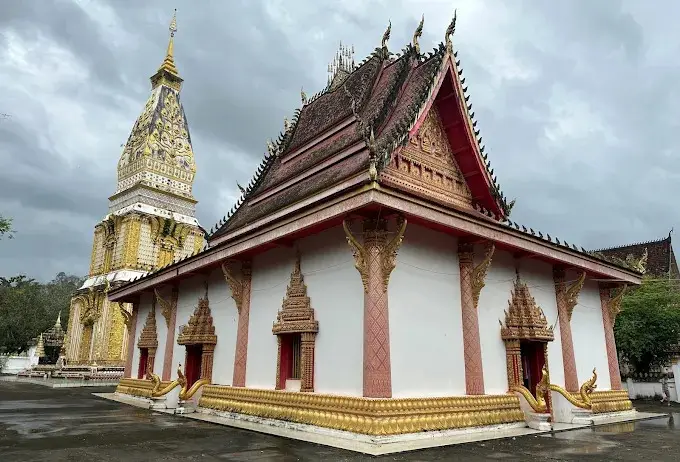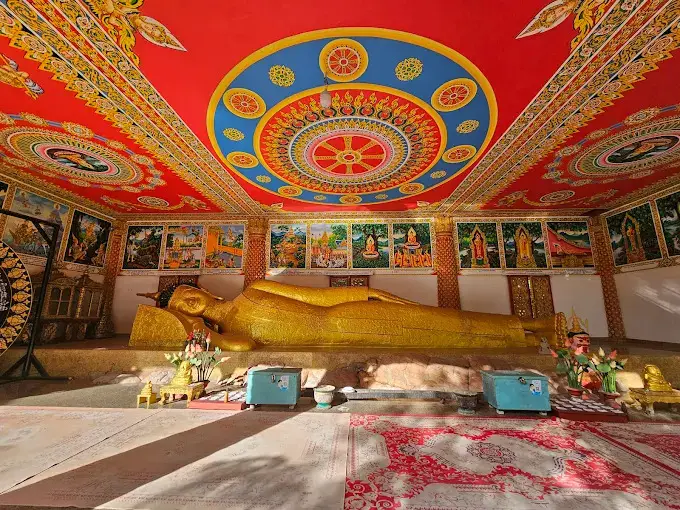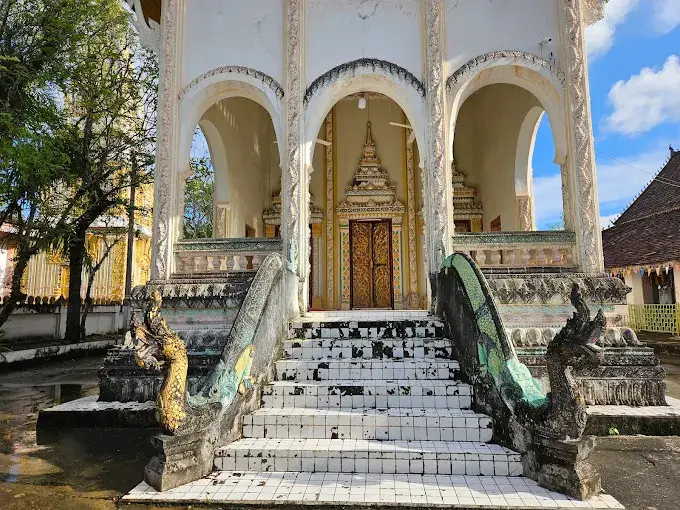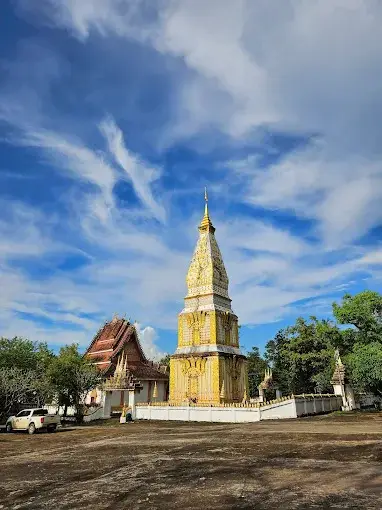
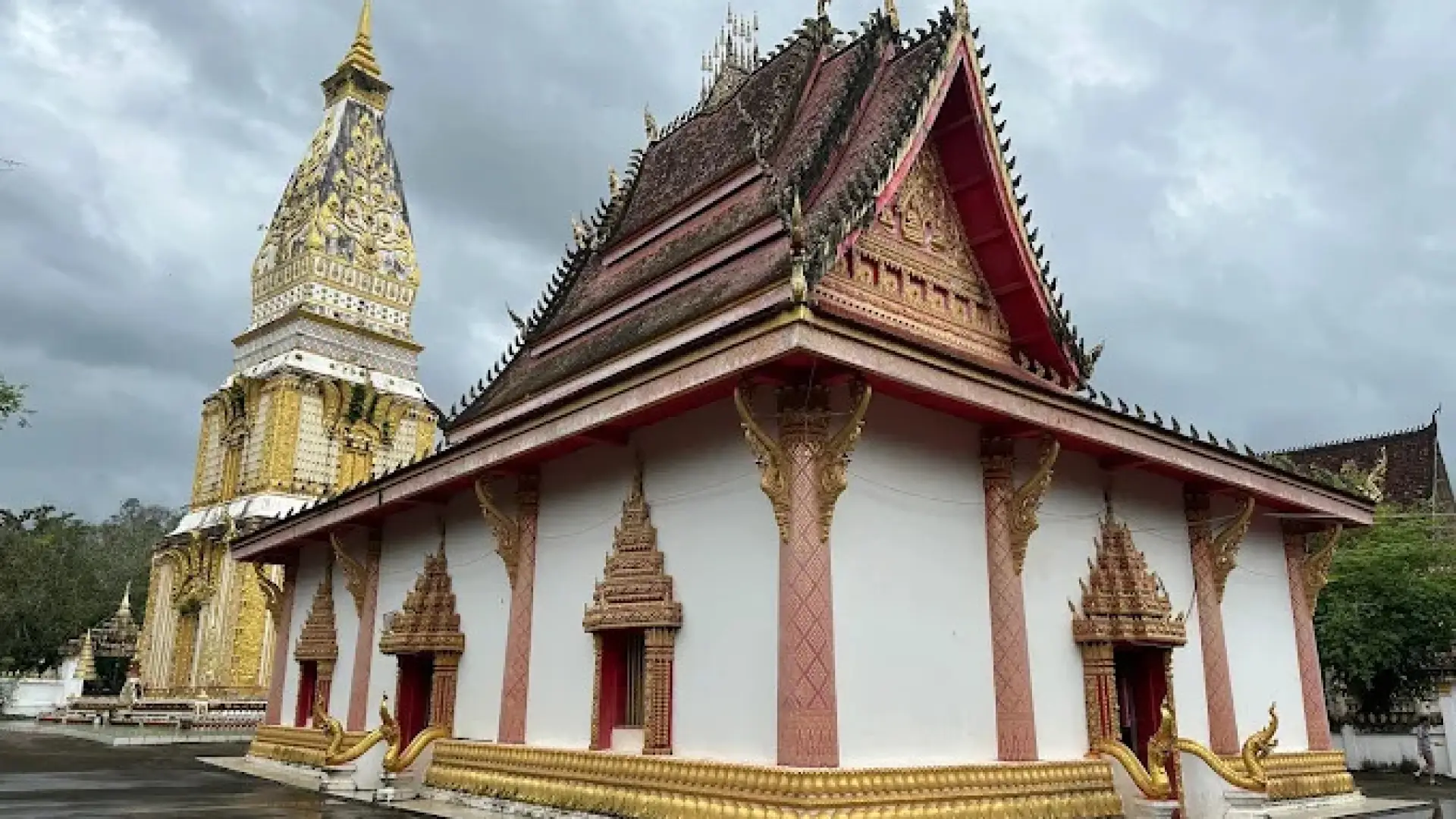
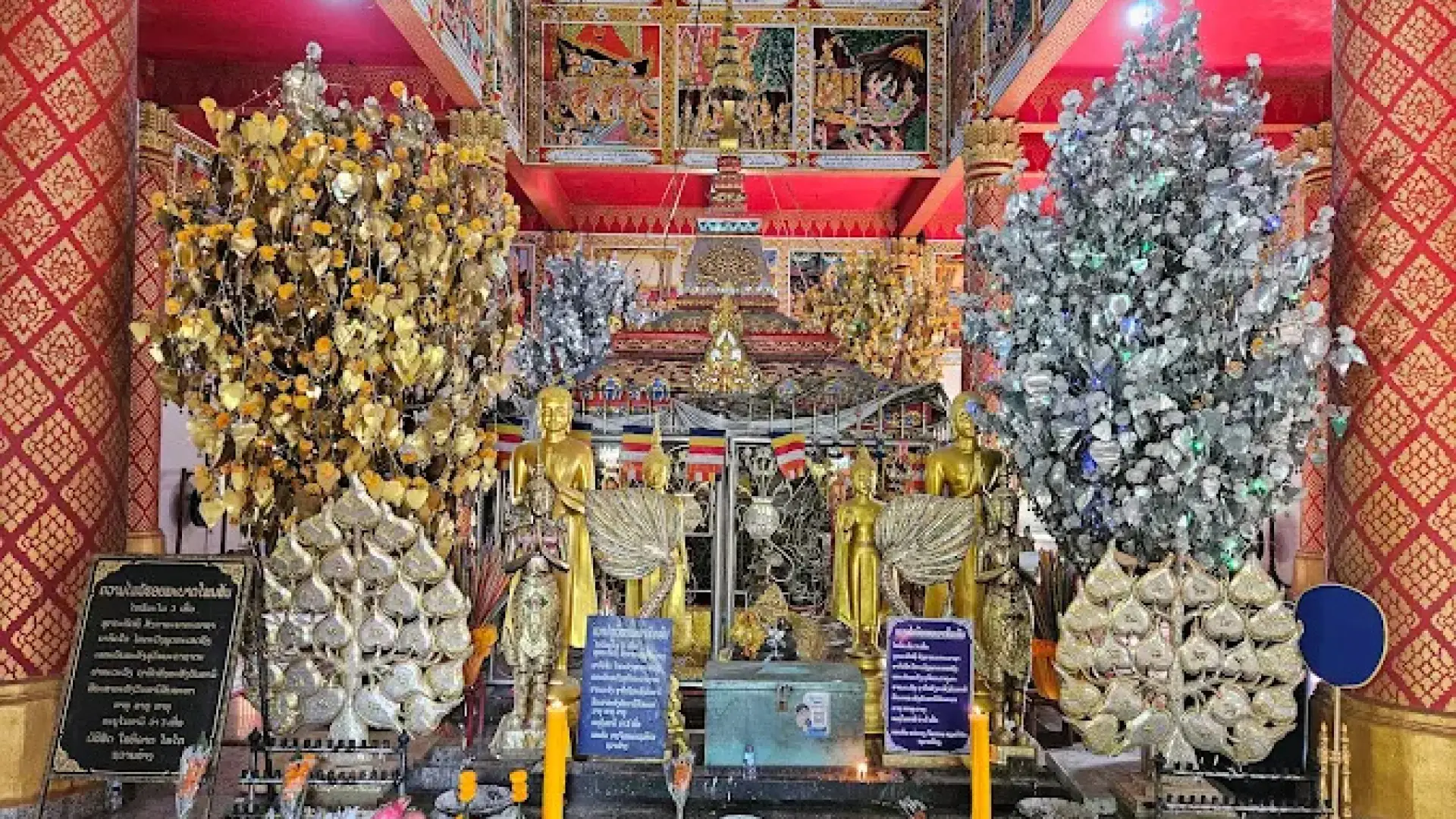
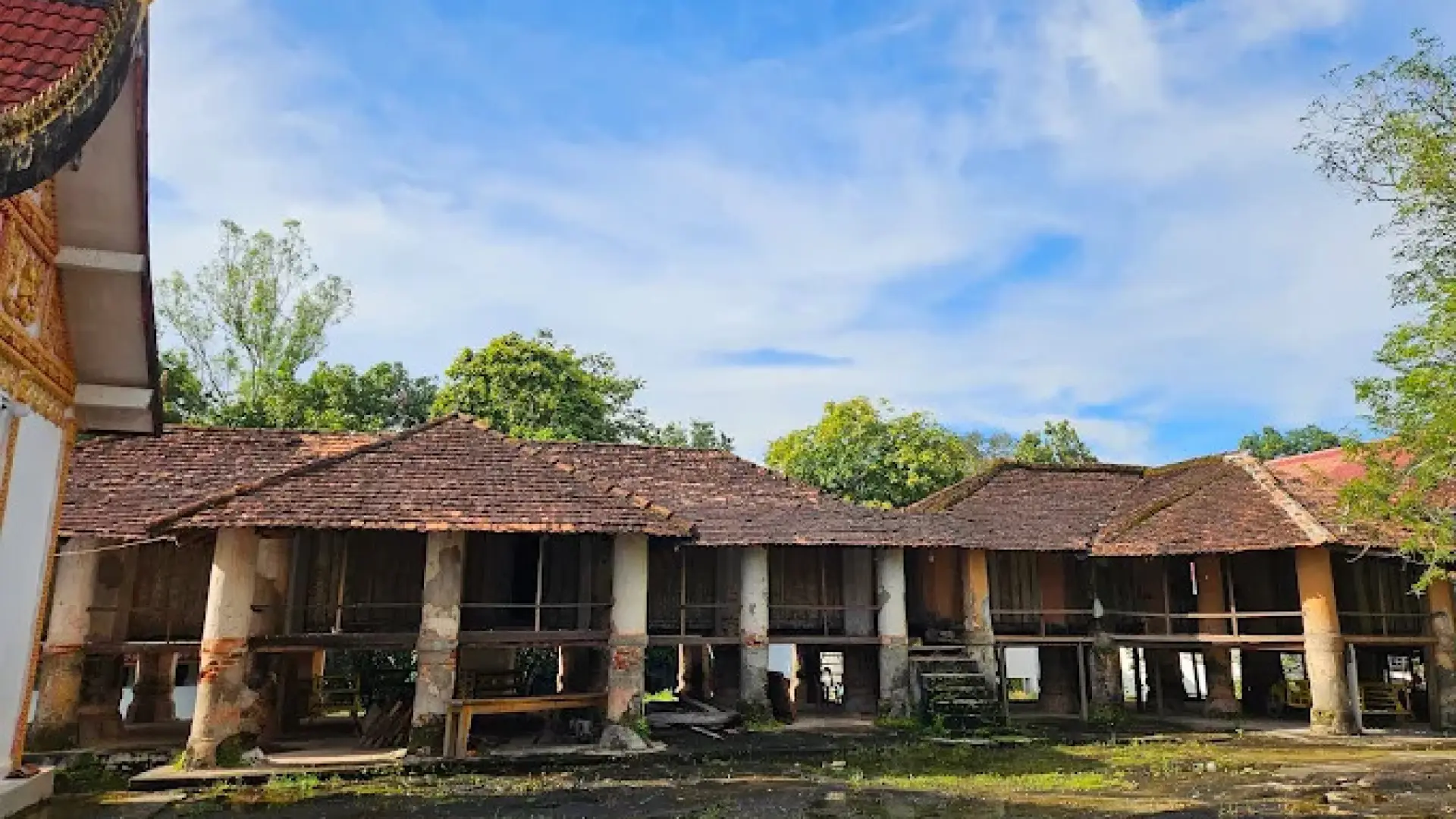
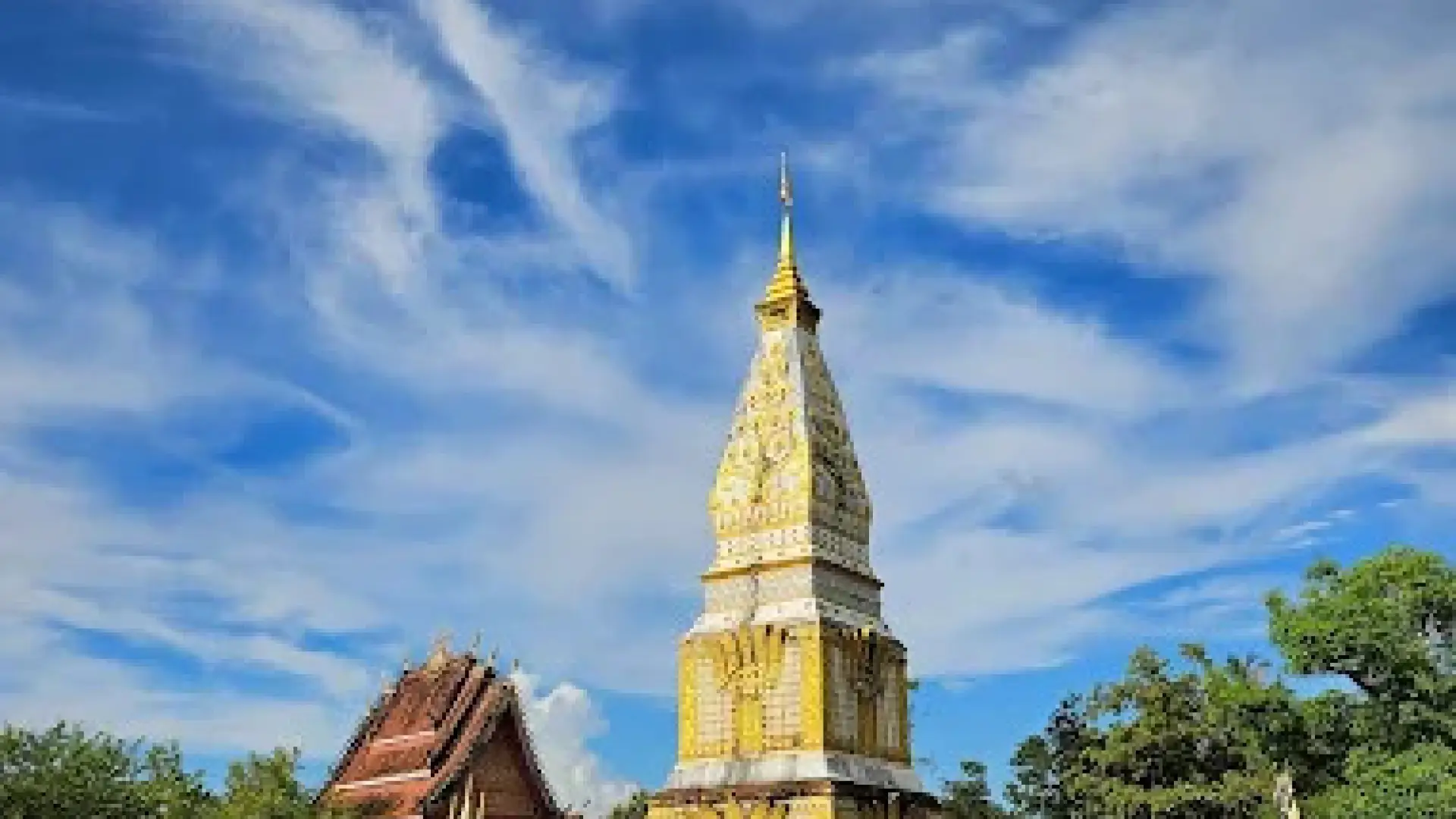
Wat Phabath Phonsan is one of the most sacred and historically significant Buddhist temples in Bolikhamxay Province. Located in Thaphabath District along Route 13 South, approximately halfway between Vientiane and Paksan, the temple is an important pilgrimage site that attracts both Lao devotees and international visitors seeking spiritual blessings and cultural insight. The temple is particularly famous for its revered Buddha Footprint (Phabath) and the ancient Phonsan Stupa, making it one of the province's most important religious landmarks.
According to local history, the Phonsan Stupa dates back to the Buddhist year 902 and has long been considered a sacred site. In 1993, local villagers discovered a large footprint measuring approximately 2.4 meters by 1.2 meters, believed by devotees to be the footprint of the Buddha. Following this discovery, a temple was constructed around the sacred footprint, creating what is now known as Wat Phabath. Since then, the site has become one of the most revered pilgrimage destinations in central Laos.
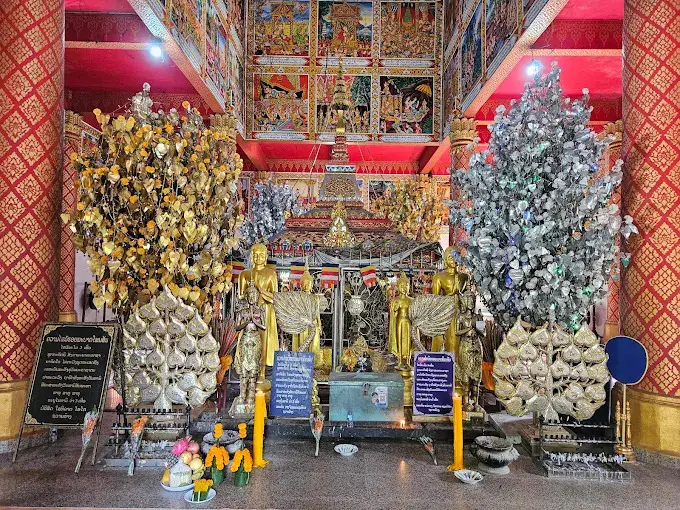
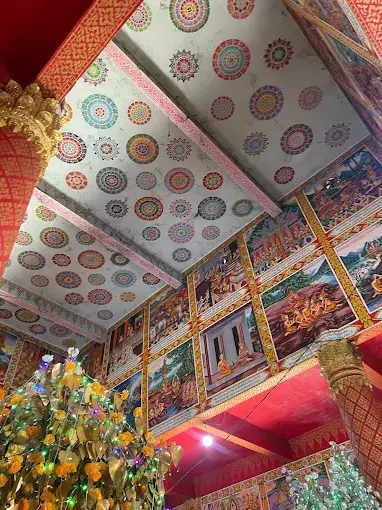
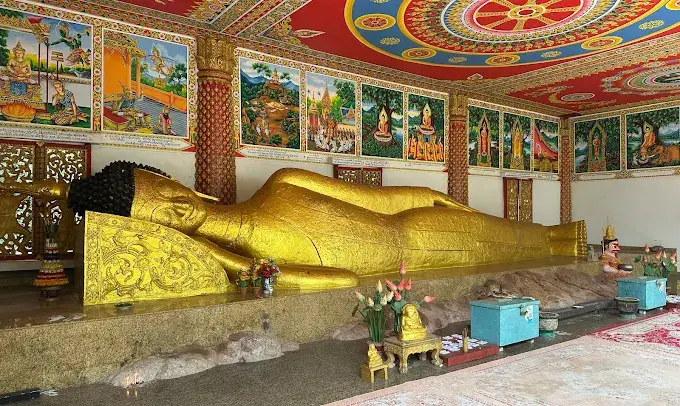
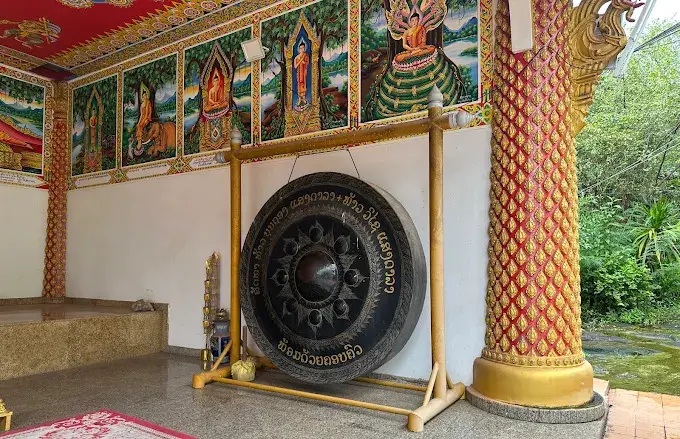
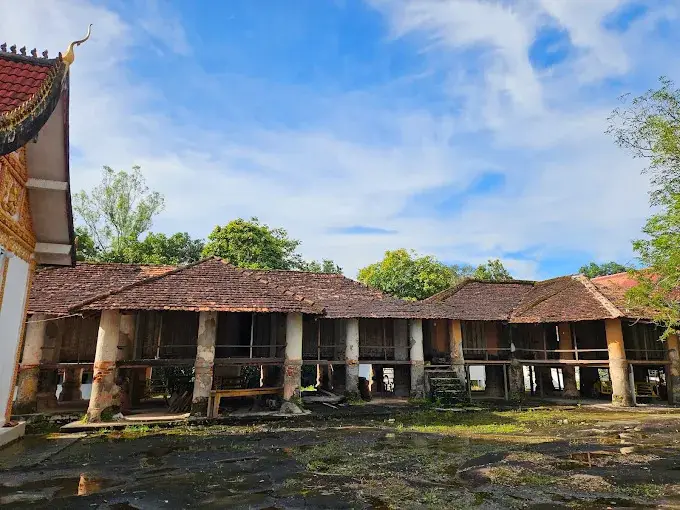
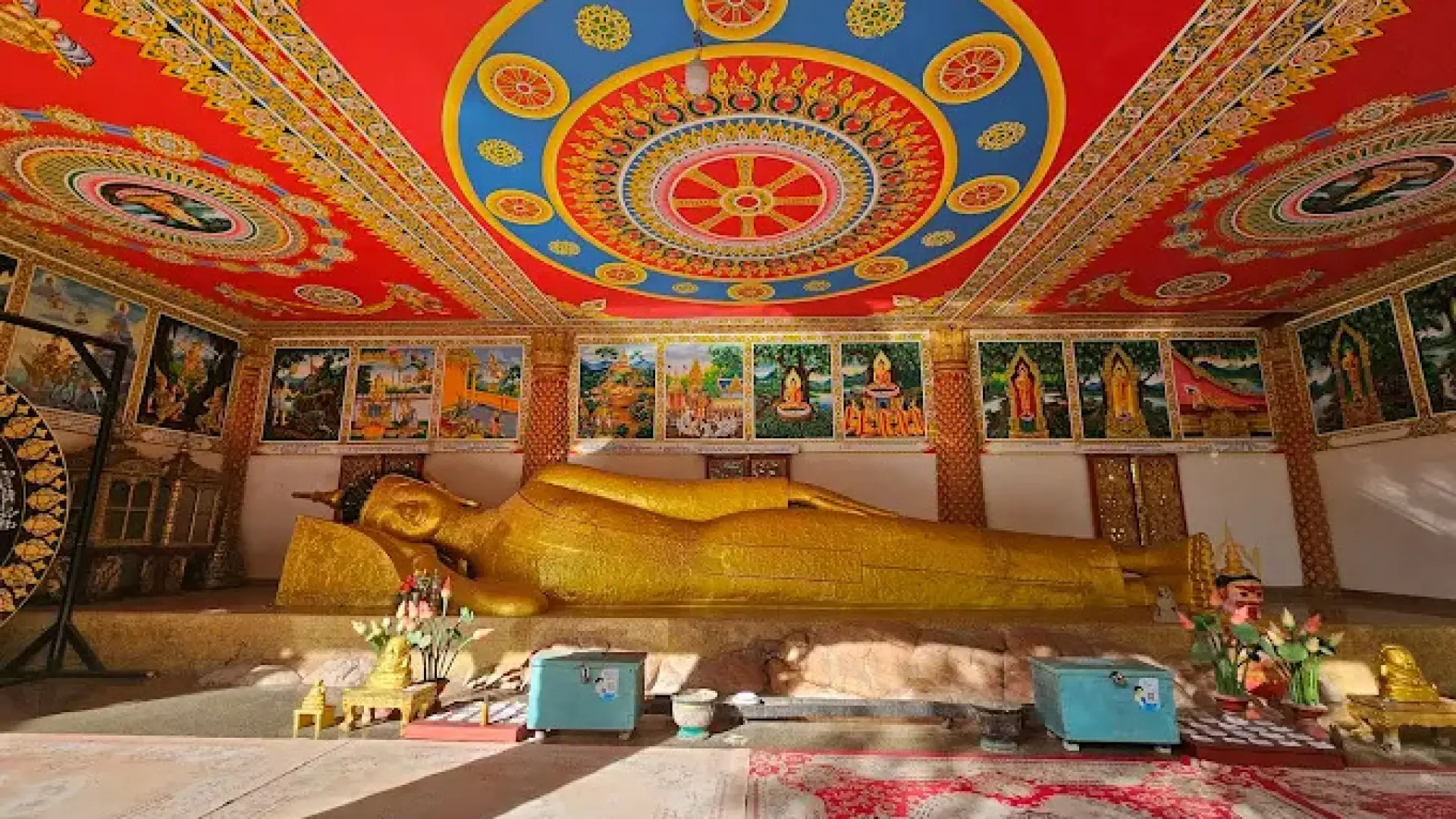
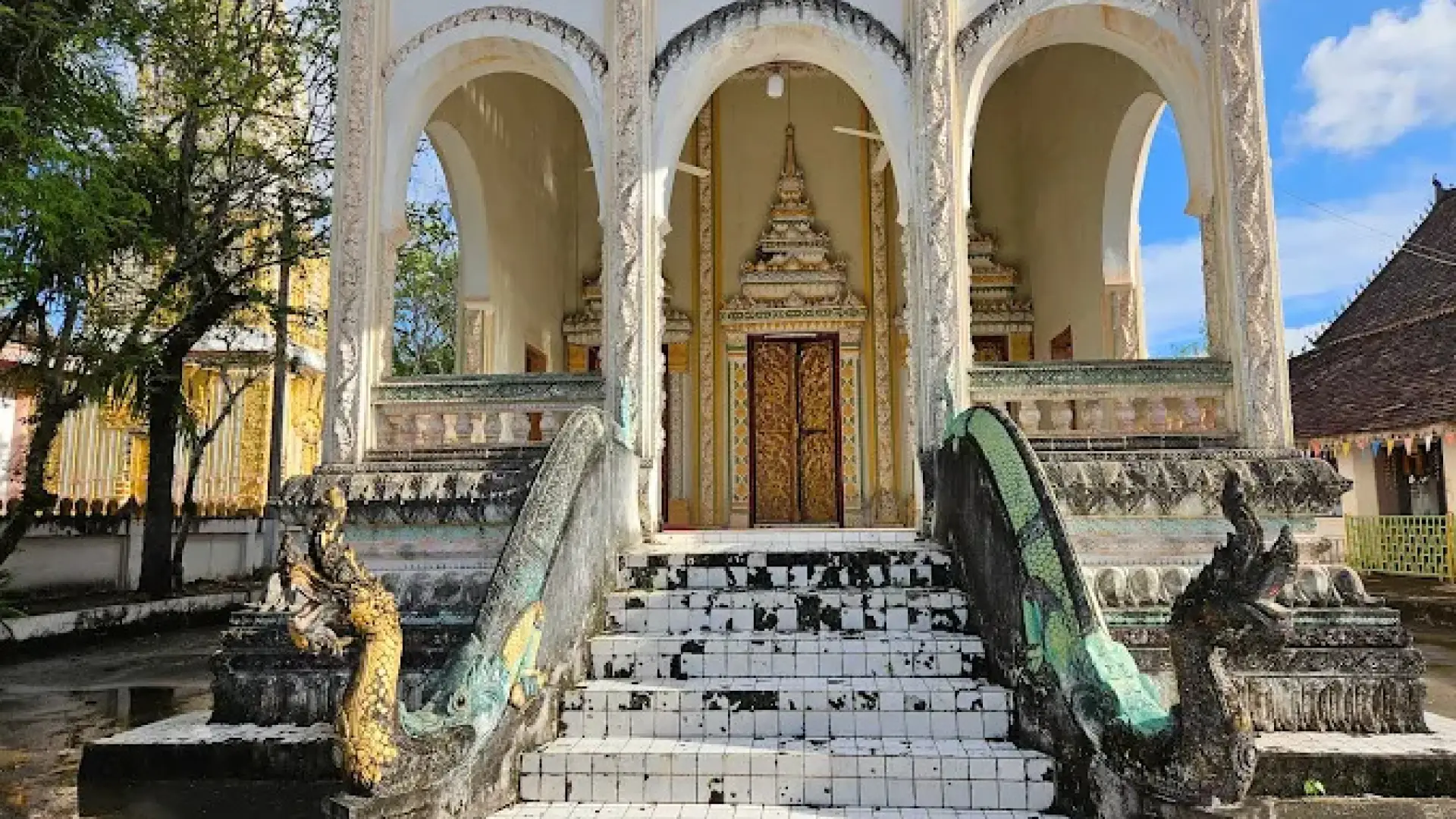
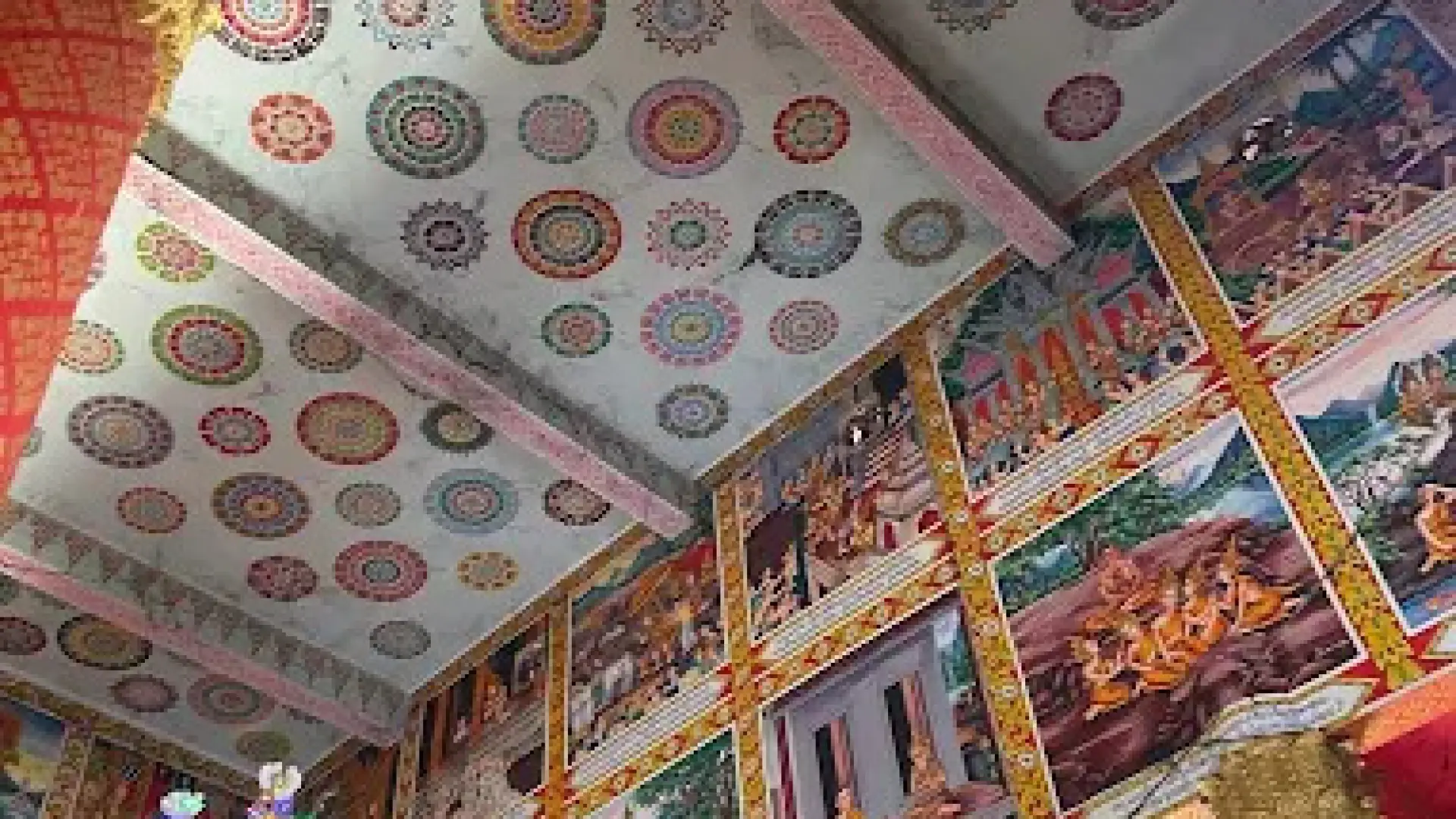
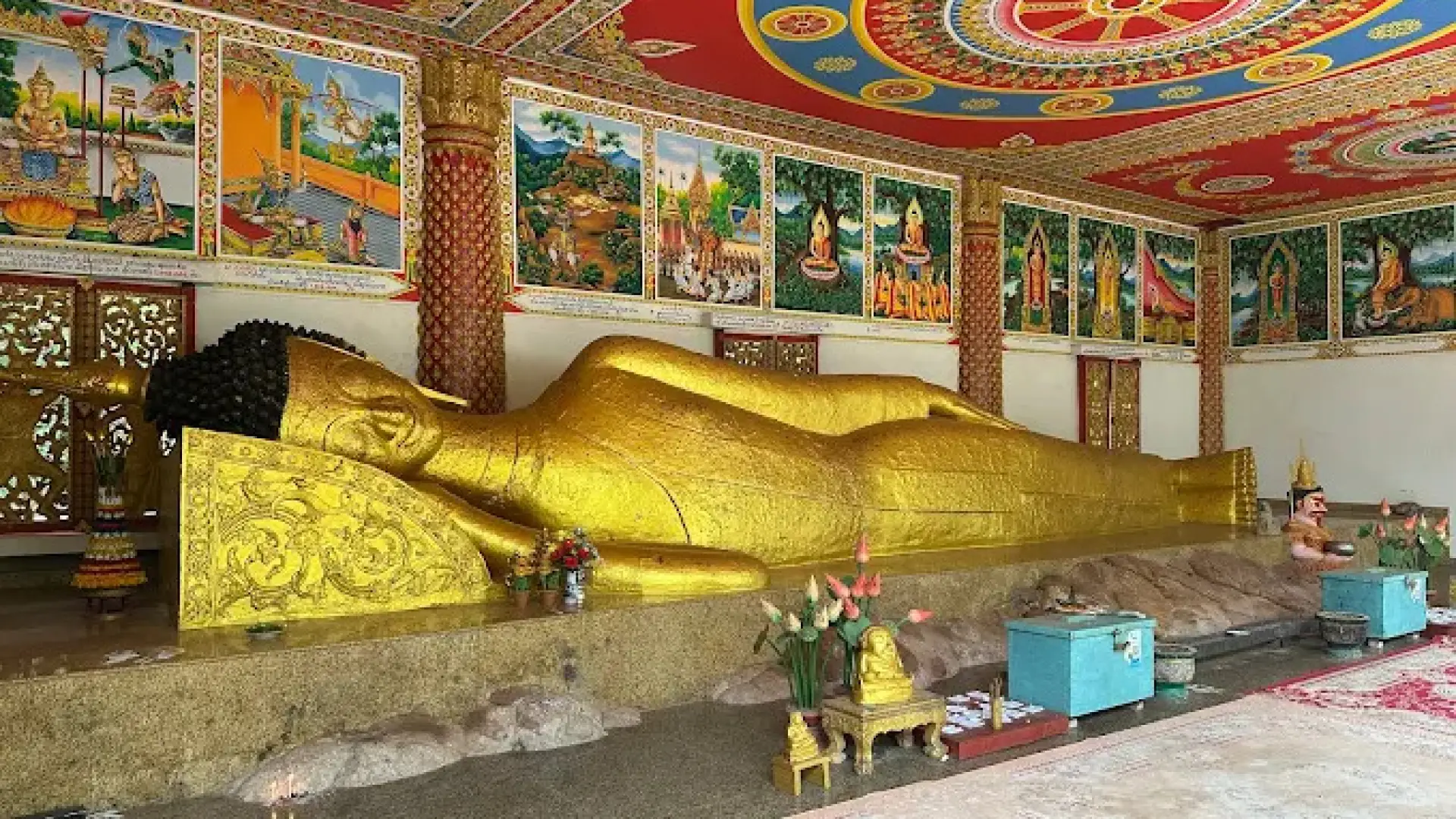
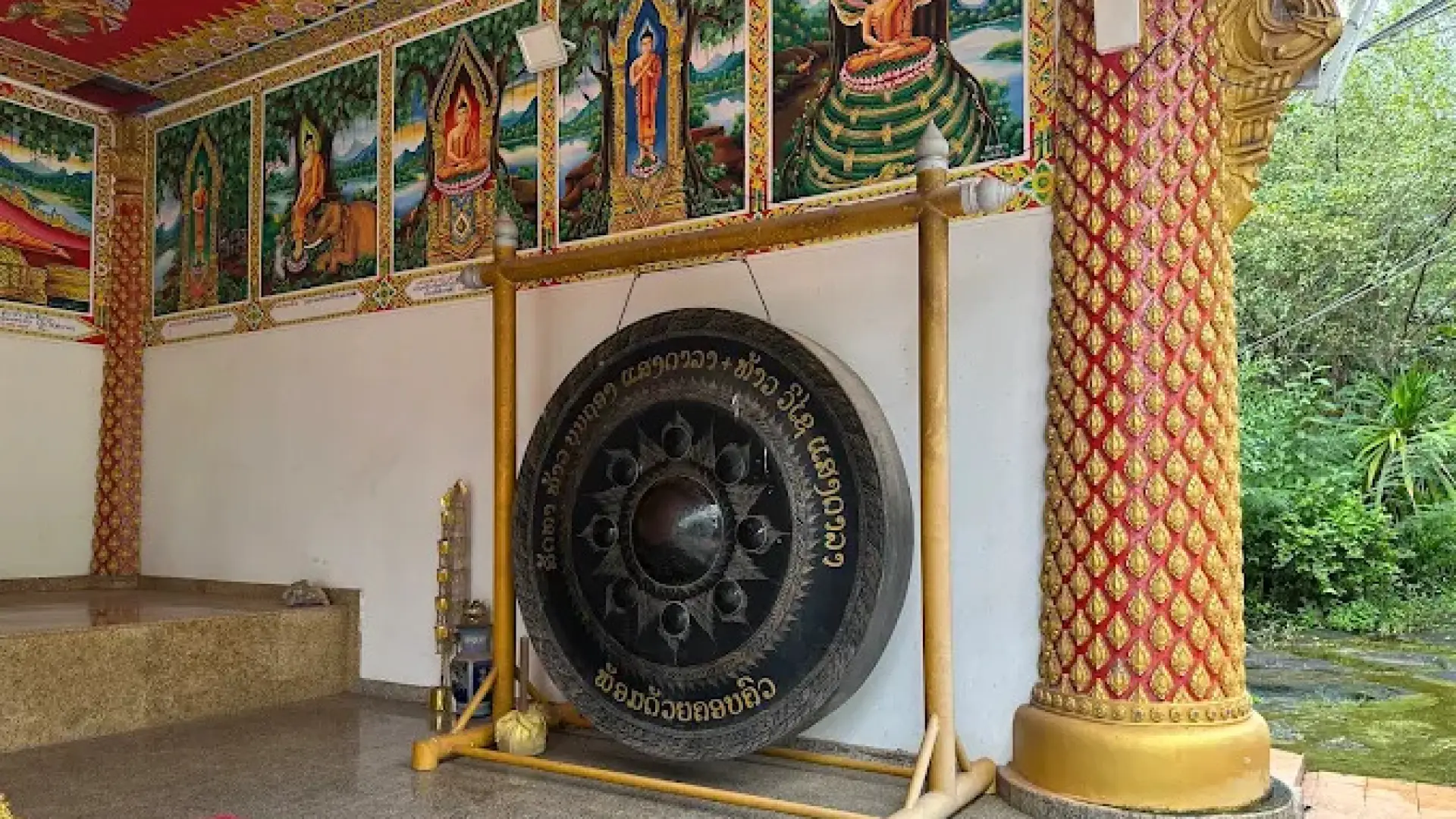
The temple complex sits on spacious grounds near the Mekong River and offers a peaceful atmosphere for prayer, meditation, and reflection. Visitors can admire traditional Lao Buddhist architecture, ornate temple halls, religious sculptures, and colorful murals depicting Buddhist teachings. The sacred footprint is housed within a dedicated shrine where devotees place gold leaf offerings and pray for health, prosperity, and safe journeys.
One of the most important events at the temple is the annual Boun Phabath Phonsan Festival, usually held in January. During this celebration, thousands of pilgrims gather to pay homage to the Buddha footprint and the Phonsan Stupa. The festival features merit-making ceremonies, traditional performances, cultural exhibitions, local markets, and religious processions. It is considered one of the largest and most significant festivals in Bolikhamxay Province.
The temple is also associated with local legends that state the Buddha once stopped at this location during his travels. The adjoining Phonsan Stupa is believed to mark a sacred resting place and remains an important symbol of faith for local communities. During the full moon period in October, the area is also known for reports of mysterious Naga fireballs appearing over the Mekong River, adding to the site's spiritual mystique.
Today, Wat Phabath Phonsan stands as both a major religious center and a cultural heritage site. In recent years, provincial authorities have moved to recognize the temple as a national heritage landmark due to its religious, historical, and cultural importance.
Opening Hours
- Daily: 06:00 AM – 06:00 PM
- Best time to visit:
- Early morning for a peaceful spiritual atmosphere.
- January during the Boun Phabath Phonsan Festival.
- Late afternoon for cooler weather and photography.
Highlights
- Sacred Buddha Footprint measuring approximately 2.4 x 1.2 meters.
- Ancient Phonsan Stupa dating back to the Buddhist year 902.
- One of the most important pilgrimage sites in central Laos.
- Annual Boun Phabath Phonsan Festival.
- Traditional Lao Buddhist architecture.
- Religious murals and sacred shrines.
- Peaceful temple grounds near the Mekong River.
- Important cultural heritage site.
- Merit-making and prayer opportunities.
- Beautiful views of the surrounding countryside.
Visitor Tips
- Dress modestly with shoulders and knees covered.
- Remove shoes before entering temple buildings.
- Bring small donations if you wish to make merit.
- Visit during weekdays for a quieter experience.
- Ask permission before photographing monks or worshippers.
- Attend the January festival for a unique cultural experience.
- Allow 1–2 hours to explore the temple complex.
- Combine your visit with nearby Mekong viewpoints and other Bolikhamxay attractions.
Location
Wat Phabath Phonsan is located in Thaphabath District, Bolikhamxay Province, adjacent to Route 13 South near Na Village, making it an easy stop for travelers journeying between Vientiane and Paksan.