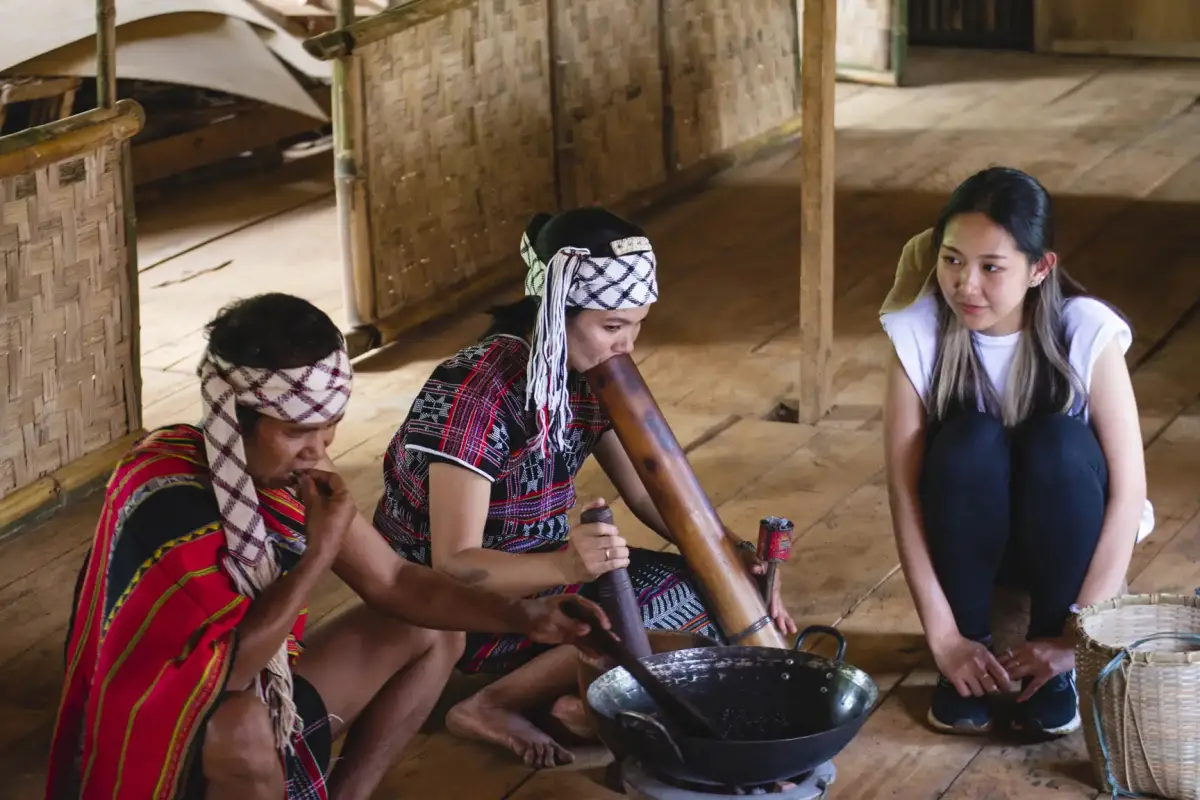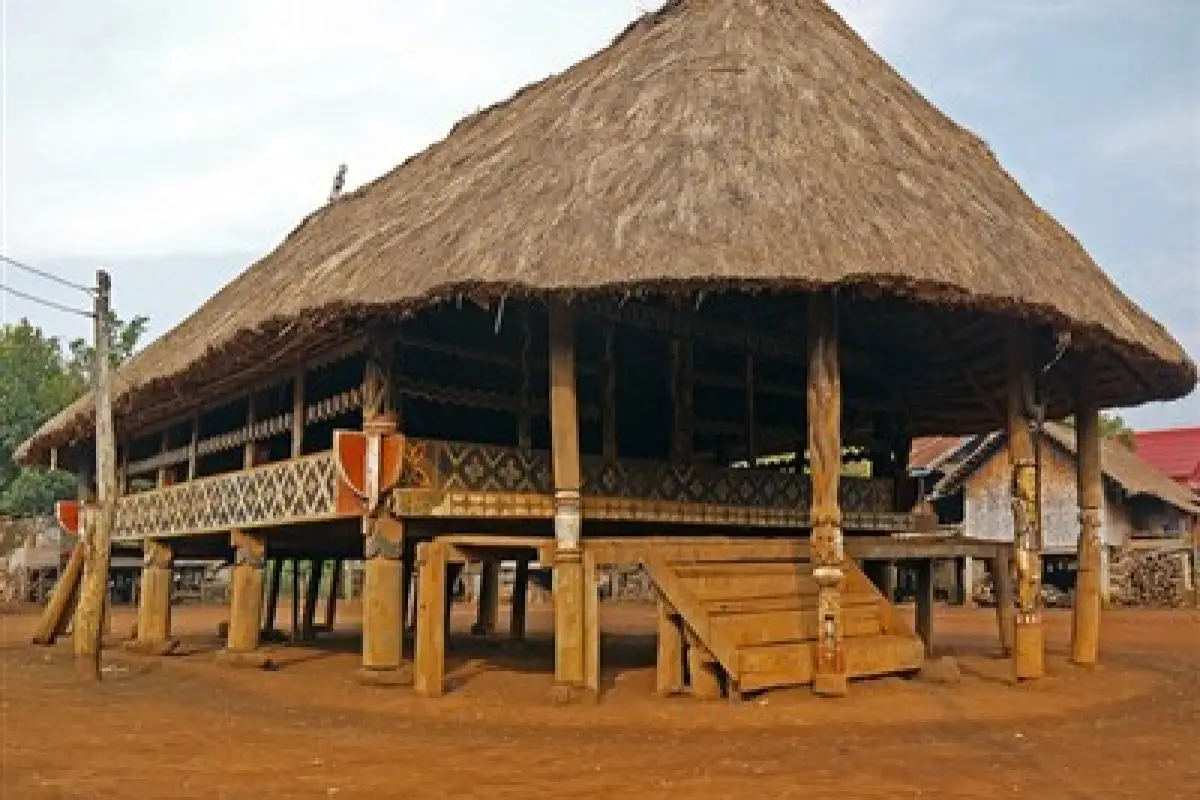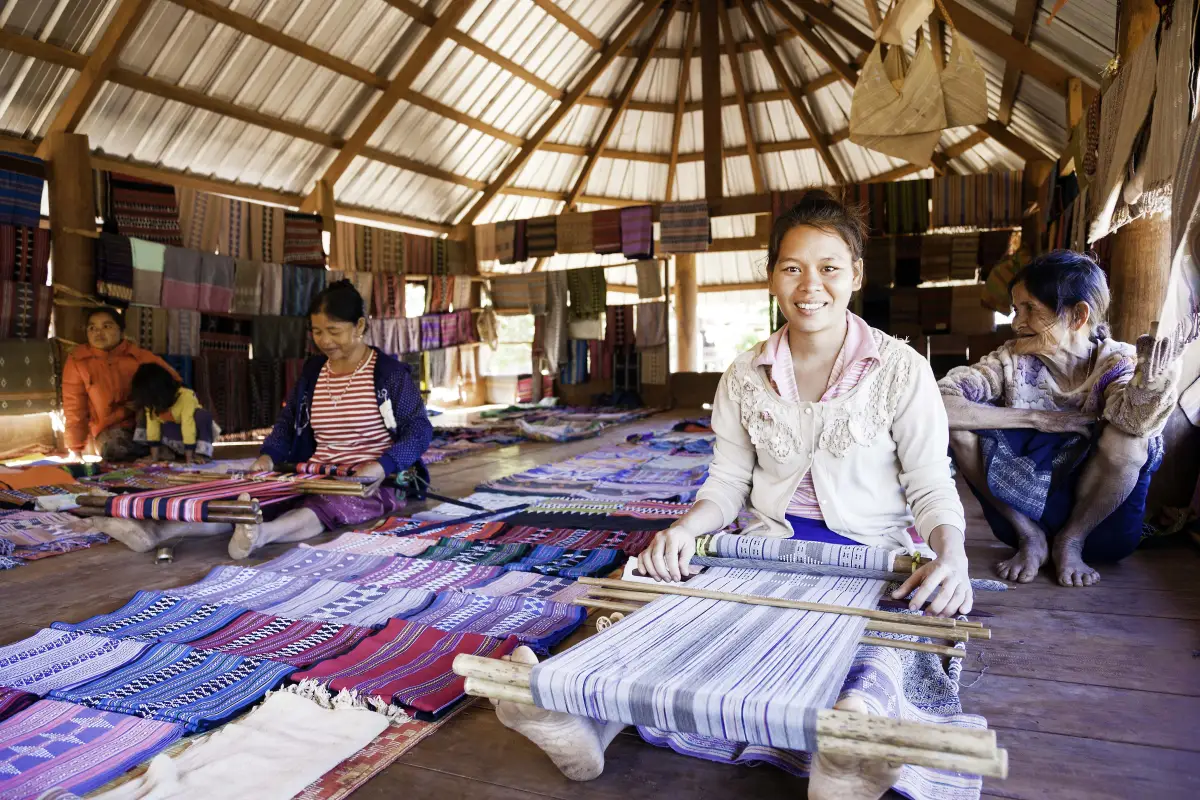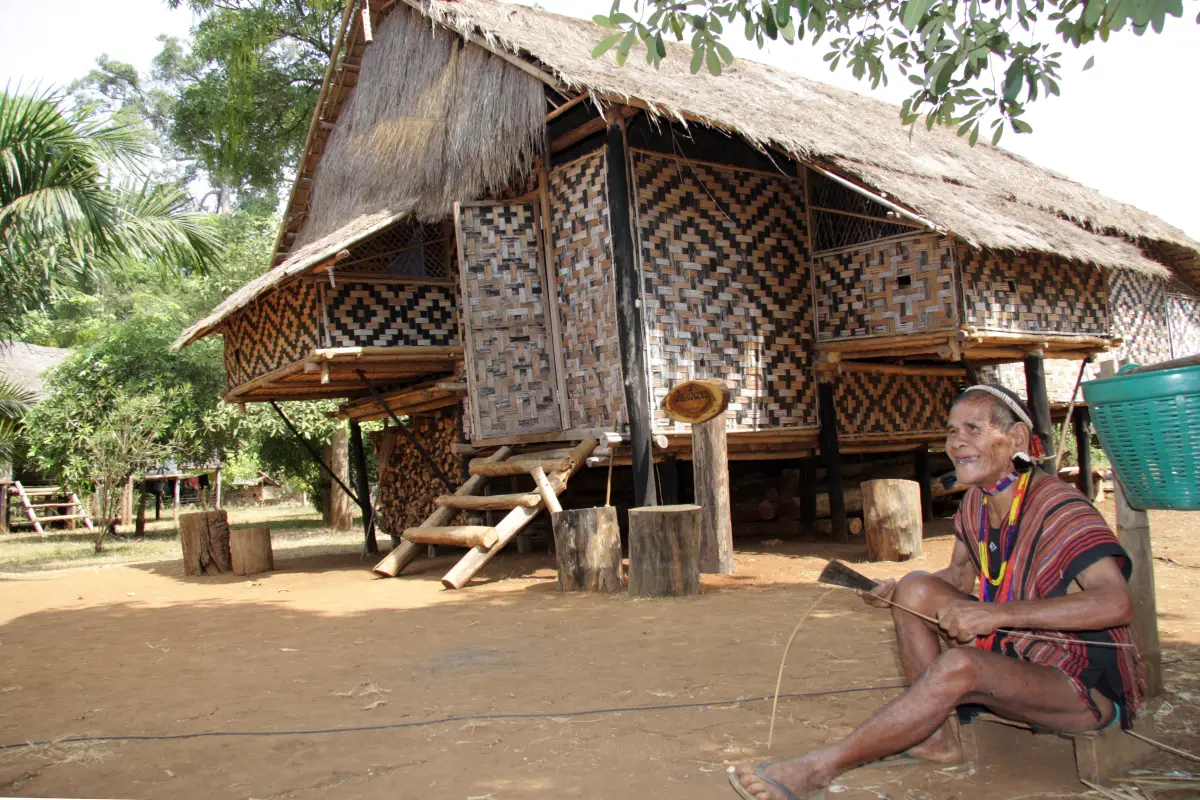
Sekong Province is one of the best destinations in Laos for discovering authentic handcrafted textiles created by ethnic minority communities. Unlike mass-produced souvenirs, the textiles found in Sekong are deeply connected to the traditions, history, and identity of the province's indigenous groups. Handwoven fabrics are still produced using traditional backstrap looms and "hip looms," with many techniques passed down through generations of women artisans.
The province is home to numerous ethnic groups, including the Katu, Tarieng (Talieng), Alak, Nge (Krieng), Laven, and Harlak communities, each producing distinctive textile styles and patterns. Traditional motifs often include geometric designs, animals, plants, and even historical symbols inspired by events from the Indochina War. Many textiles are naturally dyed and woven entirely by hand, making every piece unique.
Best Villages for Textile Shopping
Ban Kasangkang (Harlak Village)
Located near Sekong Town, Ban Kasangkang is known for its skilled Harlak weavers who continue to use traditional backstrap looms. Visitors can observe the weaving process and purchase authentic scarves, skirts, and decorative textiles directly from artisans.
Ban Dak Feuang (Katu Village)
This Katu village is renowned for its colorful woven fabrics and traditional craftsmanship. Katu women are particularly known for their sophisticated warping techniques that create intricate patterns and strong, durable cloth.
Ban Talui (Tarieng Village)
The Tarieng people produce beautiful handwoven textiles featuring bold colors and traditional tribal patterns. Visitors can often see women weaving in front of their homes and purchase handmade products directly from the community.
Ban Kaluem and Nearby Villages (Alak Communities)
Alak women are famous for weaving traditional sin (skirts), scarves, and ceremonial textiles. Their work often features unique geometric motifs and cultural symbolism that reflect generations of tradition.
Sekong Town Handicraft Markets
Several small handicraft shops and community markets in Sekong Town showcase textiles from multiple ethnic groups. These are convenient locations for travelers who do not have time to visit remote villages while still wanting to support local artisans.
What to Buy
Visitors will find a wide range of authentic handmade products, including:
- Traditional Pha Biang ceremonial scarves
- Handwoven cotton and silk scarves
- Traditional ethnic skirts (sin)
- Table runners and wall hangings
- Handwoven bags and purses
- Headcloths and turbans
- Decorative textiles with tribal motifs
- Handmade cushion covers
- Traditional ceremonial cloths
- Unique one-of-a-kind ethnic souvenirs
Cultural Significance
Textile weaving plays an important role in daily life and cultural identity throughout Sekong Province. In many villages, girls learn weaving skills from a young age, and handmade textiles are used during weddings, festivals, religious ceremonies, and important community events. Purchasing these products helps preserve traditional knowledge while supporting local families and village economies.
Many patterns have symbolic meanings connected to nature, ancestral beliefs, wildlife, and village history. Some designs are unique to specific ethnic groups and cannot be found elsewhere in Laos.
Opening Hours
- Village weaving workshops: 08:00 AM – 05:00 PM
- Community handicraft centers: 08:00 AM – 05:00 PM
- Best time to visit:
- Morning hours when artisans are actively weaving.
- November to February for comfortable weather.
- During local festivals and cultural events.
Highlights
- Authentic handwoven textiles made by ethnic minority artisans.
- Traditional weaving techniques passed down through generations.
- Opportunity to meet weavers and watch demonstrations.
- Unique cultural designs unavailable elsewhere.
- Direct support for local communities.
- Excellent cultural and educational experience.
- Handmade scarves, skirts, bags, and ceremonial cloths.
- Beautiful photography opportunities.
- Sustainable and responsible tourism activity.
- One of the best places in Laos to purchase genuine ethnic handicrafts.
Visitor Tips
- Buy directly from artisans whenever possible.
- Bring cash, as most villages do not accept cards.
- Ask permission before photographing weavers.
- Learn about the meaning of textile patterns from local guides.
- Be prepared to travel on rural roads to reach some villages.
- Support fair pricing for handmade products.
- Consider visiting multiple villages to compare weaving styles.
- Allow at least half a day for a meaningful cultural experience.
Location
The best textile-weaving villages are located throughout Dak Cheung District, Kaleum District, Thateng District, and areas surrounding Sekong Town, where Katu, Tarieng, Alak, Harlak, and other ethnic communities continue to practice traditional weaving.